A Sienese Revelation: The Presentation in the Temple
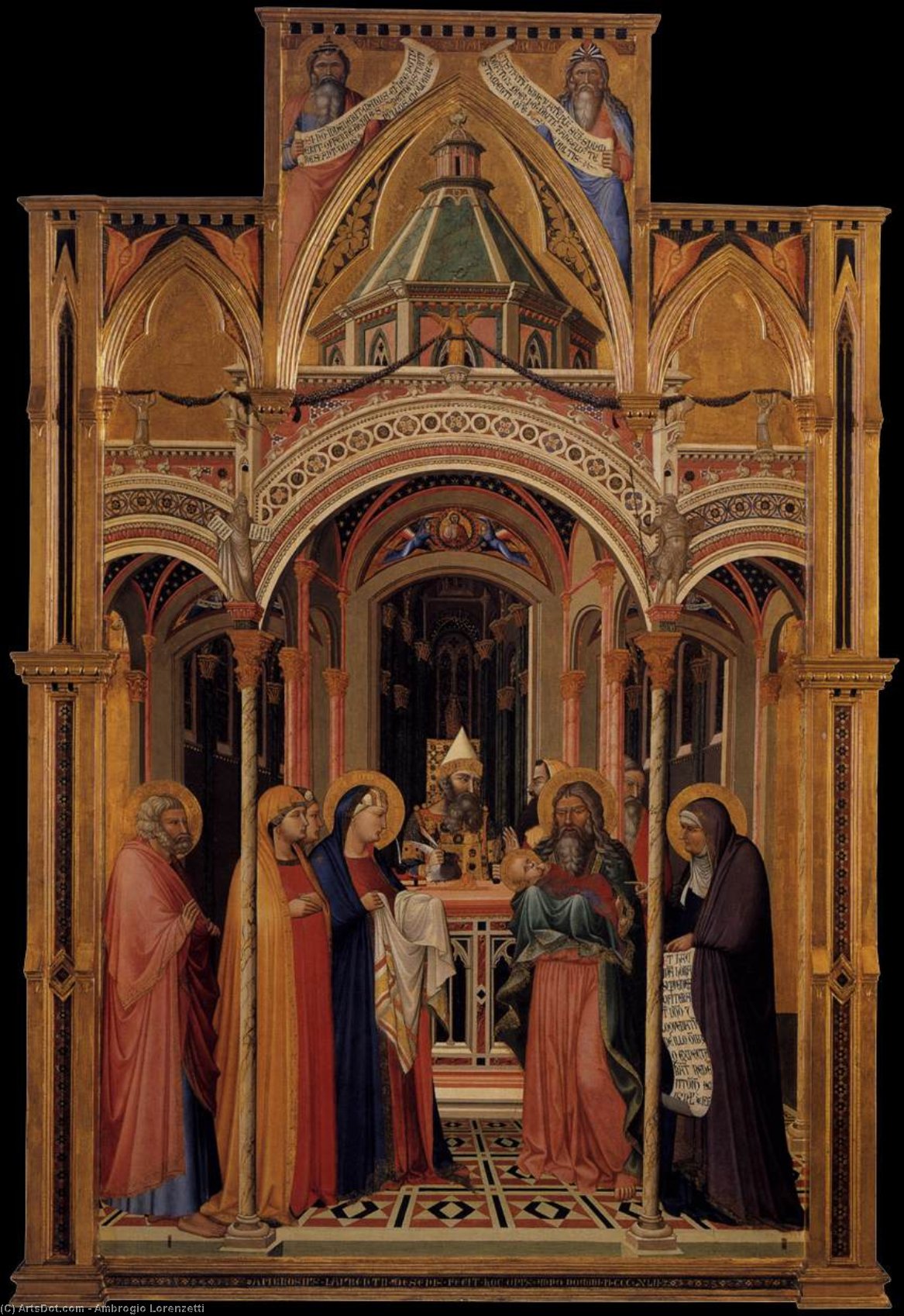
Ambrogio Lorenzetti’s “The Presentation in the Temple,” painted in 1342, isn't merely a religious depiction; it’s a window into the burgeoning artistic and intellectual landscape of Siena during a pivotal moment in European history. This captivating scene, housed within the Uffizi Gallery in Florence, transcends simple narrative to offer a profound meditation on faith, family, and the promise of divine grace. Lorenzetti, born around 1290 amidst the vibrant heart of Sienese art, skillfully blended the rich traditions of Byzantine iconography with an emerging naturalism—a characteristic that would define his unique artistic vision. He wasn’t content to replicate established forms; instead, he imbued his work with a keen observation of the world and a deeply felt spiritual engagement.

A Revolutionary Composition: Space and Figures
What immediately strikes the viewer is the painting’s remarkably innovative spatial arrangement. Lorenzetti abandons the typical static, hierarchical composition favored in earlier medieval art, opting instead for a dynamic, almost theatrical space. The scene unfolds within a shallow, meticulously rendered interior – likely representing the Temple itself – yet it feels surprisingly open and expansive. This creates a sense of immediacy, drawing the viewer directly into the heart of the event. The figures are arranged with a deliberate fluidity, moving in and around the central focus: the infant Jesus being held by two men, their gestures conveying tenderness and reverence. The composition isn’t rigidly formal; it feels alive with movement and interaction.
Notice the careful attention to detail – the folds of the robes, the expressions on the faces, even the subtle play of light and shadow. The three birds, perched strategically throughout the scene—one near the top left, another in the center-left, and a third on the right—add an element of symbolic richness, perhaps representing divine messengers or witnesses to this sacred moment. These seemingly minor details contribute significantly to the painting’s overall depth and complexity.
Symbolism and Spiritual Significance
The Presentation at the Temple is rich in theological symbolism. The event itself—the formal dedication of Jesus to God—is a cornerstone of Christian belief, representing his acceptance into the divine plan. Lorenzetti subtly reinforces this through the figures surrounding the infant: Simeon, identified by his venerable appearance and outstretched arms, embodies prophetic anticipation; Anna, with her prayerful posture, represents faith and devotion. The absence of elaborate ornamentation or dramatic gestures underscores the painting’s focus on spiritual contemplation rather than outward spectacle.
Furthermore, the choice of depicting Mary and Joseph as humble, ordinary people—rather than as regal figures—highlights the central theme of God's grace freely offered to all. The scene speaks not of a miraculous birth in isolation, but of a continuous relationship between humanity and divinity, rooted in faith and obedience.
A Legacy of Innovation
“The Presentation in the Temple” stands as a testament to Ambrogio Lorenzetti’s artistic genius and his pivotal role in bridging the gap between medieval tradition and Renaissance innovation. His masterful use of perspective, dynamic composition, and nuanced portrayal of human emotion foreshadowed many of the techniques that would define the burgeoning Renaissance style. Reproductions of this remarkable work offer a unique opportunity to experience firsthand the beauty and spiritual depth of a truly exceptional masterpiece – a window into the soul of Siena in the 14th century.