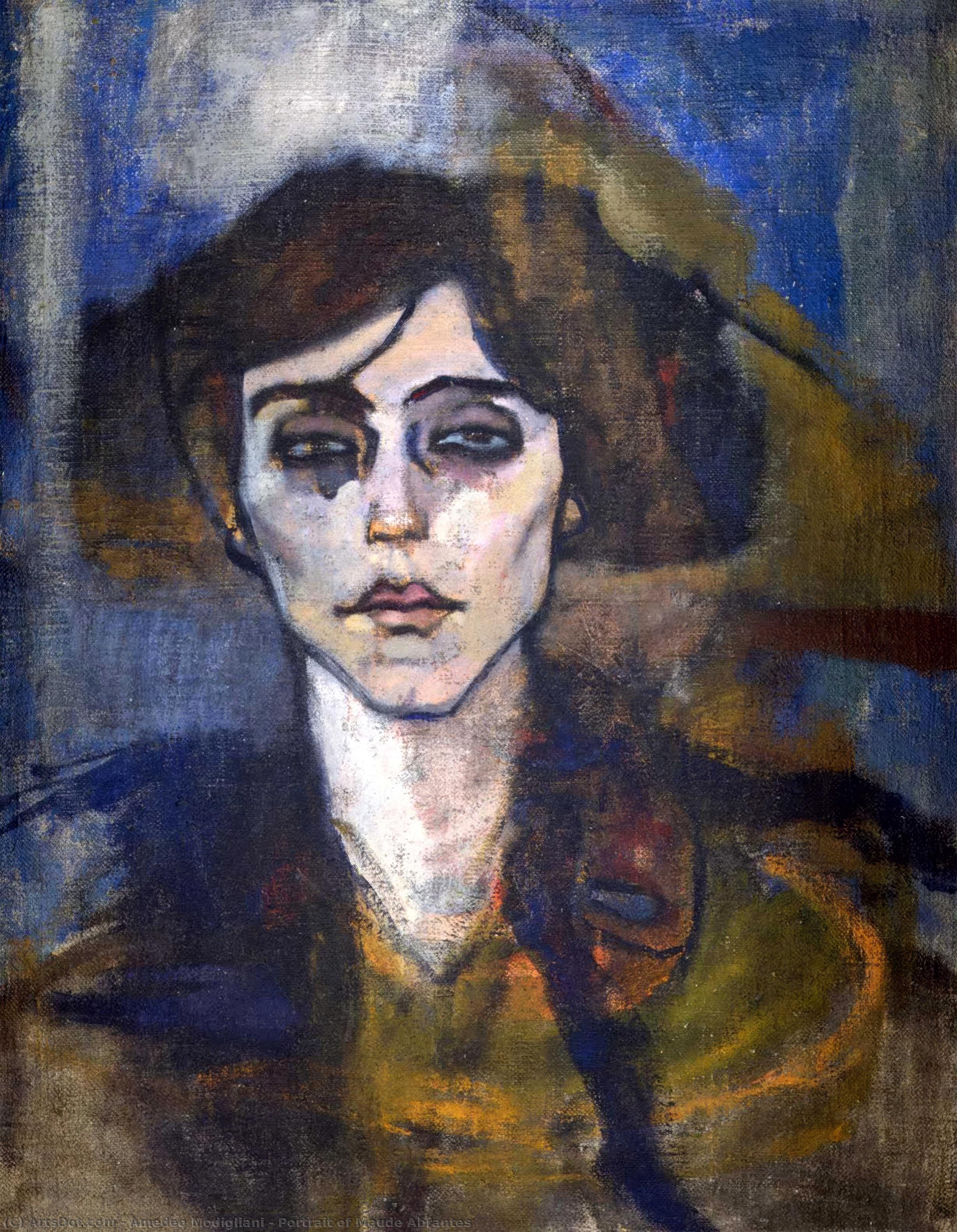
Captured in Modigliani’s signature elongated portrait style, ‘Portrait of Maude Abrantes’ portrays a woman with closed eyes and a poignant tear—a haunting depiction reflecting the artist's expressive vision from 1907. Explore this exquisite reproduction and bring timeless beauty into your home.
A Vision of Melancholy: The Soul of Maude Abrantes
In the quiet, haunting depths of Amedeo Clemente Modigliani’s 1907 masterpiece, "Portrait of Maude Abrantes," viewers are invited into a realm where emotion transcends the physical. This is not merely a portrait of a woman; it is an intimate encounter with a psychological landscape. The subject, captured with a profound sense of stillness, possesses an air of mystery that has captivated collectors and art enthusiasts for over a century. Modigliani, a master of the École de Paris, utilizes his signature approach to convey a narrative of vulnerability and quiet intensity. Through the delicate rendering of her features—most notably the subtle, heartbreaking trace of a single tear upon her cheek—the artist transforms a simple likeness into a timeless symbol of human longing.
The composition is a masterclass in the power of simplification. Eschewing the rigid anatomical precision of academic tradition, Modigliani embraces a stylized elegance that draws heavily from the influence of African sculpture and the structural explorations of Cézanne. The face of Maude Abrantes dominates the canvas, her features elongated in a way that feels both otherworldly and deeply human. This deliberate distortion serves to amplify the emotional resonance of the work, pulling the viewer’s gaze toward the closed eyes and the serene yet sorrowful expression. For those looking to bring a sense of sophisticated introspection into a curated space, this painting offers a focal point that is as much about feeling as it is about sight.
Technique and the Language of Color
The technical execution of this piece reveals Modigliani’s profound command over his medium. Utilizing oil on canvas, the artist achieves a rich, textural depth that allows for nuanced tonal gradations. The palette is a sophisticated arrangement of muted blues and warm, earthy yellows, creating a harmonious yet subtly unsettling contrast. This interplay of color does more than just define form; it establishes an atmosphere of twilight-like contemplation. The brushstrokes, while loose and expressive, are applied with a deliberate intention that prioritizes the essence of the subject over meticulous detail, a hallmark of the Expressionist movement.
For interior designers and art lovers alike, the aesthetic versatility of this work is remarkable. The painting’s balanced color temperature allows it to integrate seamlessly into various high-end decor styles, from modern minimalist galleries to classic, moody studies. A high-quality reproduction of this piece preserves the delicate interplay of light and shadow, ensuring that the subtle skin tones and the evocative background hues retain their original emotional weight. To possess such a work is to hold a fragment of early 20th-century bohemian history—a piece that does not merely decorate a wall but breathes life and narrative into an environment.