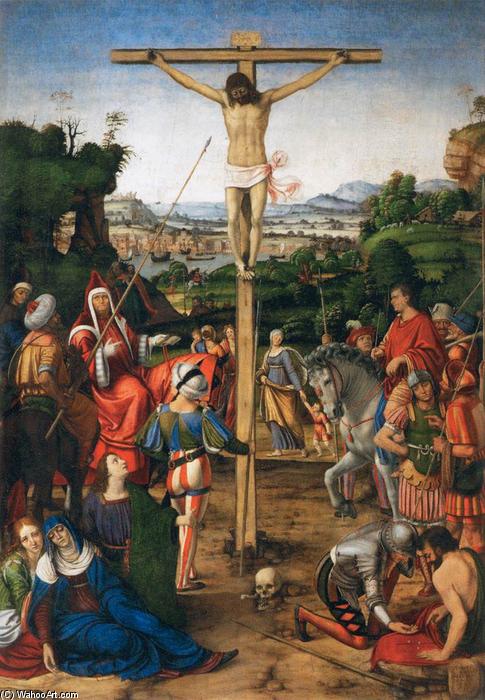
The Crucifixion by Andrea Solario: A Renaissance Echo of Suffering and Hope
Andrea Solario’s “The Crucifixion,” painted in 1503, is more than just a depiction of a pivotal religious event; it's a profound meditation on sacrifice, human emotion, and the enduring promise of redemption. Created during a period of artistic transition between the Late Gothic and Early Renaissance, this oil painting on panel stands as a testament to Solario’s skill in capturing both the stark reality of Christ’s suffering and the complex emotional landscape surrounding it.
The scene unfolds within a carefully constructed space—a hillside bathed in diffused light, subtly suggesting a Mediterranean setting. At its heart hangs the central figure of Jesus Christ, his body dramatically posed upon the cross. Solario masterfully employs *chiaroscuro*, the dramatic interplay of light and shadow, to sculpt the form of the crucified man, emphasizing the weight of his ordeal and drawing the viewer’s eye directly to his face—a mask of profound sorrow yet tinged with an almost serene acceptance. Surrounding him is a carefully orchestrated group of figures: mourners draped in dark robes, soldiers representing Roman authority, and onlookers grappling with disbelief and grief. Each figure is rendered with remarkable detail, conveying not just their physical appearance but also the depth of their emotional response to the event.
Composition and Symbolism – A Tapestry of Meaning
The composition itself is meticulously planned, reflecting a sophisticated understanding of Renaissance principles. The arrangement of figures creates a dynamic pyramid, drawing the eye upwards towards Christ’s central position. Notably, thirteen individuals populate the scene—a number often associated with faith and divinity in Christian iconography. A prominent horse, positioned near the bottom right corner, adds an element of earthly realism and perhaps symbolizes judgment or the fall of humanity. The deliberate inclusion of these symbolic elements elevates the painting beyond a simple narrative illustration, transforming it into a complex visual allegory.
The cross itself is not merely a structural element; it’s a potent symbol of sacrifice and redemption. Solario's depiction subtly echoes earlier depictions of the crucifixion in Byzantine art, while simultaneously incorporating elements of Italian Renaissance naturalism. The folds of Christ’s garments are rendered with exquisite attention to detail, conveying both their weight and their texture. The expressions on the faces of the onlookers—ranging from despair to quiet contemplation—are remarkably lifelike, inviting viewers to contemplate their own relationship to faith and suffering.
Historical Context – Bridging Italy and France
Andrea Solario’s life and career are somewhat shrouded in mystery, but he was undoubtedly a pivotal figure in the artistic landscape of his time. Born around 1460 in Milan, he spent much of his career moving between Italy and France, adapting his style to suit the prevailing trends in each region. His work reflects this constant evolution, blending Italian Renaissance ideals with influences from Venetian painting and the emerging Mannerist style. “The Crucifixion” exemplifies this transitional period, showcasing a balance between classical restraint and expressive emotionalism.
Solario’s journey is particularly significant because he served as a crucial link between the artistic traditions of Milan and France. His time in Venice exposed him to the innovations of artists like Antonello da Messina, while his later work in France demonstrates his ability to integrate these influences into a distinctly personal style. The painting's presence in the Louvre, a testament to its enduring quality, underscores its importance within the broader history of European art.
Emotional Impact – A Window into Human Experience
“The Crucifixion” is not simply a historical or artistic artifact; it’s a deeply moving work that continues to resonate with viewers centuries after its creation. Solario's masterful use of light, shadow, and color evokes a powerful sense of sorrow, empathy, and ultimately, hope. The painting doesn’t shy away from the brutality of Christ’s suffering, but it also suggests a profound spiritual truth—that even in the darkest moments, there is the possibility of redemption and renewal.
The emotional intensity of “The Crucifixion” makes it a compelling subject for reproduction. High-quality reproductions capture the painting's nuanced details and atmospheric quality, allowing art lovers to experience its beauty and power firsthand. Whether displayed in a private home or a public gallery, this iconic image serves as a poignant reminder of humanity’s shared struggles and aspirations.
For more information on Andrea Solario and his artistic legacy, please visit Wikipedia and explore resources like WikiArt and The Web Gallery of Art.