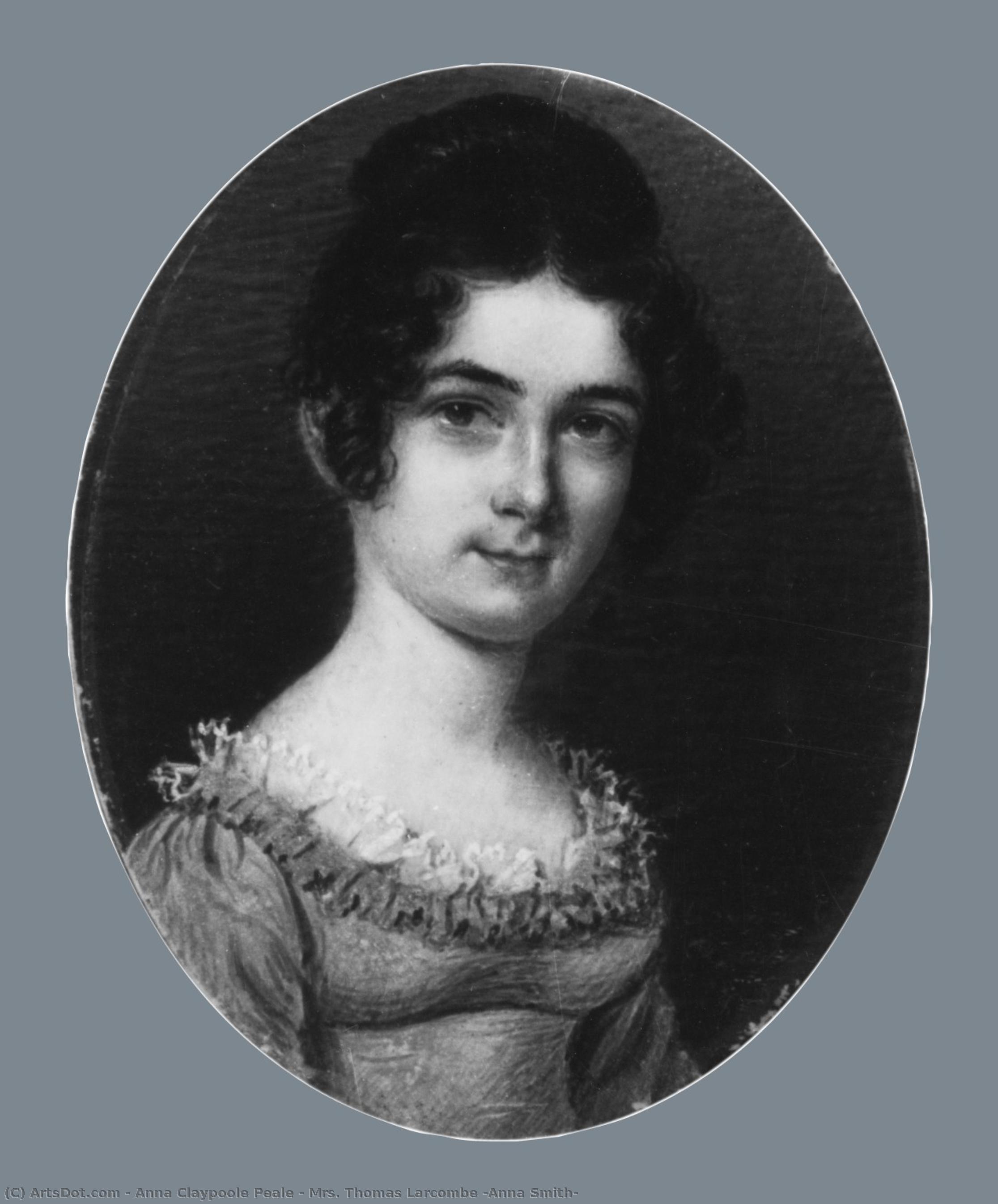
Mrs. Thomas Larcombe (Anna Smith): A Delicate Reflection of Victorian Femininity
“Mrs. Thomas Larcombe (Anna Smith)” by Anna Claypoole Peale stands as a testament to the burgeoning artistic landscape of early 19th-century America—specifically Philadelphia, where it was created in 1818. This miniature watercolor painting transcends mere likeness; it embodies the aesthetic ideals prevalent during Victorian England’s influence on American culture, capturing a moment frozen in time with remarkable sensitivity.
- Subject Matter: The portrait depicts Anna Smith Larcombe (née Claypoole), a woman of considerable social standing married to Baptist minister Thomas Larcombe. It's not simply a depiction of a person but an exploration of femininity and virtue, values highly prized within the Victorian era.
- Style & Influence: Peale’s work aligns seamlessly with the prevailing artistic traditions of Europe—particularly French Neoclassicism—which championed idealized forms and restrained emotion. The subtle elegance of the composition speaks to this broader stylistic movement.
- Technique: Executed on ivory, a prized medium for miniature painting at the time, Peale employed meticulous brushwork and layering of thin washes of gray pigment. Hatching and cross-hatching techniques skillfully delineate facial features and clothing details, creating depth and texture without resorting to vibrant color.
The grayscale palette—a deliberate choice reflecting the limitations of watercolor—serves as a powerful tool for conveying mood and atmosphere. Soft, diffused lighting illuminates Smith’s face evenly, fostering an impression of serenity and grace. The artist's masterful use of shading subtly sculpts the contours of her form, emphasizing her delicate beauty.
- Composition: Centered around Smith’s gaze—direct yet gentle—the composition prioritizes intimacy and conveys a sense of quiet dignity. Her slight turn to the left introduces a subtle dynamism that prevents the portrait from feeling static. The oval frame reinforces this visual focus, mirroring the formal conventions of Victorian portraiture.
- Symbolism: Notably, the lace collar—a ubiquitous accessory for women during this period—represents refinement and social status. It’s a visual shorthand for the expectations placed upon ladies of the upper class – modesty, grace, and adherence to societal norms.
More than just an image, “Mrs. Thomas Larcombe (Anna Smith)” is imbued with emotional resonance. The artist's careful attention to detail—the curls of Smith’s hair, the texture of the ivory surface—suggests a profound understanding of human psychology and artistic craftmanship. It remains a poignant reminder of a bygone era, capturing not only a woman’s appearance but also her inner character – a testament to Anna Claypoole Peale's enduring legacy as one of America’s pioneering female artists.