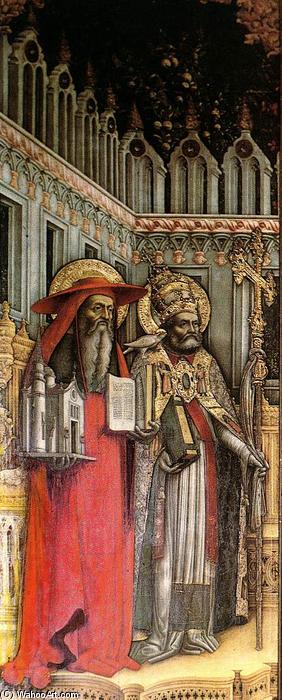
The
Triptych (Detail) by
Antonio Vivarini is a stunning example of Renaissance art, created in 1446. This tempera on panel artwork measures 339 x 138 cm and is currently housed at the
Gallerie dell'Accademia in Venice, Italy. The painting is a testament to Vivarini's skillful use of composition and color, showcasing his ability to balance International Gothic tradition with the rising Renaissance style.
Composition and Symbolism
The
Triptych (Detail) features a scene from the Renaissance period, with two figures standing side by side in the foreground. The figure on the left is dressed in red robes with a hood, holding a book or manuscript, while the figure on the right wears white garments with gold trim, also holding a book or manuscript. The background features an elaborate architectural setting, including arches, columns, and a balcony or loggia. The use of light and shadow creates a sense of depth and realism within the religious context of the scene.
Key Features: - The painting is executed in tempera style, characteristic of the Renaissance period
- The artwork measures 339 x 138 cm, making it a significant piece in the Gallerie dell'Accademia
- The composition showcases Vivarini's skillful use of color and balance between Gothic and Renaissance styles
For more information on
Antonio Vivarini and his works, visit https://ArtsDot.com. You can also explore the
Gallerie dell'Accademia collection, featuring other notable artists such as
Jacopo Bellini and
Giotto Di Bondone, at /art/list/?Filter=8Y32W7-Jacopo-Bellini-Triptych-of-the-Virgin.
The
Triptych (Detail) is a remarkable example of Vivarini's artistic genius, and its significance can be further understood by exploring the context of Renaissance art and the
Gallerie dell'Accademia collection. Wikipedia provides additional information on
Antonio Vivarini and his contributions to the art world.