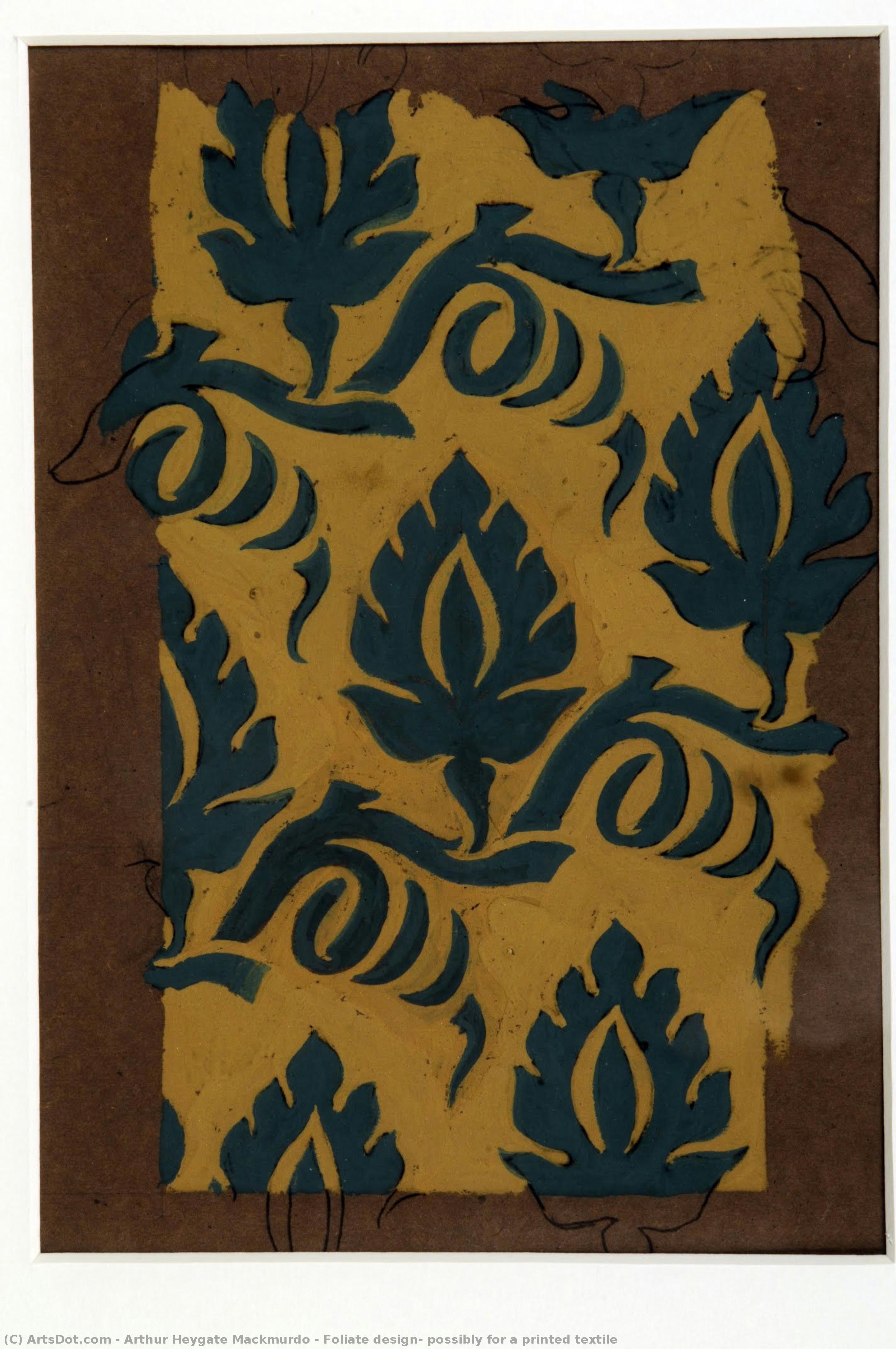
A Symphony of Blue and Gold: The Delicate Grace of Mackmurdo
In the delicate dance of Foliate design, possibly for a printed textile, we encounter a moment of pure, rhythmic beauty captured by the visionary hand of Arthur Heygate Mackmurdo. Created around 1880, this exquisite piece serves as a window into a transformative era where the rigid structures of Victorian ornamentation began to soften into the fluid, organic whispers of the burgeoning Art Nouveau movement. The composition is anchored by a luminous, sun-drenched yellow background that radiates warmth, providing a vibrant stage for the scattered blue leaves that drift across the surface like fallen petals on a summer pond. Each leaf, rendered with a meticulous yet effortless touch, possesses a weightless quality, inviting the viewer to contemplate the simple, profound elegance of nature’s geometry.
The technique employed in this design speaks to Mackmurdo’s mastery of pattern and his deep connection to the Arts and Crafts movement. There is a deliberate clarity in the way the blue pigments interact with the golden ground, suggesting a work intended for the tactile world of fine fabrics or luxurious wallpapers. The artist utilizes a rhythmic repetition that avoids the monotony of industrial production, instead favoring a naturalistic spontaneity. This balance between structured design and organic freedom creates a visual melody; the larger leaves act as melodic anchors, while the smaller, more delicate sprigs provide the trilling notes that complete the composition. For the discerning collector or interior designer, this piece offers a sophisticated way to introduce movement and light into a space, acting as a focal point of serene vitality.
Beyond its aesthetic charm, the work carries the historical weight of a pivotal transition in design history. As a pioneer who bridged the gap between Gothic Revival precision and the sinuous curves of modernism, Mackmurdo imbues this foliate pattern with a sense of quiet revolution. The symbolism of the leaf—a universal emblem of growth, renewal, and the cyclical nature of life—is presented here without heavy-handedness, allowing for an emotional impact that is both calming and uplifting. To possess a reproduction of such a piece is to bring a fragment of late 19th-century optimism into the contemporary home, offering a timeless connection to an era that sought to find the divine in the details of the natural world.