August Macke’s ‘Couple on the Forest Track’: A Moment of Contemplation in a Tumultuous Era
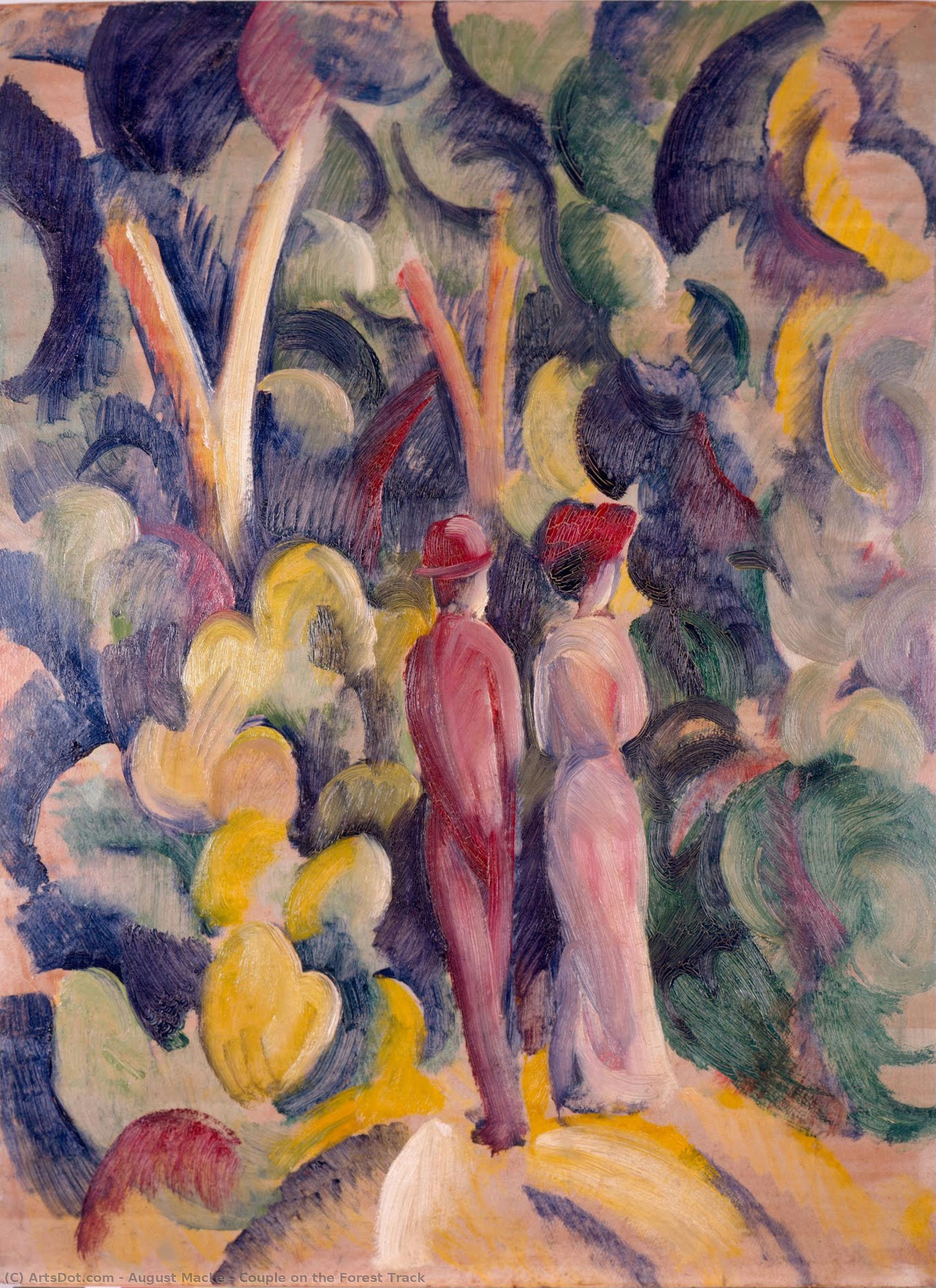
“Couple on the Forest Track,” painted in 1913 by August Macke, is more than just a depiction of two women amidst a woodland scene; it's a poignant encapsulation of the anxieties and aspirations simmering beneath the surface of early 20th-century Europe. Created during a period of immense social and political upheaval – a mere year before the outbreak of World War I – the painting speaks to a yearning for tranquility, observation, and perhaps even escape, rendered with Macke’s signature expressive brushwork and vibrant color palette. Measuring 61 x 81 cm, this intimate canvas invites viewers into a world where the natural beauty of the forest is intertwined with a subtle sense of unease.
A Symphony of Color and Broken Brushstrokes
Macke’s artistic journey was one defined by a restless pursuit of innovation. Initially influenced by Impressionism and Post-Impressionism, particularly the work of Gauguin and Van Gogh, he quickly developed his own distinctive style – a bold synthesis that would later be recognized as a key element in the burgeoning movement of German Expressionism. “Couple on the Forest Track” exemplifies this approach perfectly. The painting’s technique is characterized by broken color, applied with loose, gestural brushstrokes to build form and atmosphere. This deliberate fragmentation of pigment creates a shimmering effect, particularly noticeable in the dappled light filtering through the trees, contributing significantly to the work's textural richness. The artist skillfully employs pointillistic techniques, layering small dots of color to achieve depth and luminosity – a technique that adds to the painting’s dynamic energy.
Subject and Symbolism: Lost in the Woods
The central figures—two women in striking red hats—are placed towards the right side of the composition, drawing the viewer's eye into the depths of the forest. Their posture suggests a moment of quiet contemplation, perhaps an observation of something beyond the immediate view. The ambiguity surrounding their activity – are they simply enjoying the scenery, or are they engaged in a deeper, more significant encounter? – adds to the painting’s enigmatic quality. The dense, stylized trees themselves become symbolic representations of the unknown, mirroring the uncertainties and anxieties that permeated European society at the time. The forest, traditionally associated with mystery and introspection, becomes a space for both solace and potential danger.
Historical Context and Emotional Resonance
Painted in 1913, “Couple on the Forest Track” is inextricably linked to the historical context of its creation. Germany was experiencing rapid industrialization, social unrest, and a growing sense of nationalistic fervor – all factors that contributed to the volatile atmosphere leading up to World War I. Macke’s work reflects this tension, capturing a fleeting moment of serenity amidst a period of impending doom. The painting's emotional impact is profound; it evokes a feeling of quietude punctuated by an underlying current of unease, mirroring the anxieties felt by many Europeans on the cusp of war. Macke’s use of color and form isn’t merely aesthetic; it’s a deeply expressive response to the world around him.
Material and Technique Details
- Artist: August Macke
- Year: 1913
- Medium: Oil on Canvas
- Size: 61 x 81 cm
- Style: Post-Impressionism, Expressionism (proto)
- Technique: Broken Color, Pointillistic Elements, Loose Brushwork