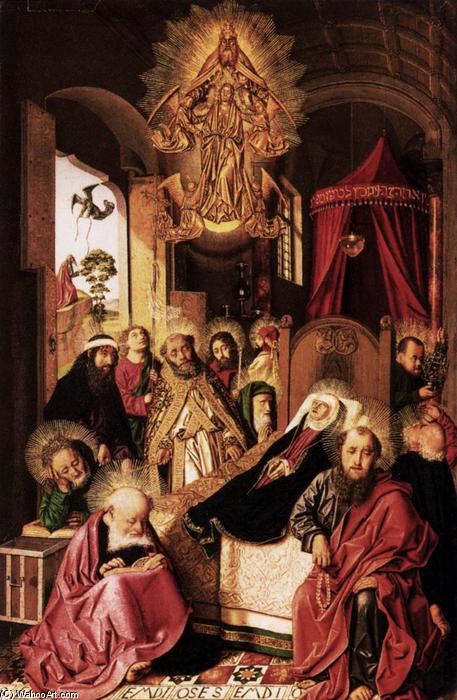
Bartolomé Bermejo’s ‘Death of the Virgin,’ executed around 1460, exemplifies the Hispano-Flemish style. Drawing inspiration from Hugo van der Goes, it features meticulous realism and symbolic elements—a poignant depiction of Mary's passing within a richly ornamented chapel setting.
Bartolomé Bermejo (c. 1440-1501) fue un pintor español pionero conocido por incorporar técnicas flamencas y una meticulosa atención al detalle en sus obras maestras, especialmente en los retablos como la Pietà de Llúis Desplà. Explora su legado artístico y cómo marcó el paso del arte gótico al renacimiento temprano.
Descubre la historia y el arte de Berlín en los Staatliche Museen: Nefertiti, artefactos antiguos, obras maestras y mucho más en Museum Island y otros museos.
Bartolomé Bermejo: Bridging Gothic Legacy with Flemish Innovation
Bartolomé Bermejo (c. 1440 – c.1500) stands as a pivotal figure in the transition between Gothic and Early Renaissance art, particularly within the Iberian Peninsula. His distinctive style—characterized by meticulous detail, dramatic lighting, and masterful realism—earned him recognition as one of the foremost painters of his era and cemented his legacy as a pioneer who successfully assimilated Flemish painting techniques into Spanish artistic traditions. While biographical details remain somewhat elusive due to sparse documentation, scholars agree that he flourished primarily in Valencia, Zaragoza, Barcelona, and Córdoba during the latter half of the fifteenth century. He represents an extraordinary convergence of influences, marking a crucial step away from the solemn grandeur of Gothic formalism towards the luminous vibrancy of Northern European aesthetics.
A Flemish Echo in Spanish Renaissance
Bermejo’s artistic journey began with formative years spent studying under Juan de Juanes and Pedro Berruguete, absorbing the stylistic precepts of the Valencian School—a bastion of Gothic sensibilities. However, his travels to Bruges and Antwerp profoundly impacted his oeuvre, exposing him to the revolutionary innovations championed by Flemish masters like Hugo van der Goes and Rogier van der Weyden. This encounter resulted in a transformative embrace of Flemish painting techniques, notably chiaroscuro – the dramatic interplay of light and shadow – which dramatically enhanced the expressive power of his compositions. Unlike many contemporaries who clung stubbornly to Gothic conventions, Bermejo skillfully blended these traditions with Flemish realism, creating a unique visual language that distinguishes him from other artists of his time.
The Death of the Virgin: A Masterpiece of Detail and Emotion
Considered one of Bermejo’s most celebrated works, “Death of the Virgin” exemplifies this masterful synthesis. Painted circa 1460-1468 in Valencia, it depicts Mary reclining on her bed, attended by Jesus Christ cradled in her lap, surrounded by mourners. The scene is bathed in an ethereal glow emanating from a window, skillfully utilizing chiaroscuro to sculpt the figures and heighten their emotional impact. Every element—from the drapery folds meticulously rendered to the subtle expressions of grief—is imbued with palpable realism, reflecting Bermejo’s unwavering commitment to capturing human emotion with unparalleled accuracy. The inclusion of two birds – one perched on Mary's shoulder and another hovering near the window – adds a layer of symbolic significance, representing purity and divine grace respectively.
Symbolism and Emotional Resonance
Beyond its technical brilliance, “Death of the Virgin” resonates deeply with viewers due to its profound exploration of themes related to mortality, faith, and compassion. The composition itself is deliberately restrained, emphasizing Mary’s vulnerability and highlighting the solemnity of the occasion. The artist's masterful manipulation of light contributes significantly to conveying a sense of sorrowful contemplation, inviting reflection on the sacred narrative. Bermejo’s work stands as a testament to the enduring power of art to communicate complex emotions and spiritual truths—a legacy that continues to inspire admiration and scholarly study centuries later.
A Legacy Enduring Through Reproduction
Today, reproductions of “Death of the Virgin” grace homes and galleries worldwide, ensuring that Bermejo’s artistic vision remains accessible to a broader audience. Its captivating imagery and masterful execution serve as an enduring reminder of the transformative potential inherent in blending disparate artistic traditions—a lesson applicable not only to art history but also to creative endeavors across disciplines.