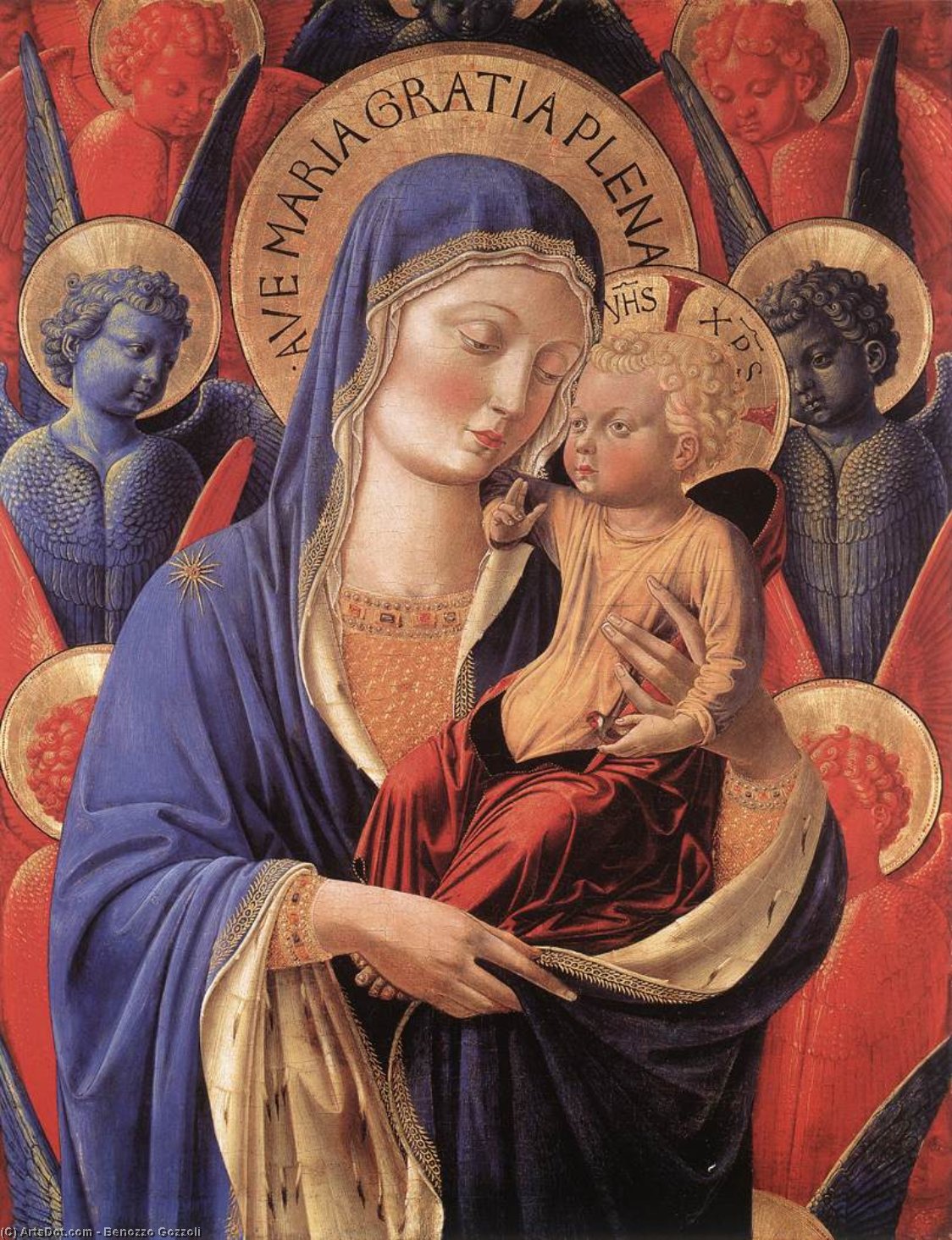
Benozzo Gozzoli’s opulent ‘Madonna and Child’ fresco bursts with Renaissance color and intricate detail, showcasing a masterful blend of International Gothic style and religious devotion. Admire this stunning 1460 artwork – a timeless celebration of faith perfect for your collection.
Descubre Benozzo Gozzoli (1420-1497), pintor florentino del Renacimiento, famoso por sus frescos vibrantes y detalladas procesiones que fusionan el gótico internacional con la elegancia renacentista.
Descubre el arte de Detroit en el DIA: murales impresionistas, obras maestras europeas y una colección estadounidense excepcional. Historia, cultura y belleza para todos.
A Celebration of Faith and Regal Splendor: Benozzo Gozzoli’s Madonna and Child
The fresco “Madonna and Child,” executed by Benozzo Gozzoli in 1460, stands as a testament to the vibrant artistic spirit of Florence during the High Renaissance. More than just a depiction of Mary cradling her son Jesus, it embodies a profound expression of piety and heralds the grandeur of papal patronage—a visual narrative that continues to captivate audiences centuries later.
The Style: International Gothic Revisited
Gozzoli’s Madonna and Child firmly anchors itself within the traditions of international gothic, albeit infused with the burgeoning optimism characteristic of the Renaissance. Unlike the somber hues and stylized figures prevalent in earlier gothic art, Gozzoli employs a palette bursting with color—deep reds, blues, golds, and greens—creating an opulent visual experience that transcends mere representation. The influence of Fra Angelico’s meticulous attention to detail is palpable; Gozzoli meticulously renders drapery folds and facial expressions with remarkable precision, mirroring Angelico's dedication to conveying spiritual emotion through artistic skill. This stylistic blend speaks volumes about the period’s desire for beauty alongside religious devotion.
Technique: Fresco Painting – A Durable Legacy
The fresco technique itself—applying pigment onto wet plaster—was chosen deliberately by Gozzoli. This method guarantees exceptional durability, ensuring that the Madonna and Child will endure for generations to come. The artist skillfully utilizes layering pigments to achieve luminous effects, capitalizing on the inherent properties of the plaster surface to maximize color vibrancy and depth. Careful observation reveals subtle gradations in tone and texture, demonstrating Gozzoli’s mastery of chiaroscuro—the dramatic interplay between light and shadow—a technique that enhances the emotional impact of the scene and draws viewers into its serene atmosphere.
Historical Context: Papal Patronage and Festive Celebration
Painted for the Maggi Chapel within the Palazzo Medici-Riccardi, the fresco reflects the ambitious cultural agenda pursued by Lorenzo de’ Medici and his family during their reign. The chapel was intended as a symbol of Florentine prestige and papal authority—a deliberate statement of civic pride underscored by the lavish ornamentation. Gozzoli's depiction of a procession celebrating Mary’s nativity aligns perfectly with the prevailing artistic trends of the time, mirroring similar celebrations undertaken by other European courts. It represents not merely religious piety but also an assertion of political influence and cultural sophistication.
Symbolism: Angels, Light, and Divine Grace
The fresco is replete with symbolic imagery designed to elevate its spiritual significance. The multitude of angels surrounding Mary and Jesus underscores the divine protection afforded to the Virgin Mother and her son—a cornerstone of Christian theology. Their radiant halos illuminate the scene, symbolizing God’s grace and illuminating the sacred narrative. Furthermore, the central cup symbolizes the Eucharist, representing Christ's sacrifice and offering salvation to humanity. Gozzoli’s meticulous attention to detail ensures that every element contributes to a cohesive visual representation of faith and divine majesty.
Emotional Impact: Tranquility and Reverence
Ultimately, “Madonna and Child” evokes a profound sense of tranquility and reverence. The serene expressions on Mary's face convey compassion and maternal tenderness—a timeless portrayal of motherhood celebrated across cultures. The harmonious composition invites contemplation and fosters an appreciation for the beauty inherent in religious art. It remains a powerful reminder of humanity’s yearning for spiritual solace and artistic excellence, securing its place as one of Florence’s most treasured masterpieces.