Benozzo Gozzoli (1420-1497) was a Florentine Renaissance painter celebrated for his monumental frescoes—particularly the Magi Chapel cycle—that blended Gothic grandeur with emerging Renaissance sensibilities. Trained by Fra Angelico, he collaborated on iconic projects like the Baptistery Doors of Florence.
Descubre Benozzo Gozzoli (1420-1497), pintor florentino del Renacimiento, famoso por sus frescos vibrantes y detalladas procesiones que fusionan el gótico internacional con la elegancia renacentista.
¡Descubre Santa María en Aracoeli en Roma! Explora la arquitectura gótica, los frescos de Pinturicchio, el Santo Bambino y los reliquias históricas. Sube a las icónicas 124 escaleras y experimenta una rica mezcla de arte, historia y espiritualidad.
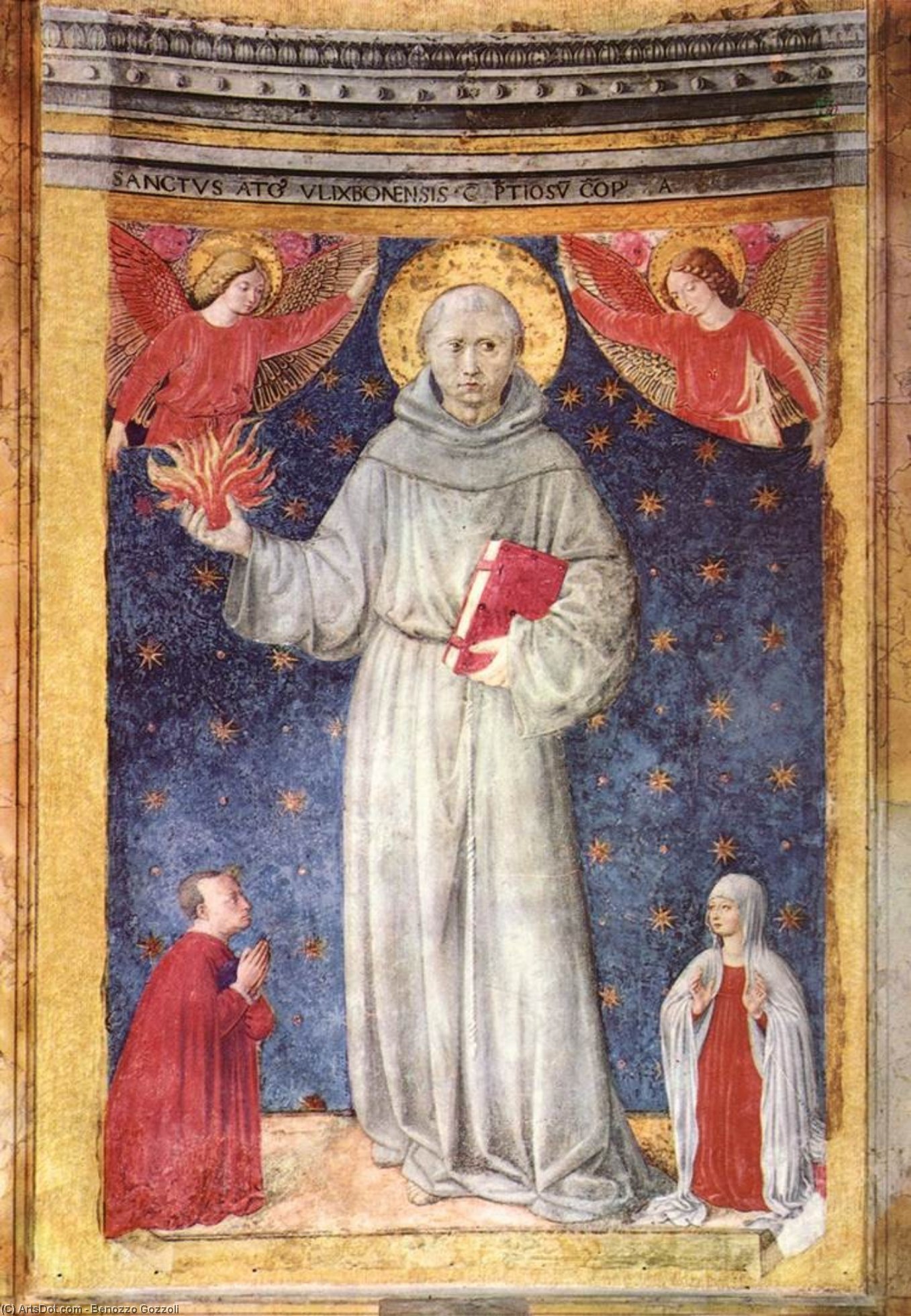
Benozzo Gozzoli’s St Anthony of Padua: A Symphony of Color and Faith
Benozzo Gozzoli’s “St Anthony of Padua,” painted circa 1450, stands as a testament to the burgeoning Renaissance spirit in Florence – a period marked by humanist ideals intertwined with profound religious devotion. More than just a portrait of Saint Anthony, it embodies the artistic ambition and stylistic innovation that defined the era, securing its place within the canon of Italian Gothic art.
The Fresco’s Narrative Power: Gozzoli meticulously crafted this monumental fresco for the Minorite Church in Eger, Hungary. The scene depicts Saint Anthony surrounded by angels and kneeling supplicants, conveying a powerful message about prayer, humility, and divine grace. Unlike many contemporary depictions of saints, Gozzoli eschewed rigid formality, opting instead for a dynamic composition that captures movement and emotion—a hallmark of the International Gothic style.
Stylistic Influences & Technique: The fresco’s distinctive aesthetic derives heavily from Fra Angelico's earlier works, demonstrating Gozzoli’s apprenticeship under one of Florence’s foremost artists. Gozzoli skillfully employed tempera paint on plaster, achieving remarkable luminosity and detail. Observe the meticulous rendering of drapery folds, conveying texture and volume with astonishing precision. The artist’s masterful use of color—particularly vibrant reds and blues—creates a rich tapestry that draws the viewer's eye into the spiritual heart of the composition.
Symbolism & Composition: Beyond its visual splendor, “St Anthony” is laden with symbolic significance. Saint Anthony’s flaming heart represents divine love and compassion – a central theme in Christian iconography. The angels flanking him hold books symbolizing knowledge and scripture, reinforcing the saint's role as a teacher and guide. The kneeling figures below express fervent devotion, emphasizing the importance of prayer and contemplation.
A Legacy of Beauty: Gozzoli’s “St Anthony” continues to inspire admiration for its artistic excellence and spiritual depth. Its enduring appeal lies in its ability to communicate profound religious ideas through masterful technique and evocative imagery—a timeless masterpiece that exemplifies the best achievements of Florentine Gothic art.