A Divine Encounter in Florentine Gold
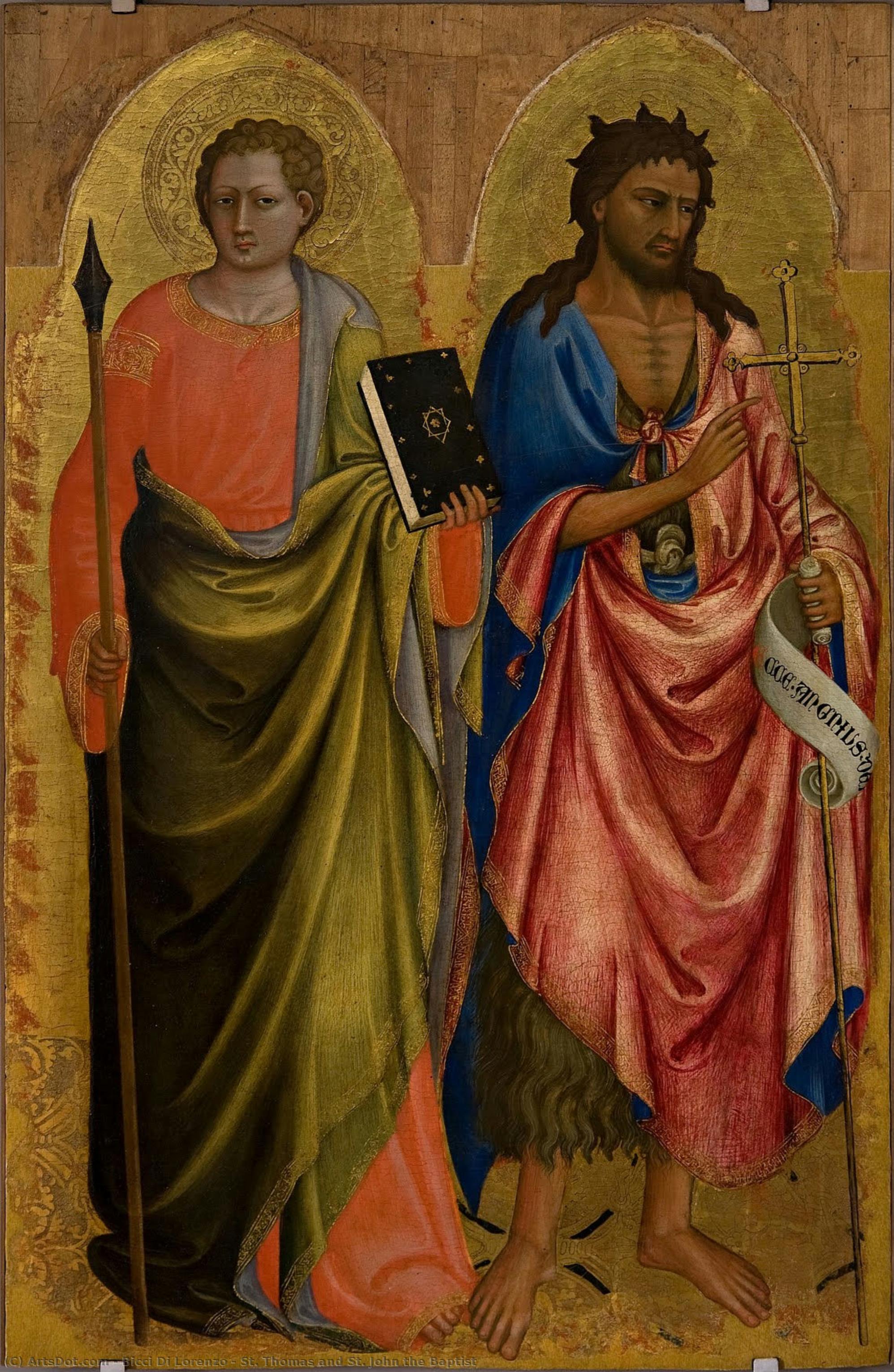
In the quiet, hallowed atmosphere of the early fifteenth century, the brush of Bicci di Lorenzo captured a moment of profound spiritual stillness. His masterpiece, St. Thomas and St. John the Baptist, serves as a breathtaking window into the devotional heart of Florence. The painting presents a sacred dialogue between two pillars of Christian tradition, rendered with the meticulous grace characteristic of the Florentine School. As one gazes upon the composition, the eye is immediately drawn to the interplay between the figures; one saint holds a book, symbolizing the weight of scripture and divine wisdom, while the other clutches a cross, a poignant emblem of sacrifice and faith. This silent communion between the saints transcends the canvas, inviting the viewer into a space of deep contemplation and reverence.
The technique employed by Bicci di Lorenzo reflects the transition from the late Gothic elegance to the burgeoning clarity of the Early Renaissance. There is a rhythmic fluidity in the drapery and a deliberate use of color that breathes life into the holy figures. The artist masterfully integrates smaller, peripheral figures and subtle details—such as the sharp presence of a knife near the center—to create a layered narrative that suggests a larger, unfolding historical or biblical event. This complexity ensures that the painting is not merely a portrait of two men, but a rich tapestry of theological significance, where every shadow and highlight serves to reinforce the sanctity of the scene.
Symbolism and the Soul of the Renaissance
Beyond its visual splendor, the artwork is a profound study in religious symbolism. The presence of the book and the cross acts as a visual shorthand for the dual nature of the Christian experience: the intellectual pursuit of divine truth through study and the emotional journey of faith through suffering. The composition, though seemingly static, vibrates with an underlying tension, as if the very air around the saints is charged with the presence of the Holy Spirit. For the discerning collector or interior designer, this piece offers more than just aesthetic beauty; it provides a focal point of historical gravity and spiritual depth that can anchor a room with a sense of timelessness.
Integrating such a high-quality reproduction into a contemporary space allows for a sophisticated dialogue between the past and the present. Whether placed in a sunlit gallery or a moody, classical study, the painting’s warm tones and intricate details command attention. It serves as an evocative piece of decor that inspires conversation, reminding all who encounter it of the enduring power of art to bridge the gap between the earthly and the divine. To possess such a work is to hold a fragment of Florentine history, a testament to the era when beauty and devotion were inextricably linked.