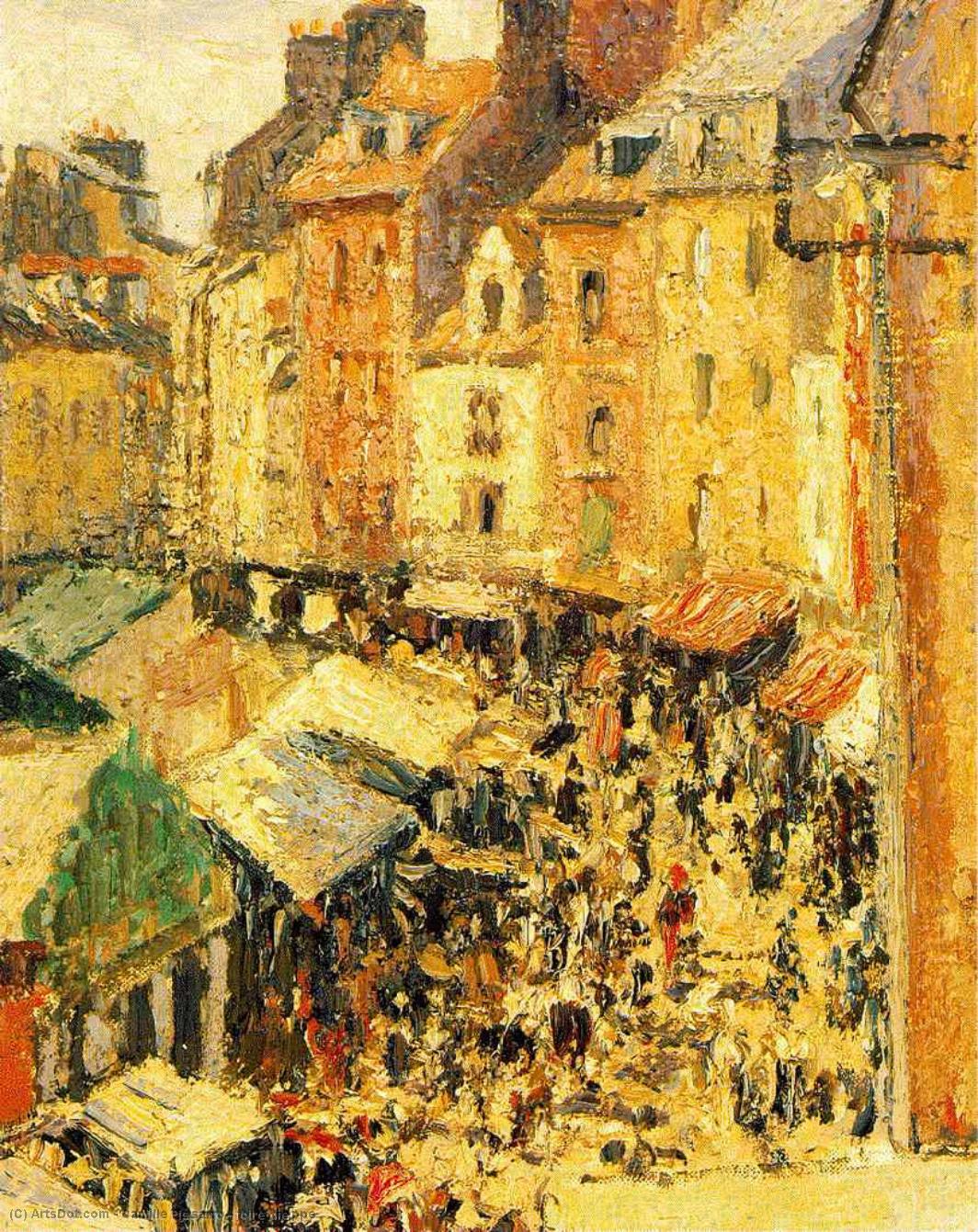
A Snapshot of Urban Life: Camille Pissarro's *foire dieppe*
Camille Pissarro’s *foire dieppe*, painted in 1901, offers more than just a depiction of a bustling market scene; it’s a vibrant distillation of Impressionism’s core tenets – capturing fleeting moments and the effects of light on everyday life. This artwork, brimming with energy and movement, transports us to the heart of Dieppe, a port town renowned for its annual fair, a spectacle that drew crowds from across France. The painting's subject matter—a lively street scene teeming with people—was a favored theme for Pissarro throughout his career, reflecting his deep connection to the landscapes and communities he observed.
Impressionistic Technique and Color
- Brushwork: Pissarro’s distinctive brushstrokes are immediately apparent. They aren't blended smoothly but rather applied in short, broken touches of color, creating a shimmering effect that mimics the way light dances on surfaces. This technique, central to Impressionism, aims to capture the immediate visual sensation rather than a precise representation.
- Color Palette: The artist employs a bright and optimistic palette dominated by blues, greens, and yellows – colors evocative of a sunny afternoon and the vibrancy of the fair. Subtle variations in tone and hue contribute to the painting’s overall luminosity and sense of depth. Notice how he uses complementary colors—such as blue and orange—to heighten visual interest and create a dynamic composition.
- Open Composition: The scene is rendered with an open composition, allowing the eye to wander across the canvas, absorbing the details of the crowd and the surrounding architecture. This approach reflects Pissarro’s belief in capturing the essence of a place rather than meticulously recreating it.
Historical Context: The Rise of Impressionism
*foire dieppe* was created during a pivotal moment in art history – the height of the Impressionist movement. Pissarro, along with Claude Monet and Edgar Degas, were at the forefront of this revolutionary artistic shift, challenging the academic conventions of the time. The Impressionists rejected the traditional emphasis on historical or mythological subjects, opting instead to paint scenes from modern life—urban landscapes, portraits, and genre paintings. This decision was fueled by advancements in photography, which demonstrated that a realistic depiction of reality didn't necessarily require painstaking detail. Pissarro’s work exemplifies this shift, prioritizing observation and the subjective experience of seeing over idealized representation.
Symbolism and Emotional Impact
Beyond its technical brilliance, *foire dieppe* resonates with a sense of joyful chaos. The multitude of figures—pedestrians, vendors, children—creates a feeling of communal energy and celebration. The umbrellas scattered throughout the scene suggest either a recent rain shower or an attempt to shield oneself from the sun, adding another layer of narrative complexity. The painting’s overall mood is one of optimism and vitality, reflecting Pissarro's appreciation for the simple pleasures of everyday life. It invites us to share in this moment of urban conviviality, capturing not just a scene but also an atmosphere.