The Street of Hermitage, Pontoise – A Window Into Impressionist Rural Life
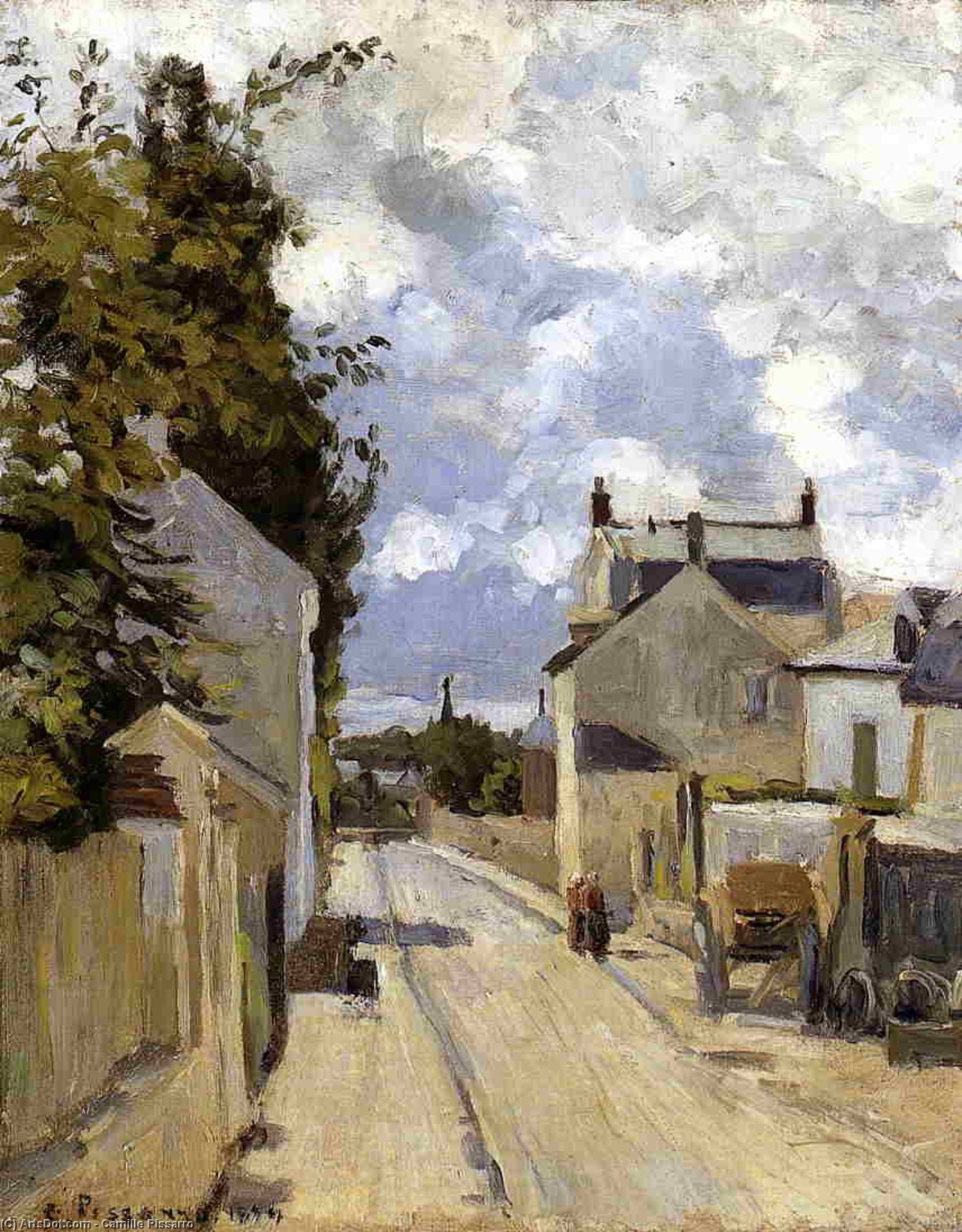
“The Street of Hermitage, Pontoise” stands as a quintessential embodiment of Impressionism, capturing not merely a visual depiction but an atmosphere—a fleeting moment imbued with light and color that transports the viewer back to 1874 France. Painted by Camille Pissarro, this oil on canvas masterpiece resides within the Musée des Beaux-Arts André Malraux in Le Havre, offering visitors a tangible connection to one of the movement’s most celebrated artists.
Composition and Observation
Pissarro's genius lies in his ability to distill complex scenes into simplified forms. The painting centers around a man riding a bicycle down a cobblestone street lined with buildings—a commonplace activity rendered extraordinary by Pissarro’s meticulous attention to detail. Two figures accompany him, adding dynamism and suggesting the bustle of daily life. Notably, a horse-drawn carriage is visible in the background, anchoring the scene within its rural context. The artist eschews dramatic poses or grand narratives; instead, he prioritizes capturing the subtle nuances of light filtering through the overcast sky, illuminating the facades of buildings and casting shadows across the pavement.
Impressionist Style: Capturing Ephemeral Beauty
The Impressionist style—characterized by its deliberate rejection of academic conventions—was born from a desire to represent how artists perceive the world. Like Monet’s landscapes, “The Street of Hermitage” abandons precise realism in favor of capturing the sensory experience of observing a scene. Pissarro employs loose brushstrokes and vibrant hues – predominantly muted greens and blues – to convey the diffused light and atmospheric haze typical of rural mornings. This technique prioritizes conveying emotion and feeling over meticulous representation, aligning perfectly with the movement’s core philosophy.
Symbolism and Context
Beyond its aesthetic qualities, “The Street of Hermitage” speaks to broader themes of modernity and social change. The bicycle represents progress—a symbol of burgeoning industrialization—contrasting subtly with the traditional buildings lining the street. Pissarro’s depiction of everyday life reflects a shift away from idealized depictions of aristocratic grandeur toward an appreciation for the beauty found in ordinary scenes. It's a testament to his belief that art should engage with the realities of human experience.
A Legacy Enduring Through Reproduction
Reproductions of “The Street of Hermitage” are available at ArtsDot.com, allowing collectors and enthusiasts alike to experience the captivating beauty of this iconic Impressionist artwork. To delve deeper into Camille Pissarro’s artistic journey and his profound influence on subsequent generations of painters, explore Wikipedia.
For more information about the Musée des Beaux-Arts André Malraux and its impressive Impressionist collection, visit this link.