A Symphony of Light and Leaf: The Impressionistic Vision of Carl Eduard Schuch
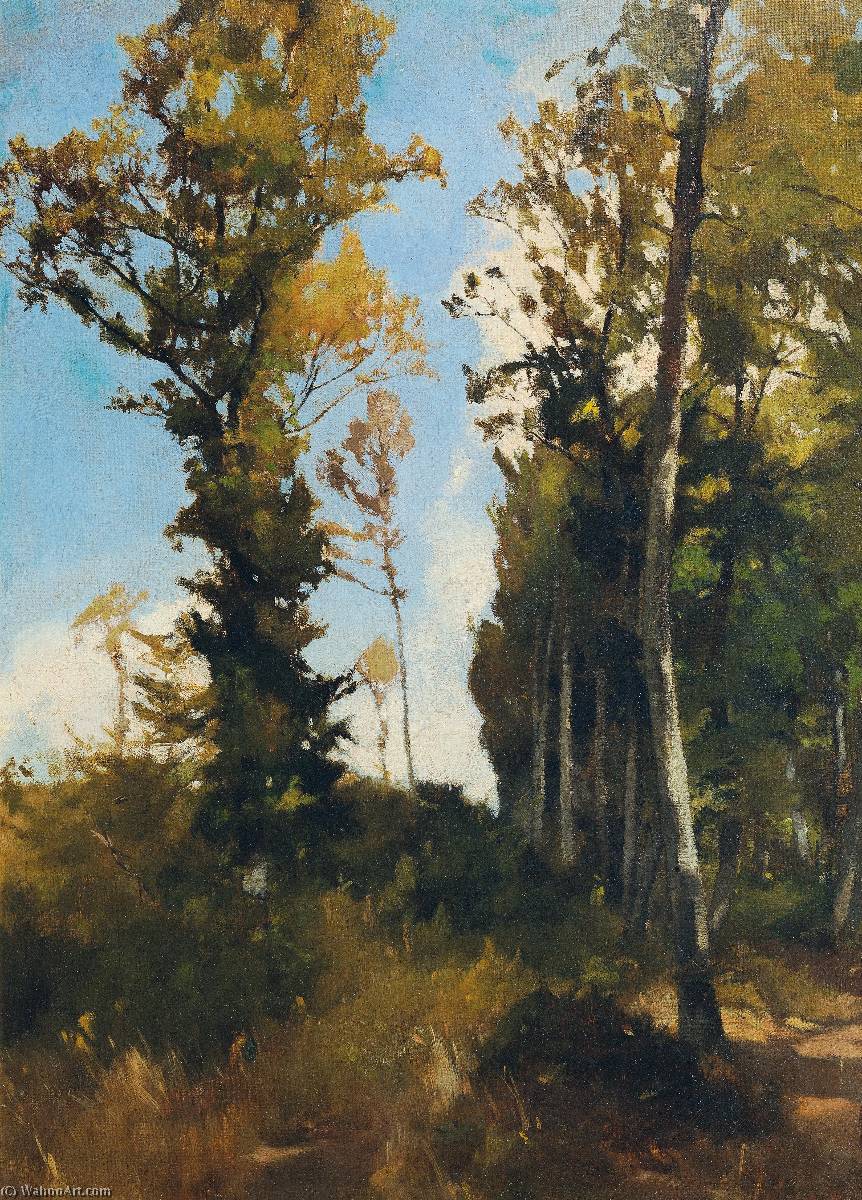
In the quietude of 1872, Carl Eduard Schuch captured a moment of profound natural serenity in his untitled landscape, a work that serves as a breathtaking window into a verdant, breathing forest. This oil on canvas is not merely a depiction of trees and foliage; it is an evocative exploration of atmosphere and the ephemeral dance of light. Through an impressionistic lens, Schuch moves away from the rigid constraints of academic precision to embrace the loose, spontaneous brushstrokes that define the movement. The composition draws the viewer’s eye upward through a rhythmic arrangement of vertical trunks, creating a sense of soaring height and immersive depth. As one gazes into this woodland scene, the slightly elevated perspective offers an intimate invitation to wander through the undergrowth, feeling the soft, diffused light of an overcast morning or the golden hush of late afternoon.
The technical mastery of Schuch is evident in his sophisticated use of color and texture. Eschewing sharp outlines, the artist employs organic shapes and expressive lines to define the boundaries of leaves and branches, allowing the elements to bleed into one another with a painterly grace. The palette is a warm, harmonious blend of earthy tones—deep ochres, mossy greens, and rich umbers—interrupted by delicate touches of sky blue and sun-drenched yellow. This careful application of oil paint creates a tactile surface where visible brushwork conveys a sense of movement and vitality. Through the use of atmospheric perspective, Schuch masterfully renders distance; the far reaches of the forest appear paler and more ethereal, pulling the viewer deeper into the heart of the landscape and creating a palpable sense of three-dimensional space.
A Bridge Between Realism and Modernism
To understand this masterpiece, one must consider Schuch’s unique position in the late nineteenth-century art world. As an Austrian painter whose journey took him through the cultural epicenters of Germany, Italy, and France, Schuch stood at a pivotal crossroads between the grounded traditions of realism and the burgeoning innovations of modernism. While his early training under Ludwig Halauska provided him with a robust foundation in composition, his mature style reflects the profound influence of masters like Monet and Rembrandt. In this particular work, we see the spirit of Impressionism in the focus on light, yet there remains a structural integrity and a tonal depth reminiscent of the Old Masters. This duality makes the piece particularly compelling for collectors who appreciate art that honors classical technique while embracing modern emotional expression.
Beyond its technical brilliance, the painting possesses an enduring emotional resonance. There is no overt symbolism or complex narrative to decode; instead, the work speaks directly to the soul through its pure naturalism. It evokes a profound sense of tranquility, peace, and a primal connection to the earth. For the discerning interior designer or art enthusiast, this piece offers more than just decoration; it provides an atmospheric anchor for a room. Whether placed in a sunlit gallery or a quiet study, the painting’s ability to evoke the stillness of the forest makes it a timeless addition to any collection. It is a celebration of the quiet dignity found in nature, captured forever in a moment of luminous transition.