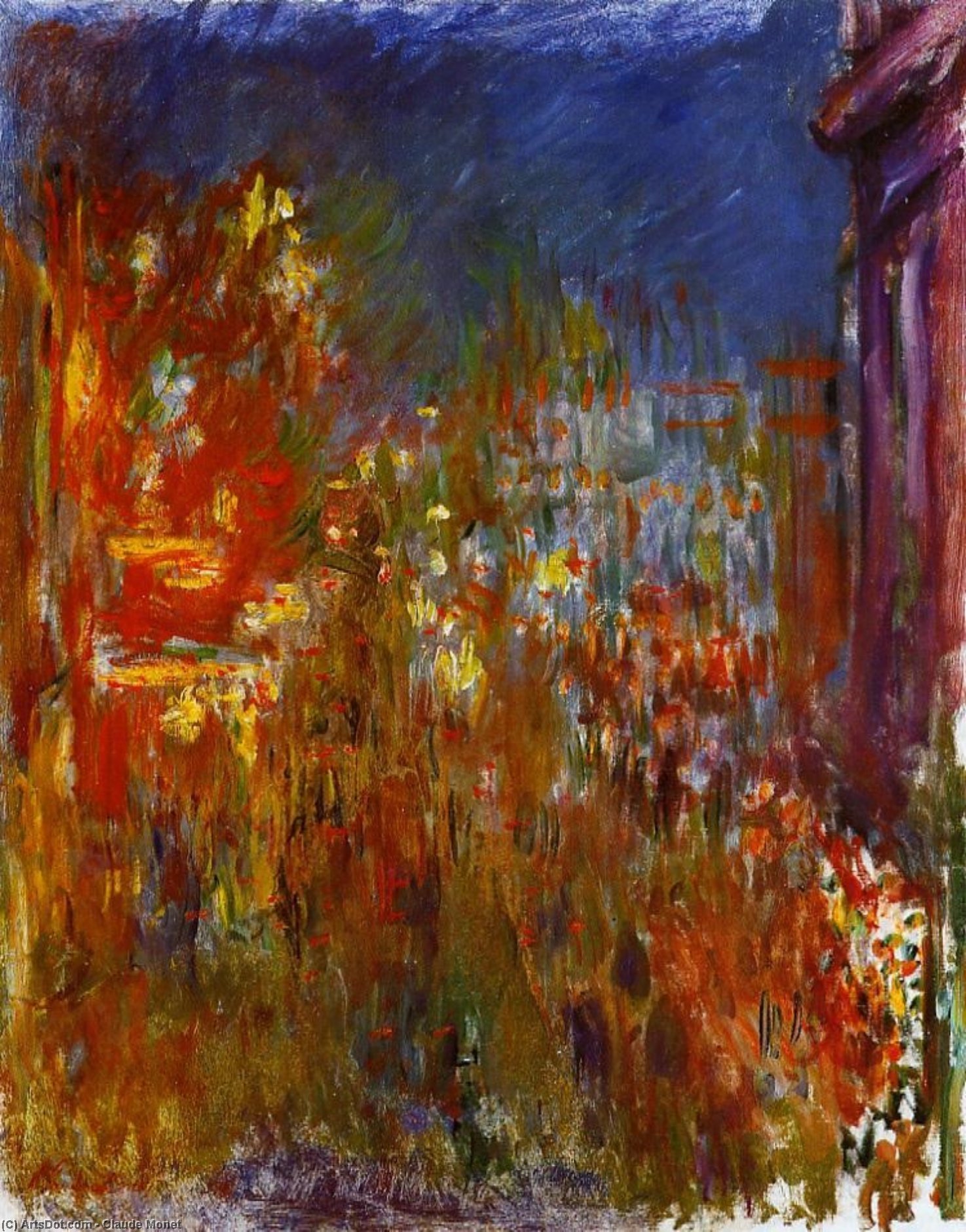
Claude Monet's 'Leicester Square at Night' captures the vibrant Impressionist scene of London after dark. Explore light, color, and urban life in this iconic masterpiece.
¡Explora a Claude Monet (1840-1926), el fundador del Impresionismo! Descubre nenúfares icónicos, paja y paisajes que capturan la luz y la esencia de la naturaleza. Una figura fundamental en el arte moderno.
A Nocturnal Symphony: Claude Monet’s Leicester Square at Night
Leicester Square at Night, painted in 1901 by Claude Monet, stands as a cornerstone of Impressionist art—a testament to Monet's unwavering dedication to capturing the ephemeral beauty of urban life. More than just a depiction of London’s famed theatre district, this canvas embodies the very spirit of Impressionism: an obsession with light and color, rendered in loose brushstrokes that prioritize feeling over precise representation. The painting resides within the Musée de l'Orangerie in Paris, offering visitors a chance to immerse themselves in Monet’s masterful vision of a city illuminated by artificial glow.
The Essence of Impressionism: Technique and Style
Monet’s revolutionary approach to painting—*plein air*, or working outdoors—was central to his artistic philosophy. He eschewed the academic conventions of his time, favoring instead short, broken brushstrokes applied in rapid succession. This technique isn't merely a stylistic choice; it’s an intellectual one designed to convey the fleeting effects of light on surfaces. Observe how Monet skillfully blends shades of blue and violet to represent the darkness of the night sky, punctuated by bursts of yellow and orange emanating from streetlamps—a deliberate contrast intended to stimulate the viewer’s eye and evoke a sense of movement. The textured surface of the canvas itself mirrors this dynamism, capturing the subtle vibrations of the urban environment.
A Snapshot of Victorian London
Leicester Square at Night isn't simply an artistic exercise; it’s also a historical document. Painted during the reign of Queen Victoria, the square was already a vibrant hub of activity—a theater district brimming with performers and audiences alike. Monet meticulously rendered this scene, incorporating details like parked automobiles (a relatively new innovation at the time) and illuminated buildings to convey an authentic sense of place. The inclusion of a clock tower adds another layer of significance, symbolizing both time’s passage and the grandeur of Victorian London—a city striving for progress while clinging to tradition. As evidenced by Wikipedia's article on Odeon Luxe Leicester Square, this cinema building is a landmark in itself, reflecting the cultural landscape of its era.
Symbolism Beyond Light: Emotion and Atmosphere
Beyond its technical brilliance and historical context, Leicester Square at Night possesses a profound emotional resonance. Monet’s masterful use of color—particularly his luminous yellows and oranges—creates an atmosphere of warmth and excitement, mirroring the energy of the bustling square below. The hazy brushstrokes contribute to this sense of mystery and enchantment, inviting viewers to contemplate the beauty of darkness illuminated by artificial light. Like many Impressionist paintings, it prioritizes capturing a mood rather than presenting a literal depiction of reality. It’s a painting that speaks to our innate fascination with urban spaces and the transformative power of light—a timeless masterpiece that continues to captivate audiences today.
A Legacy Enduring Through Reproduction
ArtsDot offers exceptional reproductions of Claude Monet's Leicester Square at Night, allowing art enthusiasts worldwide to experience this iconic artwork firsthand. Each print is meticulously crafted using archival inks on premium canvas, ensuring vibrant colors and lasting quality—a faithful reflection of Monet’s original vision. Explore the beauty of Impressionism in your home or office, bringing a touch of Parisian elegance into any space.