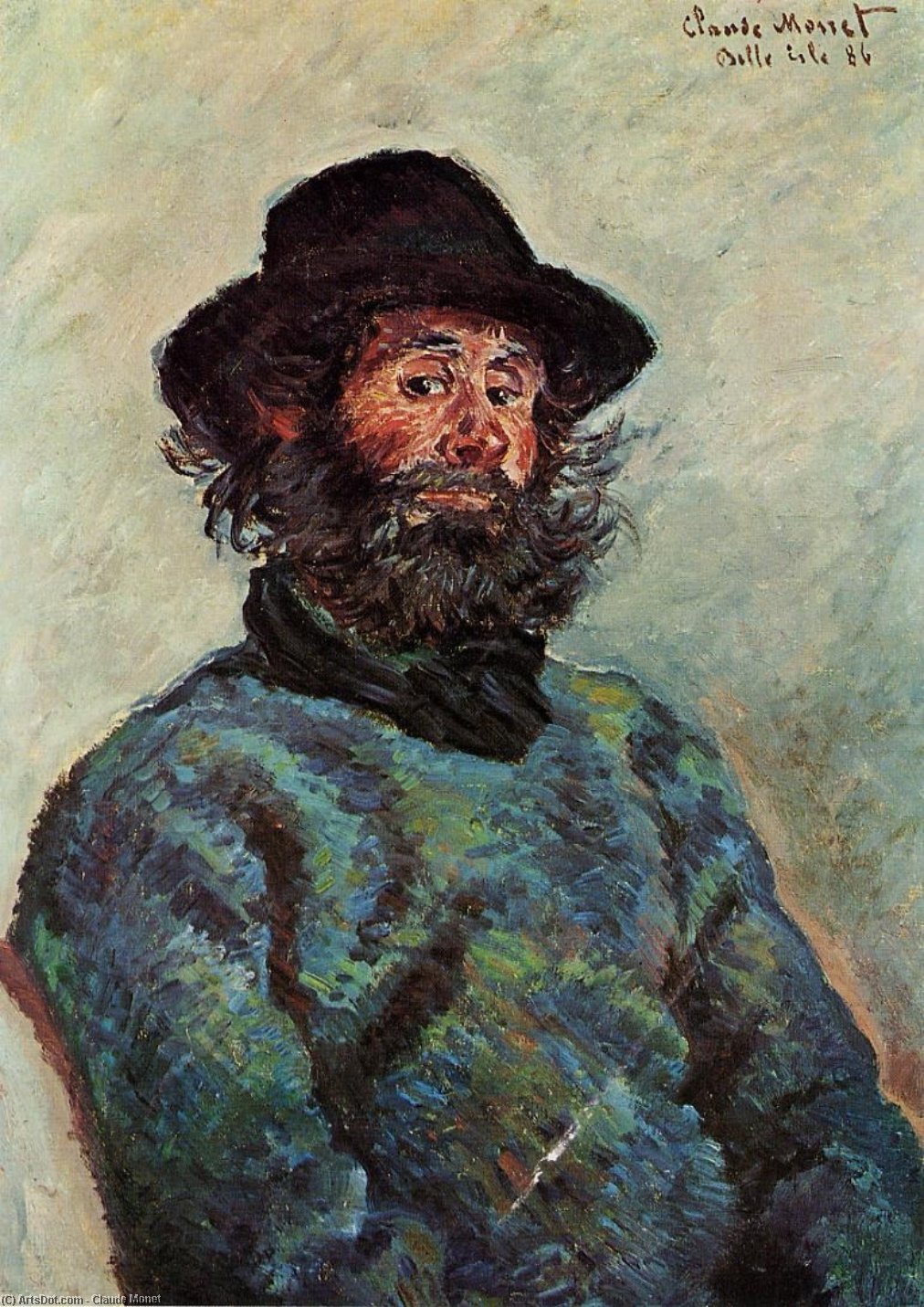
Portrait of Poly, Fisherman at Kervillaouen: A Moment Captured in Light
Claude Monet’s
Portrait of Poly, fisherman at Kervillaouen stands as a quintessential example of Impressionism—a movement that revolutionized painting and continues to inspire artists today. Created in 1886, this oil on canvas resides within the Musée Marmottan Monet in Paris, France, offering visitors an intimate glimpse into Monet’s artistic vision during his prolific period exploring the interplay between light and color.
- Subject Matter: The painting depicts Poly, a fisherman from Kervillaouen-Breizh El Baz, seated calmly with his hands clasped in his lap. This seemingly simple subject—a man engaged in everyday labor—was elevated by Monet’s masterful technique to convey profound emotion and atmosphere.
- Style: Monet's approach aligns perfectly with the core tenets of Impressionism. Rather than striving for photographic accuracy, he prioritized capturing the fleeting effects of sunlight on the fisherman’s skin and clothing, prioritizing sensory experience over meticulous detail.
Monet’s Innovative Technique – Embracing Plein Air Painting
Claude Monet was a pioneer in French Impressionist painting, fundamentally altering artistic practice by championing *plein air* painting—working outdoors directly from nature. This method allowed him to observe and record the subtle shifts in light throughout the day, transforming them into vibrant hues on canvas. Unlike artists who labored indoors under studio lamps, Monet sought to immerse himself in the environment, allowing it to inform his artistic decisions. His dedication to this practice is evident in countless canvases depicting landscapes—haystacks, water lilies, Rouen Cathedrals—each capturing a specific moment in time with remarkable sensitivity.
- Color Palette: Monet’s palette is dominated by muted blues and greens, reflecting the colors of the Breton coastline and the fisherman's sweater. However, these hues are punctuated by brighter accents – perhaps hints of sunlight filtering through the foliage—creating a dynamic visual experience.
- Brushstrokes: The painting’s characteristic brushstrokes—loose, visible strokes—are crucial to conveying Monet’s Impressionist style. These strokes aren't blended smoothly; instead, they retain their individuality, mirroring the movement and texture of the natural world.
Historical Context – Impressionism’s Challenge to Academic Tradition
The Impressionist movement emerged in defiance of the rigid conventions of academic painting—which favored idealized depictions and meticulous realism. Monet and his fellow artists rejected these traditions, arguing that art should reflect the subjective experience of perception rather than simply reproducing what was seen. This bold stance resonated with a generation eager for artistic innovation and paved the way for subsequent movements like Post-Impressionism and Expressionism. The very term “Impressionism” itself derives from Monet’s painting
Impression, Sunrise—an artwork that famously provoked criticism for its lack of polish and accuracy but nevertheless captured the essence of a new artistic sensibility.
Symbolism Beyond Representation – A Reflection of Tranquility
Beyond its technical brilliance,
Portrait of Poly, fisherman at Kervillaouen communicates a profound sense of serenity and contemplation. The fisherman’s posture—relaxed hands clasped in his lap—suggests inner peace amidst the natural surroundings. Monet skillfully uses light and color to evoke this mood, inviting viewers to share in the quiet beauty of the Breton coastline. This painting serves as a testament to Monet's ability to transform ordinary subjects into vehicles for emotional resonance—a hallmark of Impressionist art that continues to captivate audiences worldwide.
For those seeking to experience Monet’s artistic vision firsthand, ArtsDot offers exceptional reproductions crafted by skilled artisans. Explore the collection at /art/list/?Filter=8YDPH8-Claude-Monet-Portrait-of-Poly-fisherman-at-Kervillaouen.