El Viento Susurrante: Un Diálogo de Luz y Movimiento de Claude Monet
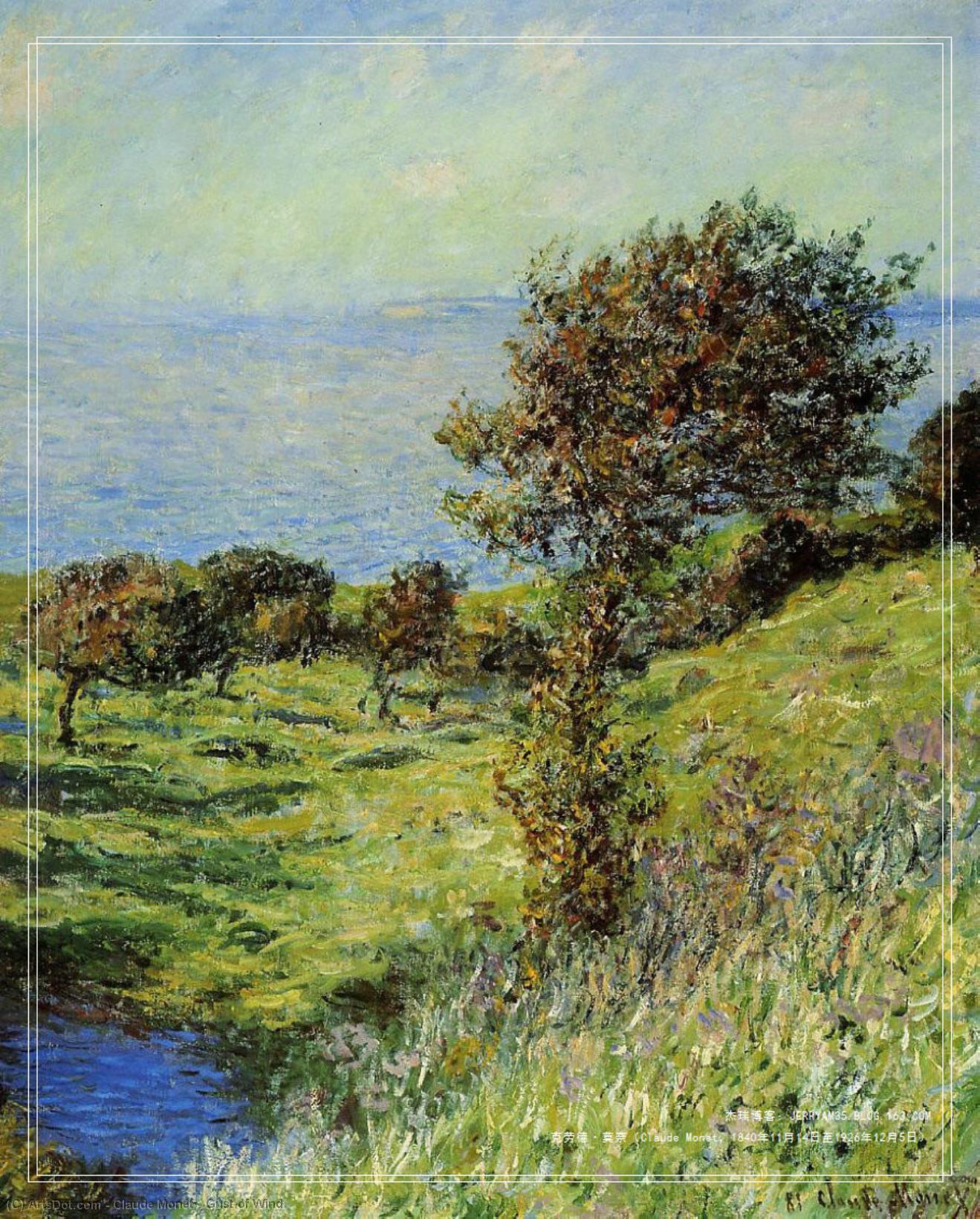
“Gust of Wind,” painted in 1881, isn’t merely a landscape; it's an experience. Claude Monet, a restless innovator at the heart of Impressionism, doesn’t simply depict a hillside; he captures a fleeting moment, a whisper of air and light frozen on canvas. This particular work, residing within the collection of the Musée Marmottan in Paris – a treasure trove for those seeking to understand Monet's evolution – offers a profound glimpse into his revolutionary approach to painting. It’s a piece that invites contemplation, drawing us into the heart of Normandy’s serene beauty and the artist’s relentless pursuit of capturing the ephemeral.
Monet’s genius lay in his dedication to *plein air* – working directly from nature. He abandoned the studio's controlled light for the unpredictable dance of sunlight filtering through trees, a technique he honed under the guidance of Eugène Boudin. “Gust of Wind” exemplifies this philosophy perfectly. Notice how the brushstrokes aren’t meticulously blended; instead, they are loose, broken, and layered – almost vibrating with energy. This deliberate lack of finish isn't an error; it’s precisely what allows the light to dominate the scene. The colors aren’t mixed in a palette but applied directly to the canvas, creating a shimmering effect that mimics the way sunlight interacts with foliage.
La Técnica de la Luz y el Color: Un Nuevo Lenguaje Pictórico
Monet's mastery of color is undeniable. He wasn’t interested in replicating reality; he was striving to represent *perception*. Observe the subtle shifts in hue – the greens deepening and lightening, the blues intensifying with the suggestion of movement. The artist uses complementary colors—such as blue and orange—to create a vibrant contrast that enhances the sense of depth and atmosphere. The painting’s palette is dominated by shades of green, reflecting the lush vegetation of Normandy, but punctuated by touches of yellow and ochre, capturing the warmth of the sunlight. Monet employed broken color, applying small dabs of paint side-by-side rather than blending them together, further intensifying the luminosity of the scene.
The composition itself is deceptively simple. The foreground trees, rendered with a slightly blurred quality, create a sense of depth and draw the viewer into the landscape. The body of water in the distance acts as a mirror, reflecting the sky and adding to the overall feeling of tranquility. However, it’s the *suggestion* of movement—the implied gust of wind rustling through the leaves—that truly captivates. Monet doesn't show us a static scene; he presents us with an active moment, alive with energy.
Más Allá de la Imagen: Contexto Histórico y Simbolismo
“Gust of Wind” was painted during a period of immense artistic experimentation. Impressionism was challenging the established conventions of academic painting, rejecting detailed realism in favor of capturing fleeting impressions and subjective experiences. Monet’s work reflects this spirit of innovation, pushing the boundaries of color and brushwork. The painting can be interpreted as a celebration of nature's beauty and power, but also as an exploration of the artist’s own perception of the world. The wind itself is a potent symbol – representing change, movement, and the passage of time. It’s a reminder that everything is in constant flux, and that true beauty lies in embracing the ephemeral.
Consider also the influence of Norman Garstin, an Irish Newlyn School painter who championed Monet's techniques. His dedication to *plein air* painting helped solidify Monet's approach, demonstrating the importance of direct observation in capturing the essence of a scene. The work’s legacy continues to inspire artists today, proving that Monet’s revolutionary vision remains as relevant and captivating as ever.