A Parisian Nocturne Captured in Bold Strokes
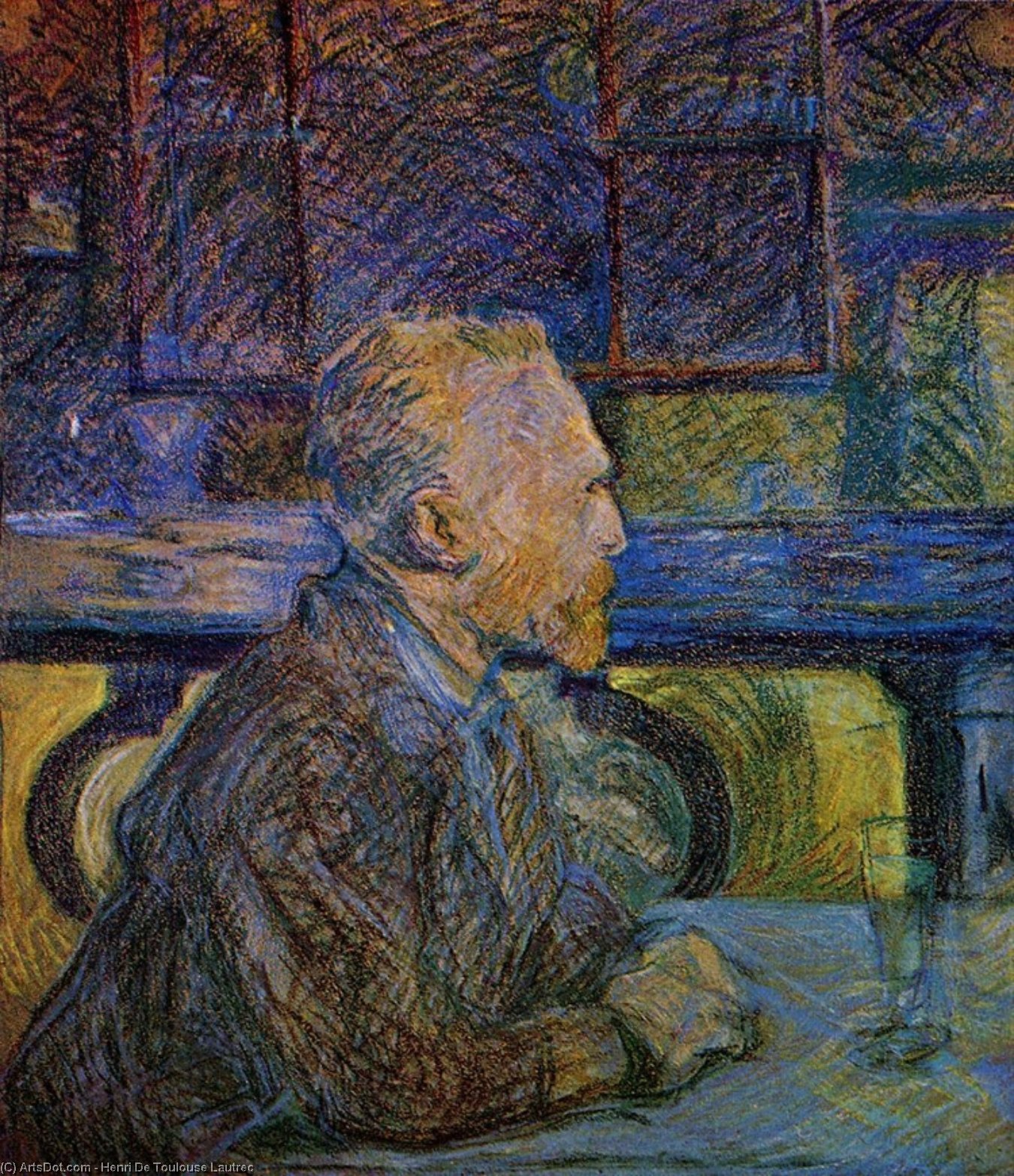
In the flickering gaslight of late 19th-century Paris, amidst the scent of absinthe and the electric energy of Montmartre, Henri de Toulouse-Lautrec captured a moment of profound stillness. His 1887 masterpiece, “Vincent van Gogh,” is far more than a mere portrait; it is an immersive window into the bohemian soul of the Belle Époque. The painting presents a man—often identified as the legendary Vincent himself—seated at a table, lost in a quiet moment of contemplation as he savors a glass of wine. There is a palpable sense of solitude within the frame, yet the room feels alive with the echoes of the vibrant Parisian nightlife that surrounded the artist's frequent haunts.
Toulouse-Lautrec’s approach to this piece rejects the stiff, meticulous realism of the academic tradition in favor of an expressive, almost visceral technique. He utilizes thick impasto strokes that create a textured surface, allowing the light to dance across the canvas much like the actual candlelight would flicker in a dim cabaret. The artist masterfully employs a palette of dramatic contrasts; deep, moody blues and shadows clash against muted yellows and the warm glow of the table, mirroring the chaotic yet beautiful rhythm of the Montmartre streets. This deliberate use of color and form places the work firmly within the vanguard of Impressionism, where emotion takes precedence over photographic accuracy.
The Soul of Montmartre and Artistic Legacy
To look upon this painting is to witness the artist’s deep empathy for the marginalized figures of his era. Toulouse-Lautrec was a chronicler of the underground—the performers, the dreamers, and the outcasts who inhabited the smoky corners of Paris. In this composition, the inclusion of a second, empty chair subtly hints at an unspoken companionship or perhaps the lingering presence of a friend, adding a layer of narrative mystery that invites the viewer to wonder about the story behind the silence. The subject's downward gaze and introspective posture evoke a sense of universal human vulnerability, making the piece deeply relatable to any observer.
For the discerning collector or interior designer, this artwork offers an unparalleled opportunity to introduce a sense of historical depth and sophisticated drama into a space. Whether placed in a contemporary gallery setting or a classic study, the painting’s bold lines and evocative atmosphere serve as a powerful focal point. A high-quality reproduction of this work allows one to bring the haunting beauty of 1887 Paris into the modern home, providing not just decoration, but a conversation piece that celebrates the enduring spirit of artistic fervor and the timeless allure of the nocturnal city.