A Symphony of Faith and Floral Elegance
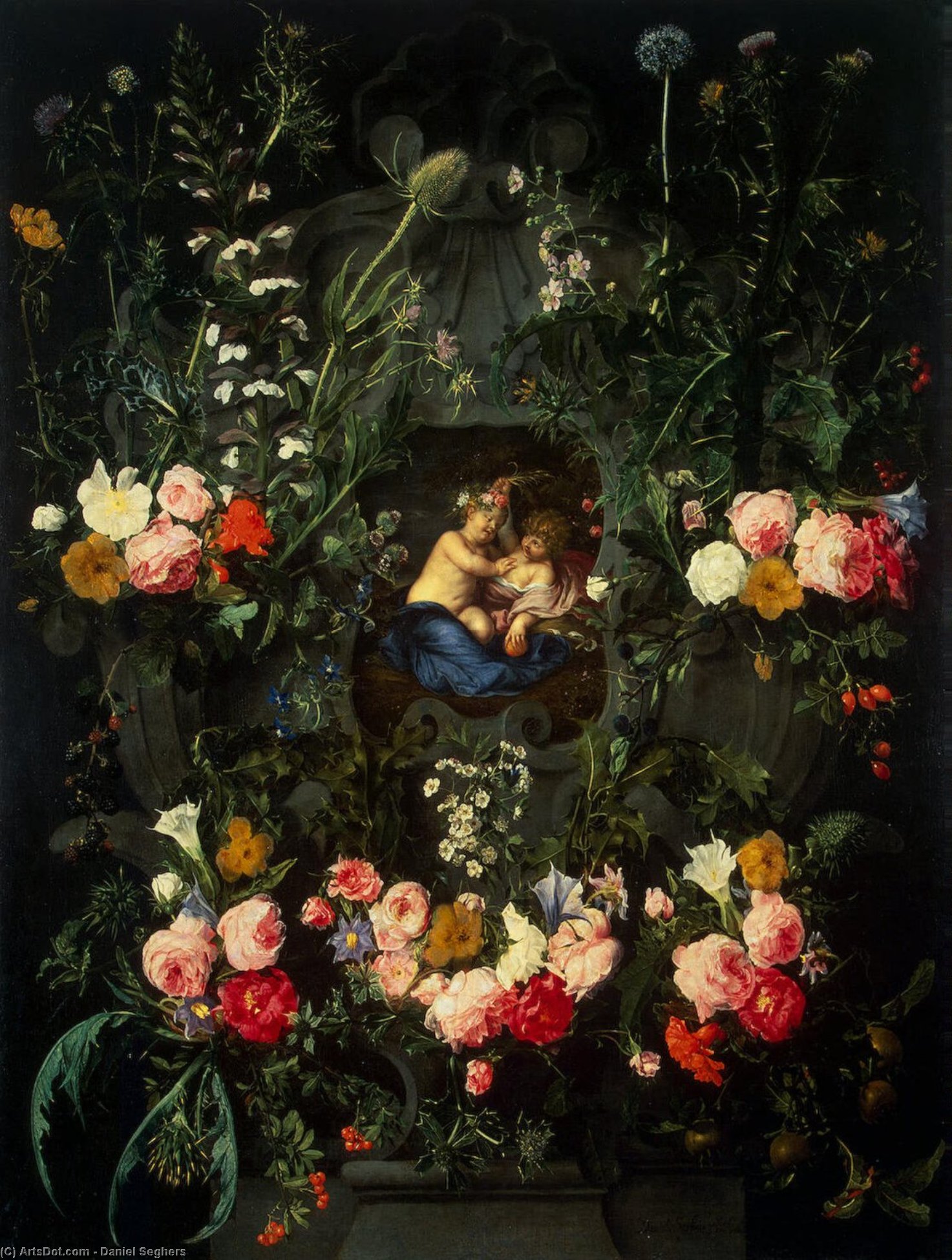
In the heart of the Flemish Baroque era, few artists captured the delicate intersection of earthly beauty and divine devotion as masterfully as Daniel Seghers. His masterpiece, Garland of Flowers, completed around 1650, serves as a breathtaking window into a world where botanical precision meets spiritual transcendence. This work is not merely a depiction of flora; it is a carefully orchestrated meditation on grace. As one gazes upon the canvas, they are transported to an idealized garden—a sanctuary of peace that echoes the legendary landscapes of Jan Brueghel the Elder. The painting presents a tender, sacred moment: the Virgin Mary cradling the infant Jesus, surrounded by a celestial presence. An angel hovers above the child, completing a composition that breathes tranquility and eternal serenity into the viewer's soul.
The visual narrative is anchored by an opulent tapestry of color and texture. Seghers meticulously renders a lush variety of blossoms, including the velvety petals of roses, the simple purity of daisies, and the intricate layers of carnations. Each flower is more than a decorative element; they are potent symbols within Christian iconography. The garden serves as a metaphor for Paradise, representing humanity's profound yearning for spiritual purity and the abundance of God's creation. For the collector or interior designer, this piece offers a profound sense of depth, where every petal carries the weight of historical meaning and religious reverence.
Mastery of Light and Technique
To behold Garland of Flowers is to witness the pinnacle of seventeenth-century oil painting technique. Seghers was a master of luminosity, employing a painstaking process of building up multiple layers of translucent glazes. This method allowed him to capture the subtle nuances of light as it filters through petals and rests upon the soft skin of the holy figures. His use of sfumato—the delicate blurring of edges and softening of contours—creates an ethereal, dreamlike atmosphere that lifts the scene from the physical realm into the divine. The interplay of light and shadow, or chiaroscuro, lends a three-dimensional realism to the blossoms, making them appear almost tactile, as if one could reach out and catch their fragrance.
This level of technical brilliance makes the artwork an extraordinary choice for high-quality reproductions. A hand-painted tribute to Seghers's work preserves that essential glow and the velvety texture of the oil medium, ensuring that the emotional impact remains undiminished. Whether placed in a grand gallery, a quiet study, or a sophisticated living space, the painting acts as a focal point of elegance. It invites contemplation and provides a sense of timelessness, making it an invaluable asset for those looking to infuse their surroundings with the sophisticated splendor of the Flemish Baroque tradition.