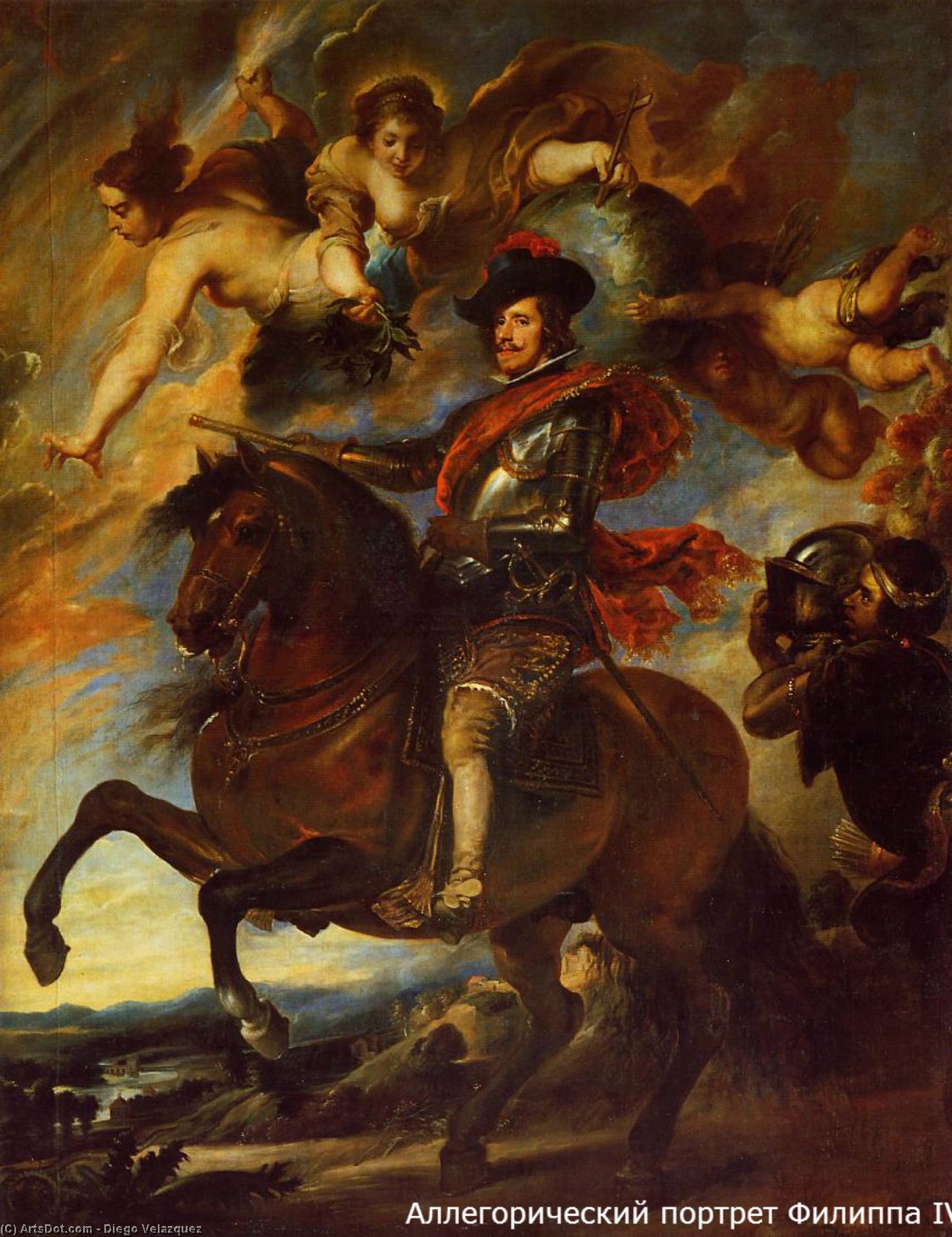
Allegorical Portrait of Philip IV
Diego Rodríguez de Silva y Velázquez, a master of the Baroque era, created an array of captivating artworks that continue to inspire and intrigue art enthusiasts. Among his notable works is the
Allegorical Portrait of Philip IV, a painting that embodies the essence of regal grandeur and symbolic representation.
The Artwork's Significance
Painted around 1645, this oil on canvas masterpiece is housed in the esteemed
Uffizi Gallery in Florence, Italy. The artwork serves as a testament to Velázquez's skill in capturing the essence of his subjects through allegorical elements and dramatic lighting. It represents one of Philip IV’s most ambitious portraits, commissioned during a period of significant political and artistic upheaval—a deliberate attempt to project an image of strength and piety onto the Spanish monarchy.
Composition and Symbolism
The painting depicts Philip IV, King of Spain, on horseback, centrally positioned with an aura of command. His suit of armor reflects light, emphasizing his noble stature. The horse is portrayed mid-step, adding dynamism to the scene. Cherubs flying above the king symbolize divine favor and virtuous leadership—a crucial element in conveying the spiritual aspirations of the Habsburg court. The inclusion of a young boy dressed as St. George slaying the dragon reinforces this symbolism, representing courage and triumph over evil.
Baroque Elements
The painting exemplifies Baroque characteristics through its use of sharp contrasts between light and dark, creating a sense of depth and realism—a technique known as chiaroscuro perfected by Velázquez. This dramatic lighting not only illuminates Philip IV’s figure but also casts shadows that heighten the emotional intensity of the scene. The rich palette and detailed textures further enhance the regal tone of the artwork, demonstrating Velázquez's meticulous attention to detail and his mastery of pigment manipulation.
Velázquez's Mastery
Velázquez's masterful technique is evident in his depiction of Philip IV. The king’s expression is composed yet solemn, reflecting Velázquez’s ability to capture the psychological depth of his subjects. He achieved this remarkable feat through careful observation and anatomical precision—a hallmark of his artistic approach. This portrait stands as a testament to Velázquez's skill in preserving the visage of a ruler during a period of intense political maneuvering and religious reform. It is considered one of his finest achievements, securing his place among the titans of Baroque art.
- Artist: Diego Rodríguez de Silva y Velázquez
- Year Painted: 1645
- Location: Uffizi Gallery, Florence
- Medium: Oil on Canvas
- Style: Baroque
For those interested in exploring more of Velázquez's works or learning about other artists from the Baroque period, visit https://ArtsDot.com for a comprehensive collection of handmade oil painting reproductions.