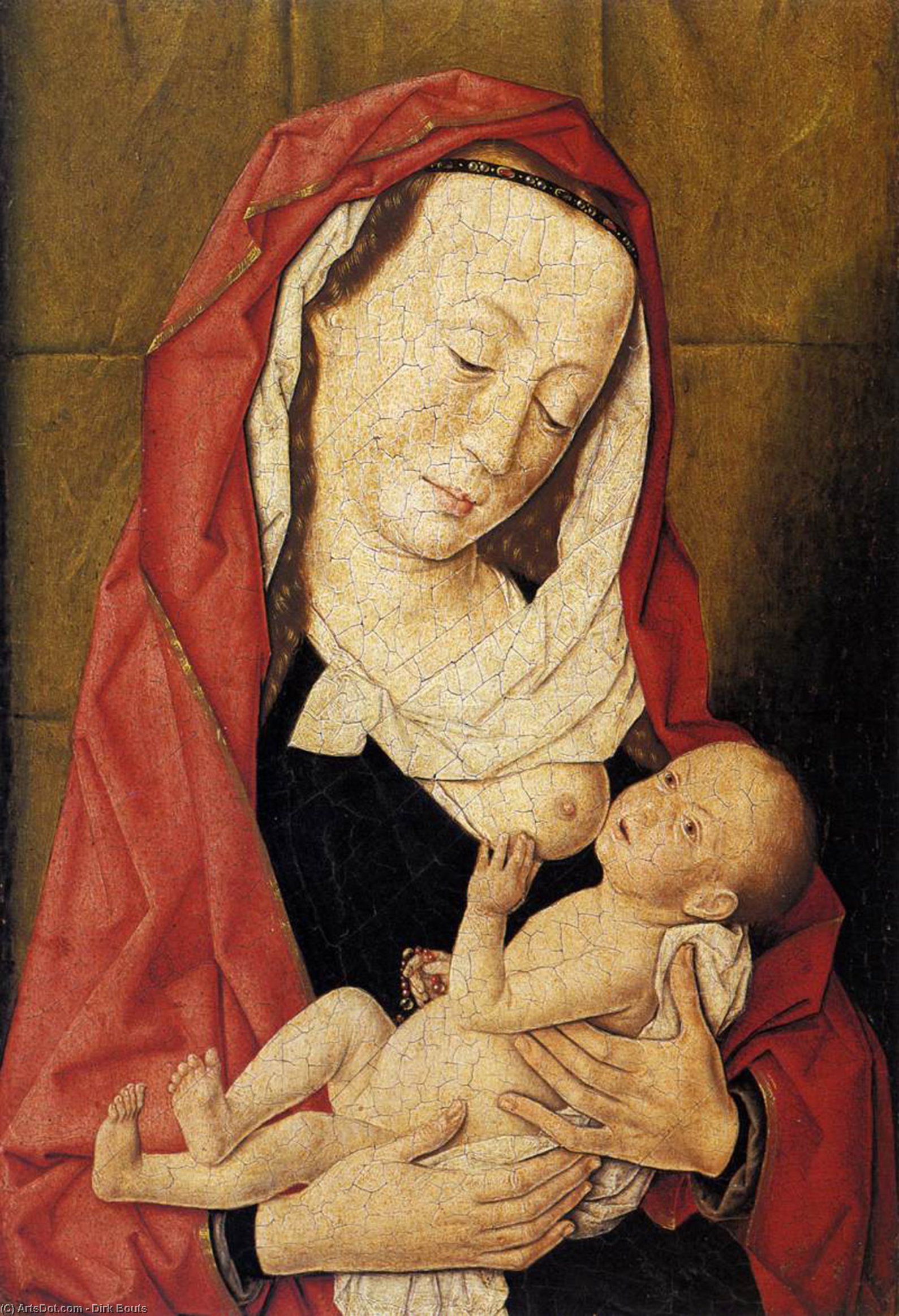
The painting "Virgin and Child" by
Dieric Bouts is a masterpiece of the Northern Renaissance, showcasing the artist's skill in capturing the intimate bond between the Virgin Mary and the Christ Child. Created in 1460, this oil on wood panel painting measures 29 x 20 cm and is a testament to the artist's ability to convey emotion and tenderness.
Artistic Style and Influences
Dieric Bouts' style was influenced by
Jan van Eyck and
Rogier van der Weyden, two prominent artists of the Northern Renaissance. The use of oil as a medium allowed for greater depth and luminosity, as seen in the delicate folds of the Virgin's clothing and the softness of the Child's skin. The painting's composition, with the Virgin and Child positioned in a triangular formation, creates a sense of balance and harmony.
Key Features of the painting include:
- The use of oil on wood panel, which allows for intricate details and textures
- The intimate portrayal of the Virgin and Child, conveying a sense of love and devotion
- The subtle color palette, with an emphasis on blues and whites to symbolize royalty and purity
Conservation and Provenance
The painting is now housed at the
National Gallery, London, where it has undergone extensive conservation and restoration. The
Metropolitan Museum of Art also has a similar version of the painting, showcasing the artist's workshop practices and techniques. For more information on
Dieric Bouts and his works, visit
/art/list/?Filter=Dieric-Bouts. To explore the world of Northern Renaissance art, check out
/en/art/show/art-8xxt9b-en/ and discover the beauty of handmade oil painting reproductions.
The "Virgin and Child" by
Dieric Bouts is a masterpiece that continues to inspire and captivate art lovers today, offering a glimpse into the artistic and cultural heritage of the Northern Renaissance.