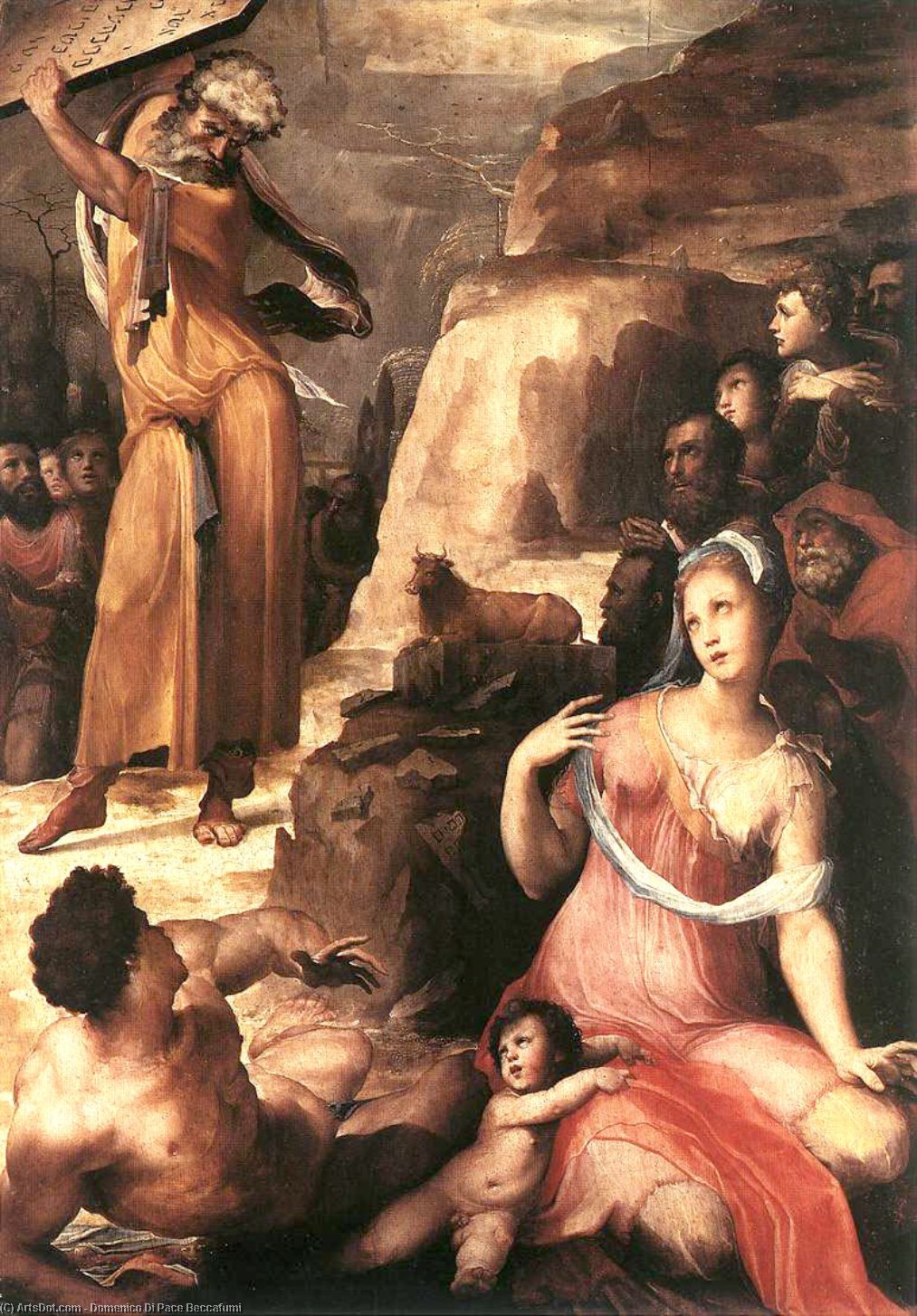
Domenico Beccafumi’s Moses and the Golden Calf: A Symphony of Drama and Faith
Domenico di Pace Beccafumi (1486-1551), though overshadowed by the titans of Florentine Mannerism, stands as a singular voice within the artistic landscape of his era—a Sienese visionary who wrestled with profound theological questions while forging an intensely personal visual language. His masterpiece, “Moses and the Golden Calf,” executed in 1536, exemplifies this duality perfectly: it’s not merely a depiction of biblical narrative but a carefully constructed meditation on obedience, idolatry, and the enduring power of divine law. The painting resides within the Palazzo Pubblico of Siena, serving as one of the monumental frescoes adorning its Salone dei Cinquecento—a space dedicated to civic pride and commemorating significant historical events.
- Subject Matter: The scene portrays Moses confronting Aaron and the Israelites after Aaron had fashioned a golden calf to worship in defiance of God’s commandment at Mount Sinai. This pivotal moment from Exodus recounts the Israelites' initial lapse into idolatry following Moses’ ascension to receive divine law, highlighting the fragility of faith and the temptation to abandon spiritual principles for earthly comforts.
- Style: Beccafumi’s style is firmly rooted in Mannerism—a reaction against the idealized beauty of High Renaissance art. Unlike the harmonious compositions favored by artists like Raphael or Michelangelo, “Moses” embraces dynamism and distortion. Figures are rendered with exaggerated musculature and contorted poses, conveying intense emotion and psychological turmoil. The artist deliberately eschews classical proportions, prioritizing expressive gesture over anatomical accuracy.
Technique: Orchestrating Color and Texture
Beccafumi’s masterful technique is characterized by a meticulous layering of pigments—a hallmark of Mannerist painting—that creates astonishing depth and luminosity. He employed tempera on plaster, a medium known for its brilliance and permanence. The artist meticulously blended shades of ochre, crimson, and ultramarine to achieve a rich tapestry of color that captures the dramatic lighting conditions of the scene. Furthermore, Beccafumi utilized impasto—thickly applied paint—to sculpt textural surfaces, particularly in Moses’ robe and Aaron’s face, emphasizing the physicality of the figures and amplifying their emotional impact. The artist's attention to detail extends beyond mere pigment; he painstakingly rendered folds of drapery and musculature with astonishing precision.
- Historical Context: Siena during Beccafumi’s lifetime was a city grappling with religious upheaval—the Protestant Reformation posed a significant challenge to papal authority. The Palazzo Pubblico's commission for “Moses” reflects the civic desire to reaffirm faith and moral virtue amidst turbulent times. It served as a powerful visual statement of Siena’s commitment to orthodox Christianity.
- Symbolism: The golden calf itself embodies idolatry—the worship of false idols—representing humanity’s tendency to abandon divine devotion for material pursuits. Moses' unwavering gaze and forceful posture symbolize moral fortitude and the steadfast adherence to God’s law. The painting underscores the importance of humility before God and warns against succumbing to worldly temptations.
Emotional Impact: A Portrait of Spiritual Struggle
“Moses and the Golden Calf” transcends mere narrative illustration; it is a visceral portrayal of psychological drama—a depiction of Moses’ internal conflict as he confronts Aaron's transgression. Beccafumi succeeds in conveying the profound anguish experienced by Moses, capturing his determination to uphold divine law despite the allure of compromise. The artist’s masterful use of color and texture contributes to the painting’s emotional resonance, immersing viewers in the scene’s atmosphere of tension and moral reckoning. It remains a testament to Beccafumi's ability to transform biblical narrative into an enduring symbol of spiritual struggle—a timeless meditation on faith, obedience, and the human condition.