Introduction
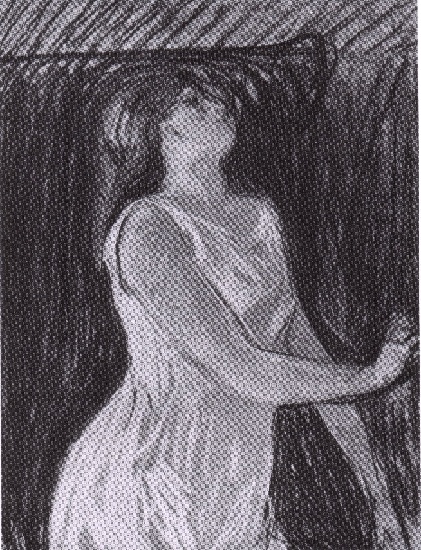
Outline of a Model is a painting created in 1893 by the renowned Norwegian artist
Edvard Munch. This work, like many others from this period, reflects the emotional intensity and bold use of color that characterizes Expressionism.
The Artist: Edvard Munch
Born on December 12, 1863, in Norway,
Edvard Munch is globally recognized for his iconic masterpiece, The Scream (1893). His childhood was marked by personal tragedies and a fear of inheriting a familial mental illness. He studied at the Royal School of Art and Design in Kristiania (now Oslo), where he developed his unique style that would later become associated with Expressionism.
The Painting Style: Expressionism
Expressionism is a modernist movement that emerged in the early 20th century, characterized by its emotional intensity and bold use of color. Unlike other art movements, Expressionism does not focus on depicting the natural world as realistically as possible. Instead, it seeks to express subjective emotions and responses to the world.
Historical Context
The late 19th and early 20th centuries were a time of great change and upheaval. The Industrial Revolution had transformed society, leading to urbanization and the growth of cities. This period also saw the emergence of new ideas in psychology and philosophy, particularly those related to the subconscious mind and the irrational. These changes provided the perfect backdrop for the development of Expressionism, with its emphasis on emotion and subjective experience.
Conclusion
Outline of a Model by Edvard Munch is a prime example of Expressionism. It reflects the artist's emotional response to his model, using bold colors and expressive brushstrokes to convey a sense of intensity and emotion. As part of the larger Expressionist movement, it also speaks to the historical context of its time, reflecting the changes and upheavals of the late 19th and early 20th centuries.