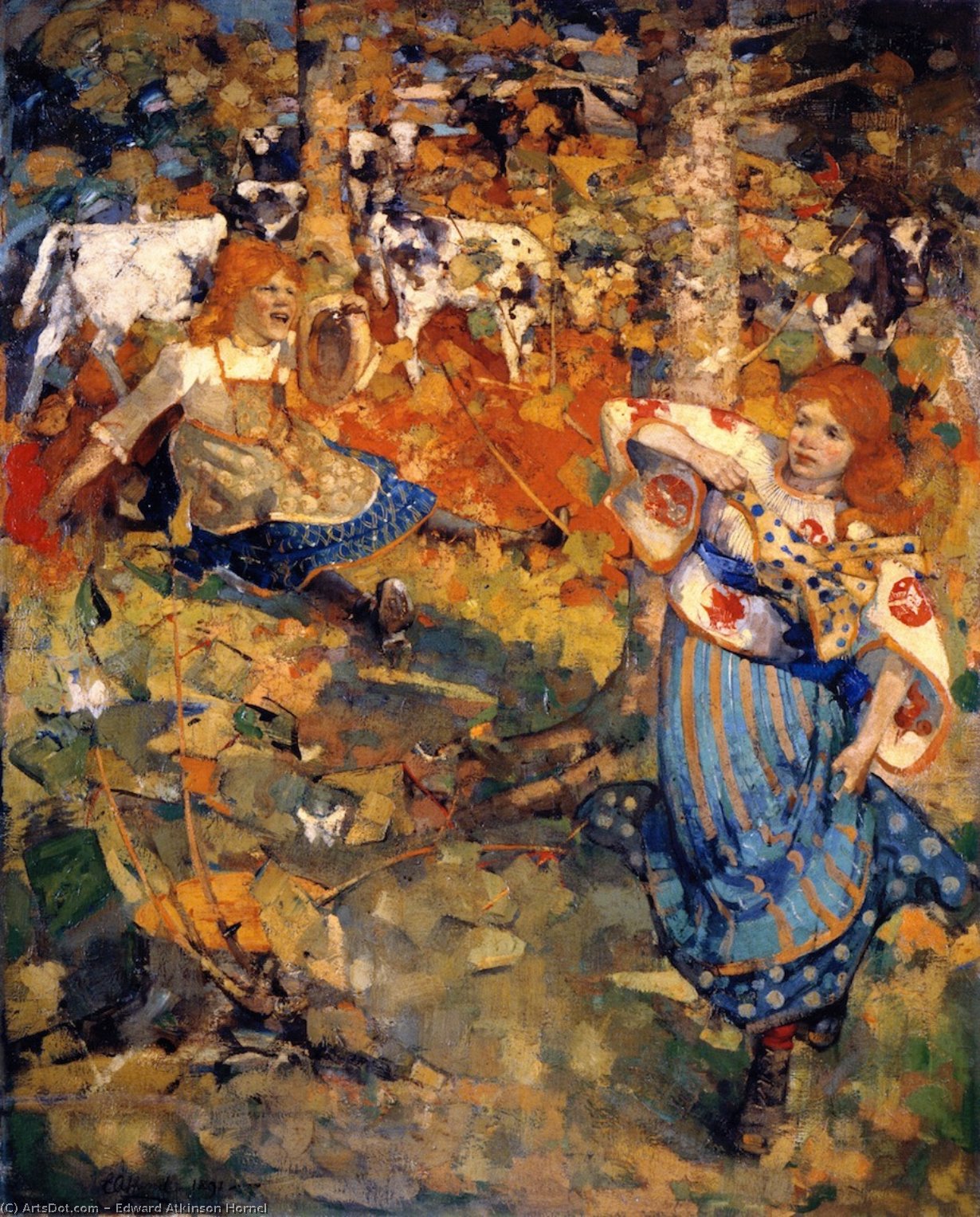
The painting Summer by
Edward Atkinson Hornel is a stunning representation of the season, characterized by vibrant colors and a sense of joy. Created in 1891, this oil on canvas piece is a prime example of Hornel's unique style, which blends elements of Post-Impressionism with a distinctive Scottish flair.
The Artist's Inspiration
Edward Atkinson Hornel was a Scottish artist known for his captivating depictions of landscapes and figures. His work often featured women and children in natural settings, showcasing his ability to capture the beauty of the human form. In Summer, Hornel has symbolized the season through the figure of a girl chasing a butterfly, surrounded by lush greenery and vibrant flowers.
The Painting's Style and Technique
The painting's style is reminiscent of Japanese art, with its flat, decorative design and emphasis on pattern and color. The use of bold brushstrokes and vivid hues creates a sense of energy and movement, drawing the viewer into the scene. As noted by
ArtsDot.com, Hornel's technique is characterized by a focus on capturing the emotional and psychological depth of his subjects.
Notable Features and Similar Works
Some notable features of Summer include its use of symbolism, with the butterfly representing freedom and joy. The painting is also notable for its sense of movement and energy, created through the use of bold brushstrokes and vibrant colors. Similar works by
Edward Atkinson Hornel can be found at the
Walker Art Gallery in Liverpool, including
A Galloway Idyll and
Blossom Time, Brighouse Bay. For more information on these paintings, visit
ArtsDot.com.
The Summer painting by
Edward Atkinson Hornel is a beautiful representation of the season, characterized by its vibrant colors and sense of joy. As a masterpiece of Scottish art, it continues to inspire and delight audiences today. For those interested in learning more about Hornel's work, visit
Wikipedia or explore the collection at
Walker Art Gallery.