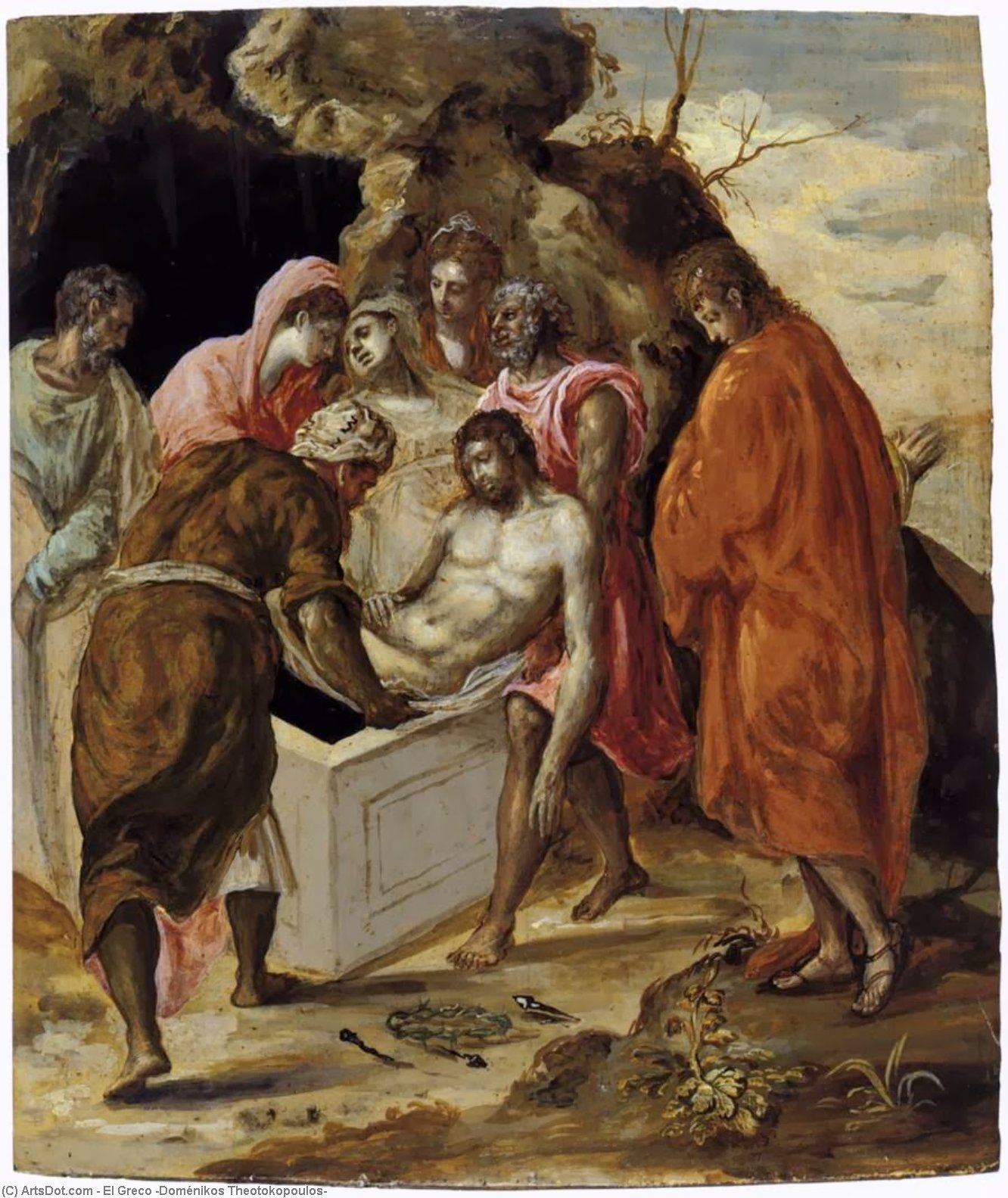
El Entombment of Christ: A Symphony of Sorrow and Renaissance Genius
Doménikos Theotokópoulos, universally known as El Greco (1541 – 1614), stands as one of the most singular figures in the artistic panorama of the sixteenth century. His oeuvre transcends mere representation; it embodies a profound spiritual quest expressed through an unparalleled visual language—a fusion of Byzantine solemnity and Renaissance innovation that continues to captivate audiences centuries later.
The Entombment of Christ, painted around 1570-1576 and housed in the Alexandros Soutzos Museum in Athens, Greece, exemplifies this distinctive artistic vision. Measuring 51 x 43 cm, it’s not merely a depiction of biblical narrative but a meticulously crafted meditation on grief, faith, and mortality.
Inspirations and Influences: Echoes of Michelangelo and Raphael
El Greco's creative process was deeply rooted in the artistic currents of his time. He initially drew inspiration from Tintoretto’s dramatic composition—a bold departure from conventional depictions—establishing a foundation for his own stylistic explorations. However, the true genesis of this masterpiece resides in Michelangelo’s drawings and Venusti’s painting at the National Gallery in London; El Greco consciously adopted the sculptor's monumental grandeur and expressive musculature.
Furthermore, the poignant portrayal of Mary of Clopas—her face etched with despair as she cradles her son—bears unmistakable resemblance to Raphael’s tapestry cartoon, The Distributing of Alms at the Golden Gate—a testament to El Greco’s erudition and engagement with the humanist ideals prevalent in Rome.
A Dialogue Between Styles: Byzantine Tradition Meets Renaissance Innovation
The architectural elements surrounding the central group—particularly those reminiscent of Raphael—contribute to the painting's overarching grandeur, reinforcing its connection to the artistic epicenter of the Cinquecento. El Greco’s masterful technique—characterized by elongated figures, intense chiaroscuro, and a palette dominated by somber hues—elevates the scene beyond mere visual representation.
The inclusion of four portraits at the bottom right—Titian, Michelangelo, Giulio Clovio, and possibly El Greco himself—acknowledges his debt to these artistic titans. These figures serve as anchors to the broader artistic landscape of the era, symbolizing El Greco’s intellectual engagement and personal ambition.
Symbolism: Grief, Faith, and Eternal Sorrow
The painting's profound symbolism transcends its narrative content. The stark contrast between light and darkness underscores the solemn atmosphere—a deliberate stylistic choice reflecting the spiritual significance of the depicted event. The figures themselves embody universal themes of grief, compassion, and unwavering faith.
Notably, the young man pointing to himself mirrors El Greco’s self-portrait at Parma, albeit with longer hair—a subtle gesture hinting at his artistic identity and aligning him with Raphael's stylistic sensibilities.
Conclusion: An Enduring Legacy
The Entombment of Christ remains a cornerstone of Renaissance art—a testament to El Greco’s unparalleled artistic genius and his ability to synthesize disparate stylistic influences into a cohesive visual experience. For those seeking to immerse themselves in the beauty and depth of this iconic masterpiece, acquiring a handmade oil painting reproduction from ArtsDot offers an exceptional opportunity to appreciate its enduring legacy.