Explore el arte dramático y expresivo de El Greco (Doménikos Theotokopoulos). Descubra sus pinturas manieristas icónicas, temas religiosos, figuras alargadas e influencia duradera en el Expresionismo y el Cubismo. Admire obras maestras como 'Vista de Toledo'!
¡Explore arte de clase mundial en el Toledo Museum of Art! Descubra impresionantes colecciones de vidrio, obras maestras europeas y arte moderno, todo con entrada gratuita. ¡Planifique su visita hoy mismo!
El Greco: A Life in Art
Doménikos Theotokópoulos, known to the world as El Greco (meaning “the Greek”), was a painter, sculptor, and architect who stands as one of the most unique figures in the history of Western art. His dramatic and intensely emotional works bridged the gap between the Renaissance and the Baroque periods, while simultaneously forging a distinctly personal style.
Early Life and Training
- Born in 1541 on the island of Crete, then under Venetian rule.
- Initially trained as an icon painter within the Byzantine tradition – a rigorous discipline emphasizing religious imagery and precise technique.
- His early work demonstrates a mastery of Byzantine conventions, including detailed ornamentation and symbolic color palettes.
- He signed his works in Greek, often adding “Krḗs” (Cretan) to denote his origin.
Journey to Italy
- Around 1567, El Greco moved to Venice, immersing himself in the artistic fervor of the Venetian Renaissance.
- Here he encountered the monumental canvases of Tintoretto and Titian, absorbing their innovative compositional strategies and expressive use of color – influences that would profoundly shape his subsequent artistic endeavors.
Toledo and His Masterpieces
- El Greco’s arrival in Toledo in 1599 marked a pivotal moment in his career, securing prestigious commissions from the Cathedral and bolstering his reputation as one of Spain's foremost artists.
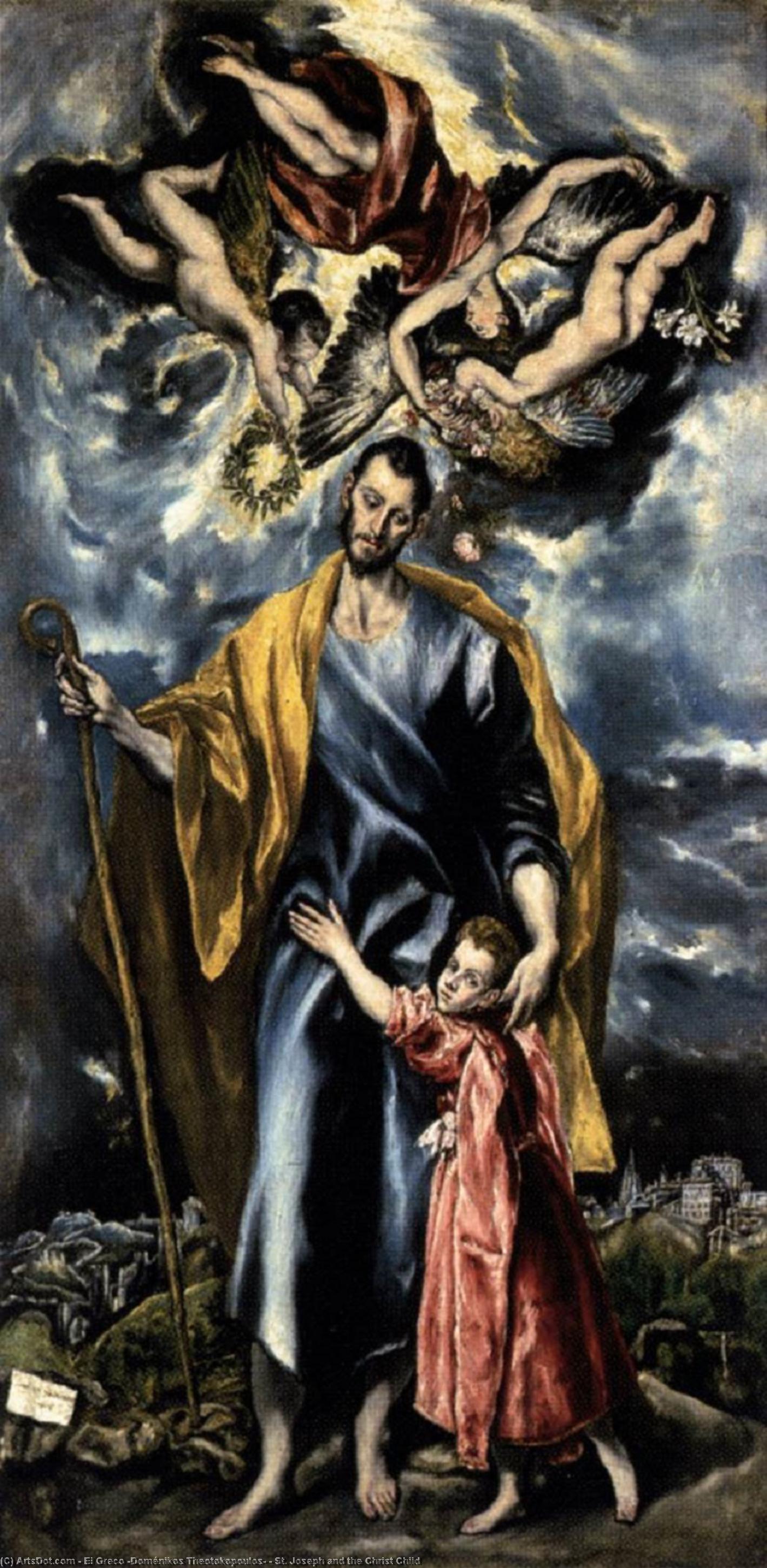
- It was during this period that he conceived and executed St Joseph and the Christ Child – a monumental altarpiece that embodies his distinctive artistic vision and remains a testament to his enduring legacy.
Style and Technique
El Greco’s style is characterized by elongated figures—a stylistic hallmark that elevates them into ethereal forms, imbued with spiritual grandeur. His technique involved applying paint in thick impasto layers, creating textured surfaces that convey palpable emotion and dynamism. The artist skillfully utilized chiaroscuro – dramatic contrasts between light and dark – to heighten the expressive power of his compositions.
Symbolism and Emotion
El Greco’s paintings are laden with symbolic meaning, reflecting profound theological concepts. His depictions of saints—particularly St Joseph—are imbued with tenderness and compassion, conveying a deep reverence for faith and human dignity. The artist's expressive brushstrokes capture the intensity of emotion—fear, sorrow, ecstasy—transforming religious narratives into visceral experiences.
Legacy
El Greco’s influence extended far beyond his lifetime, foreshadowing developments in Expressionism and Cubism. His pioneering approach to artistic representation continues to inspire artists today, cementing his place as a visionary innovator who reshaped the landscape of European art.