A Window into Renaissance Confidence
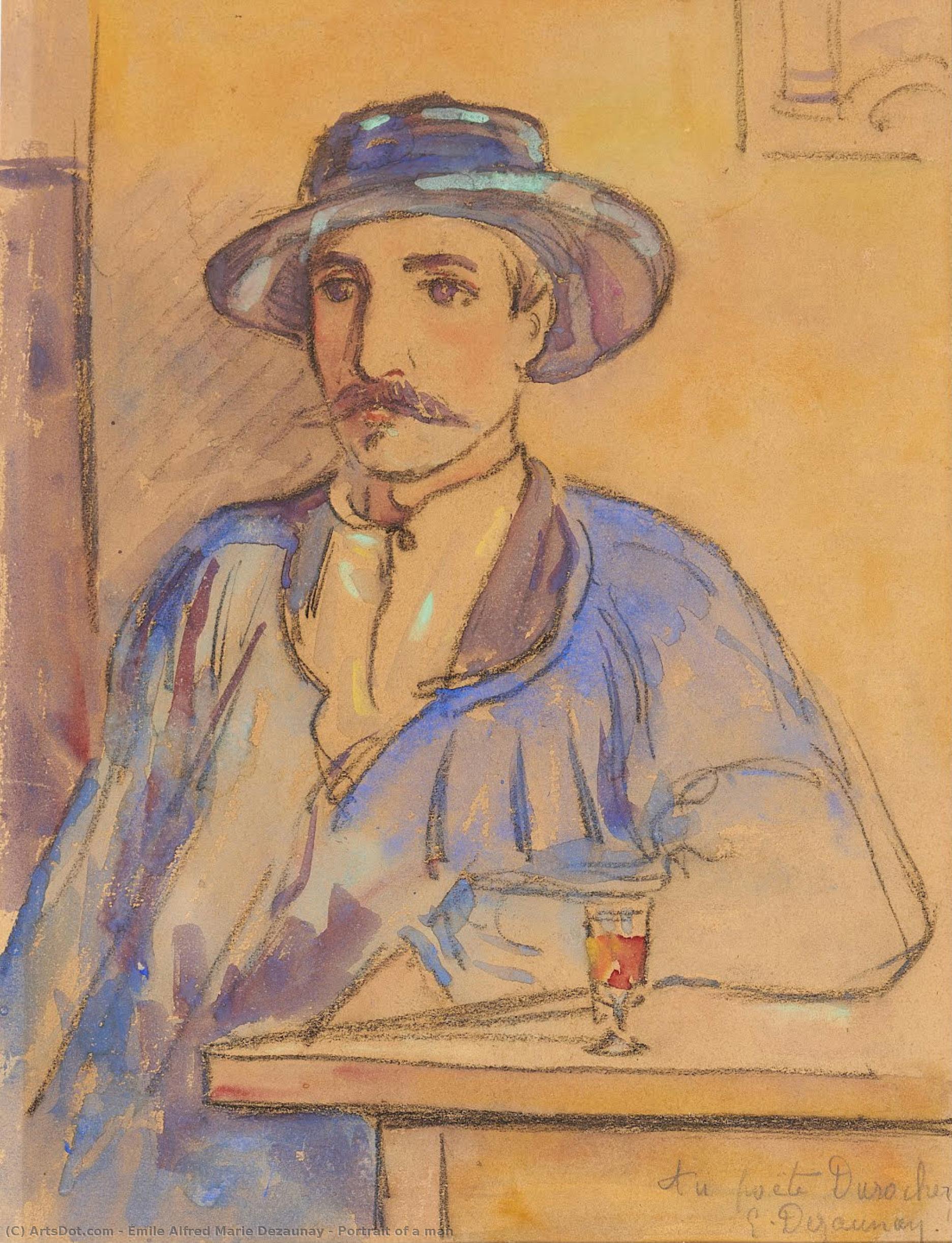
Émile Alfred Marie Dezaunay’s “Portrait of a Man,” executed around 1890, stands as a testament to the enduring fascination with capturing human psychology through meticulous observation and masterful technique. This unassuming canvas—measuring just 6 x 24 cm—holds within it a profound statement about artistic ambition and the artist's unwavering belief in his craft.
Dezaunay’s stylistic approach draws heavily from the Pont-Aven school, blending Impressionistic luminosity with Symbolist explorations of inner emotion. The painting eschews grand narratives; instead, it focuses on a single figure—a man seated at a table—whose gaze directs itself outwards, conveying a contemplative seriousness that transcends mere representation.
Technical Brilliance: Watercolor and Observation
Executed in watercolor, Dezaunay’s technique is characterized by delicate brushstrokes and subtle color gradations. The artist skillfully utilizes light to sculpt the contours of the face and drapery, creating a palpable sense of depth and texture. Microscopic examination reveals preparatory underdrawings—a hallmark of Dezaunay's meticulous process—demonstrating his dedication to achieving unparalleled accuracy.
The composition is remarkably restrained, prioritizing clarity and emotional resonance over elaborate ornamentation. The muted palette—dominated by blues and browns—reflects the artist’s connection to Brittany, where he resided for much of his life. This deliberate choice contributes to the painting's tranquil atmosphere, inviting viewers to contemplate the complexities of human experience.
Symbolism Beyond Appearance
More than just a likeness, “Portrait of a Man” embodies Dezaunay’s artistic philosophy: an unwavering commitment to capturing not only what is seen but also what is felt. The man's direct gaze—piercing yet thoughtful—suggests introspection and awareness—a reflection of the artist himself. As Craig Harbison observes, "each wrinkle of the cloth, each fold, each soft glimmer of light across the soft weave, is painted with the holy precision Jan van Eyck helped introduce to art."
The painting’s placement within the Pont-Aven school—a movement devoted to exploring spiritual themes through landscape and portraiture—further underscores its significance. Dezaunay's work speaks to a broader artistic tradition concerned with conveying inner truths through careful observation and expressive brushwork.
A Legacy of Quiet Confidence
“Portrait of a Man” remains an exceptional example of watercolor painting, demonstrating Dezaunay’s mastery of technique and his profound understanding of human psychology. Its understated beauty—coupled with its symbolic depth—continues to inspire admiration and intrigue among art historians and collectors alike.