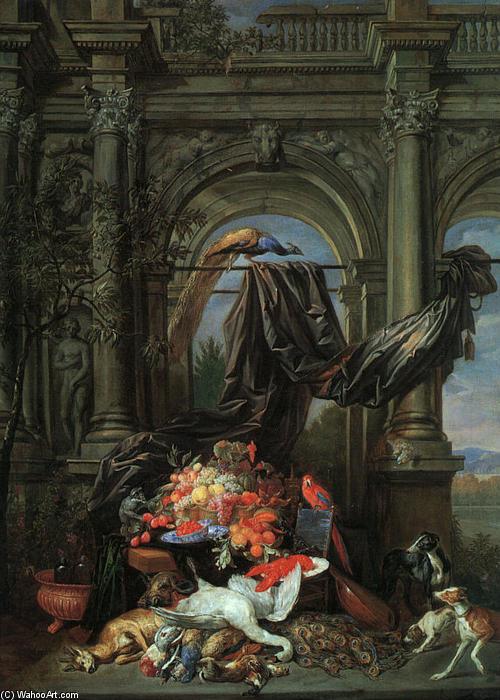
Erasmus Quellinus II’s “Still-Life in an Architectural Setting” – A Baroque Masterpiece of Abundance and Reflection
Erasmus Quellinus II's "Still-Life in an Architectural Setting," painted around 1645, is more than just a depiction of objects; it’s a meticulously crafted tableau brimming with symbolic weight and the opulent spirit of the Dutch Golden Age. This captivating work, currently housed within the Museum of Fine Arts, Boston, offers a profound glimpse into the artistic sensibilities of a pivotal figure in the Baroque movement – a collaborator closely linked to the legacy of Peter Paul Rubens himself. The painting immediately draws the eye with its rich palette and dramatic composition, yet it’s the subtle layering of meaning that truly elevates it beyond mere visual pleasure.
The scene unfolds within an intricately rendered architectural setting: a grand archway, reminiscent of classical Roman temples, frames the foreground. Above this imposing structure, statues – likely allegorical figures – preside over the composition, lending an air of timeless grandeur and hinting at themes of power, wisdom, and divine order. This carefully constructed backdrop isn’t merely decorative; it establishes a dialogue between earthly abundance and celestial ideals, a recurring motif in Baroque art.
A Symphony of Objects: Symbolism and Detail
The foreground is dominated by a table laden with an astonishing array of objects – each meticulously rendered with remarkable detail. A magnificent bunch of grapes, ripe and bursting with potential, speaks to themes of fertility, prosperity, and the fleeting nature of pleasure. Scattered amongst them are several apples, their vibrant red hues contrasting beautifully with the surrounding colors; they often symbolize temptation, knowledge, or even mortality. The presence of a delicate blue and white porcelain dish adds an element of refined elegance, while a small bird perched upon one of the objects introduces a touch of life and spontaneity into the scene.
Notably, two dogs lie languidly near the table, their relaxed postures suggesting familiarity with this luxurious setting – perhaps hinting at the comforts enjoyed by the wealthy patrons who commissioned such works. A large orange stands out due to its size and intense color, a symbol of wealth, royalty, and even divine favor. The careful arrangement of these objects isn’t arbitrary; each element contributes to a complex web of symbolism that invites contemplation.
The Painter's Hand: Technique and Style
Quellinus II demonstrates a masterful command of technique in this piece. His use of light is particularly noteworthy, casting gentle shadows that imbue the objects with a palpable three-dimensionality. The lighting source appears to originate from the left side of the composition, creating a sense of depth and drama. The artist’s brushwork is smooth and refined, yet retains a subtle texture that adds visual interest. The color palette is rich and varied, dominated by warm tones – reds, greens, and golds – which contribute to the painting's overall sense of opulence.
The influence of Peter Paul Rubens is undeniable in Quellinus’s style—particularly his dynamic compositions, vibrant colors, and attention to detail. However, Quellinus II possesses a distinct artistic voice, evident in his meticulous rendering of textures and his skillful use of perspective. The painting exemplifies the Baroque approach to still life, which sought to capture not just the appearance of objects but also their symbolic meaning and emotional impact.
A Window into the 17th Century: Historical Context
"Still-Life in an Architectural Setting" offers a valuable window into the cultural and artistic landscape of 17th-century Antwerp. During this period, Antwerp was a thriving center for art production, attracting artists from across Europe. The painting reflects the growing interest in classical antiquity, as evidenced by the architectural setting and the allegorical figures depicted above the archway. The emphasis on wealth, luxury, and earthly pleasures also speaks to the prosperity of the Dutch Republic during this era.
Furthermore, the inclusion of objects like fruit, wine, and porcelain reflects the material culture of the time – a testament to the burgeoning trade networks that connected Antwerp with distant lands. Studying this painting provides insight into the tastes, values, and aspirations of the wealthy elite who commissioned such works.