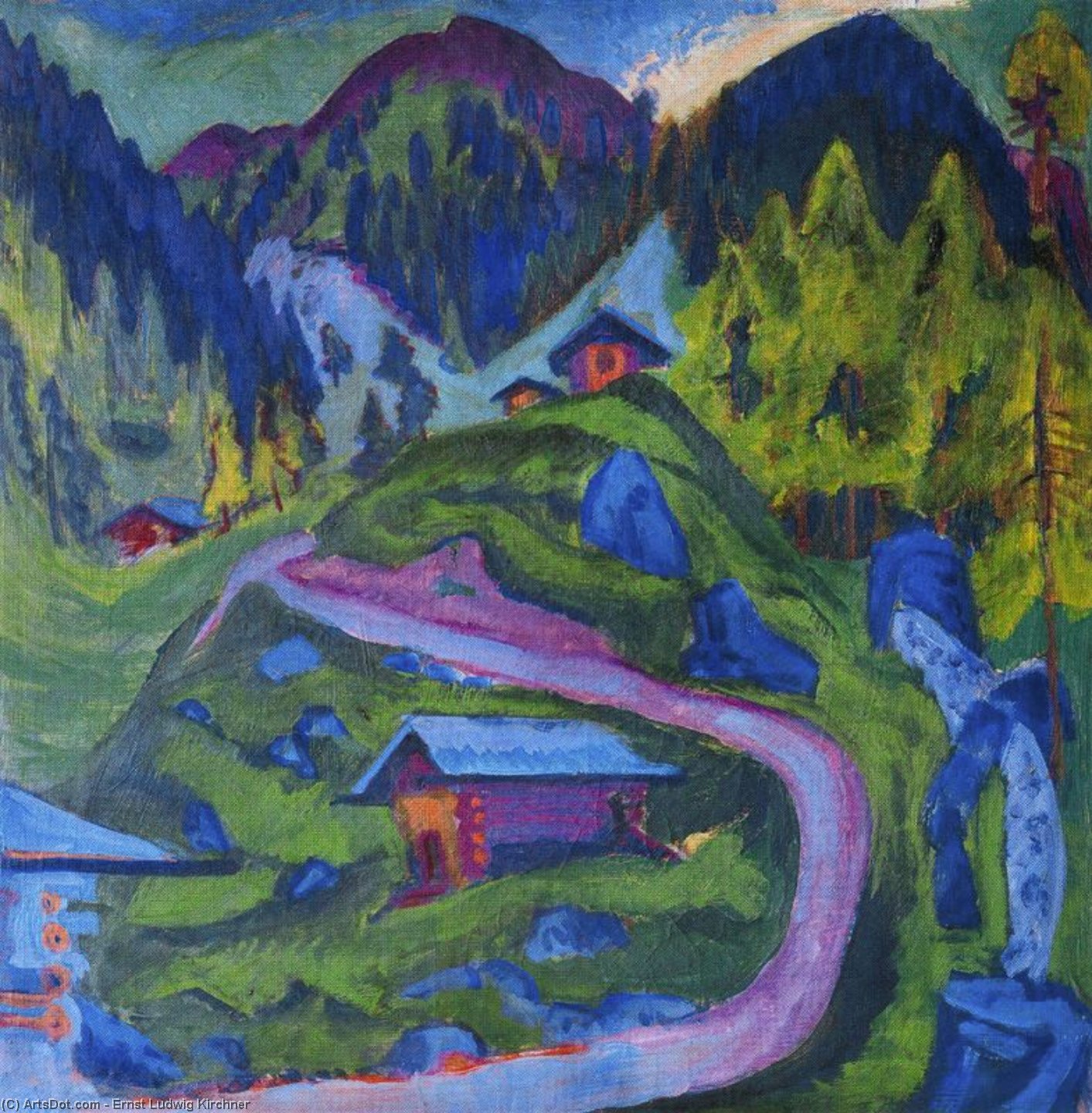
A Descent into Emotion: Exploring Ernst Ludwig Kirchner’s ‘Mountain Trail with Alpine Landscape’
Ernst Ludwig Kirchner's 'Mountain Trail with Alpine Landscape' isn't merely a depiction of a scenic vista; it’s a visceral plunge into the heart of human emotion. Painted in 1928, during his peak period of Expressionist fervor, this artwork embodies the anxieties and restless spirit that defined Kirchner’s artistic vision – a world fractured by rapid industrialization and simmering social unrest. The painting immediately assaults the senses with its intensely saturated colors, a deliberate rejection of naturalistic representation in favor of conveying raw feeling. The bold greens, blues, and fiery reds don't simply describe the landscape; they actively participate in an emotional narrative, mirroring the turbulence within Kirchner himself.
Composition and Technique: A Distortion of Reality
- Dynamic Perspective: Rendered from a slightly elevated viewpoint, the composition draws the viewer into the scene with a winding path that aggressively pulls us forward. This isn't a passive observation; it’s an invitation to share in Kirchner’s subjective experience.
- Angular Forms and Thick Brushstrokes: The artist employs strong, angular lines to define the jagged peaks of the mountains and the blocky forms of the buildings, creating a sense of unease and instability. These shapes are built up with thick, visible brushstrokes – a hallmark of Expressionism – that contribute to the painting’s textured surface and palpable energy.
- Impasto and Layering: Noticeable impasto in areas, particularly around the buildings and sky, suggests a deliberate layering of paint, adding depth and further emphasizing the physicality of Kirchner's process. This technique wasn’t about creating an illusion of three-dimensionality; it was about imbuing the canvas with emotional weight.
Symbolism and Emotional Resonance: The Weight of the Landscape
More than just a landscape, ‘Mountain Trail with Alpine Landscape’ is laden with symbolic meaning. The distorted perspective, flattened space, and unsettling color palette reflect Kirchner's profound anxieties about modern life – the alienation, the loss of traditional values, and the overwhelming sense of displacement he felt. The winding path itself can be interpreted as a journey through uncertainty, while the towering mountains represent both awe-inspiring power and potentially insurmountable obstacles. The buildings, rendered in simplified forms, perhaps symbolize the decaying structures of society, mirroring Kirchner’s own disillusionment with the prevailing social order.
Historical Context and Artistic Influence: Rooted in Expressionism
Kirchner was a central figure in the German Expressionist movement, which emerged in the early 20th century as a reaction against the perceived superficiality of academic art. Influenced by artists like Van Gogh and Gauguin, Kirchner sought to express inner emotions through bold color and distorted forms. His work reflects the broader cultural anxieties of the time – the rise of industrialization, urbanization, and the increasing sense of alienation in modern society. This painting stands as a powerful testament to his commitment to artistic freedom and his willingness to confront difficult truths about the human condition.
A Statement for Your Space: Bringing Kirchner’s Vision Home
'Mountain Trail with Alpine Landscape' is more than just a beautiful artwork; it’s an investment in a powerful statement. Its dramatic composition and emotive palette will undoubtedly become a focal point in any interior space, sparking conversation and inviting contemplation. A hand-painted reproduction captures the essence of Kirchner’s genius, allowing you to experience the raw emotional intensity of this iconic work firsthand.