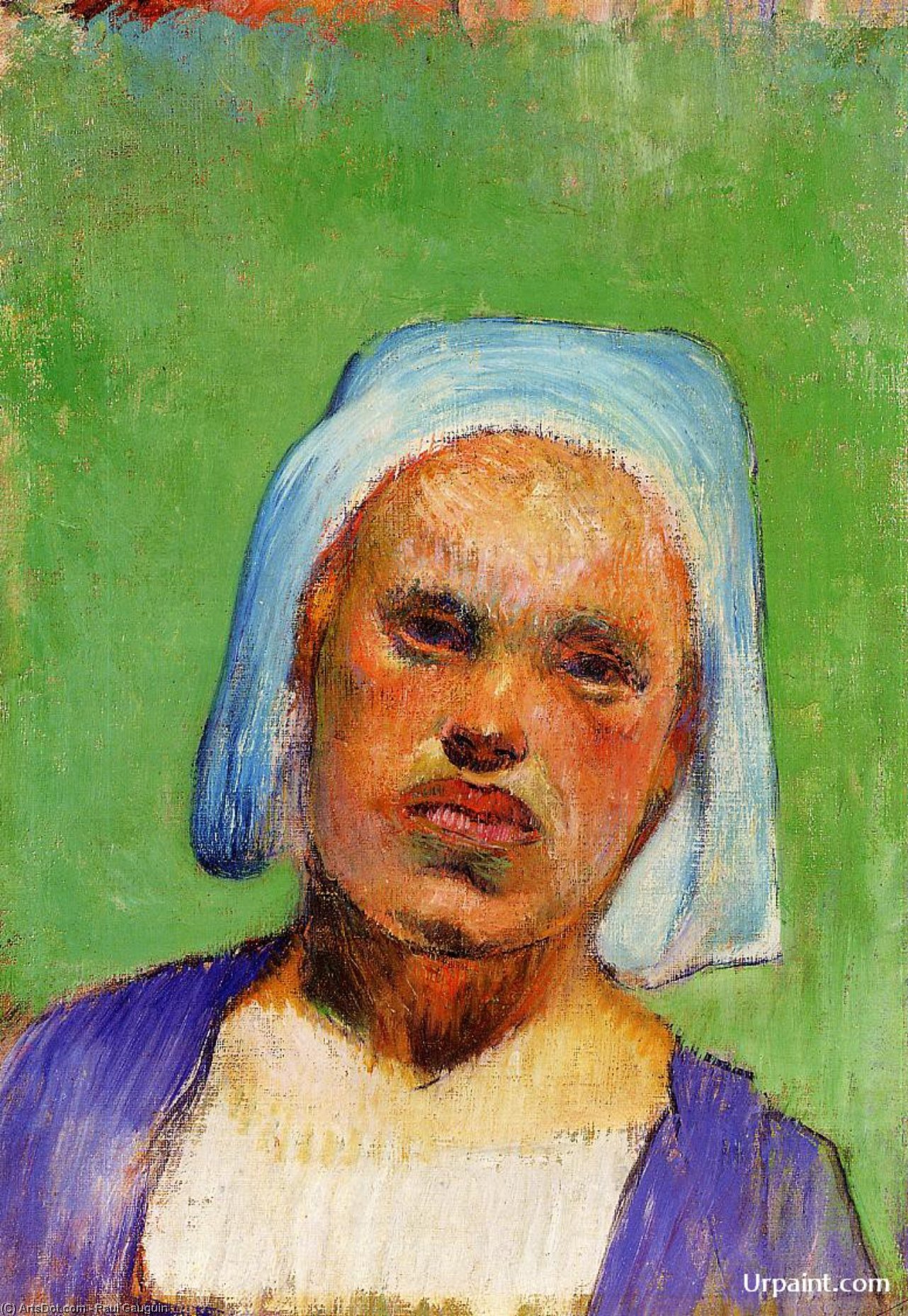
Portrait of a Pont-Aven Woman (Marie Louarn.)
The
Portrait of a Pont-Aven Woman (Marie Louarn.) by the renowned artist
Paul Gauguin is a captivating piece that embodies the essence of Post-Impressionism. Created in 1888, this oil on canvas painting measures 33 x 23 cm and is a testament to Gauguin's unique style. It depicts Marie Louarn, a woman from Pont-Aven, Brittany, France – a region that profoundly influenced Gauguin’s artistic vision. Often portraying women from this area, he captured their serene beauty and simplicity, reflecting the spirit of rural Breton life.
The Subject: Marie Louarn
Marie Louarn herself possessed an undeniable presence; her gaze directly confronts the viewer with unwavering seriousness. This intimate connection between subject and observer is heightened by Gauguin’s masterful use of light and shadow, creating a palpable sense of depth within the composition. The painting showcases Louarn adorned with a striking blue head scarf – a deliberate choice that draws attention to color and texture, elements central to Gauguin's stylistic approach. Her posture exudes quiet dignity, conveying a contemplative mood that invites reflection on themes of femininity and rural existence.
Artistic Style: Post-Impressionism
The
Portrait of a Pont-Aven Woman (Marie Louarn.) exemplifies Gauguin’s adherence to the Post-Impressionist movement. Unlike Impressionists who prioritized capturing fleeting moments of light and color, Gauguin sought to express emotion and inner vision through bold hues and flattened forms. This stylistic decision is evident in the vibrant green background – a deliberate contrast that amplifies Louarn's attire and contributes to the painting’s overall dramatic effect. The artist skillfully employs thick brushstrokes, layering pigment onto the canvas to build up texture and create an impressionistic surface.
Influence of Les Nabis
Gauguin’s artistic trajectory was significantly shaped by
The Nabis Art Movement, a group of young French artists who championed experimentation and challenged traditional academic conventions. Influenced by Symbolist ideas – particularly the concept of representing inner states rather than external appearances – Gauguin adopted techniques reminiscent of Les Nabis, such as simplified contours and muted color palettes. This stylistic kinship is palpable in his other works, notably *Two vases of flowers a fan*, where similar principles of flattened form and expressive brushwork are employed.
Comparison with Other Artists
Gauguin’s style resonates with that of fellow Post-Impressionists like Vincent van Gogh and Maurice Denis. Van Gogh's canvases pulsate with energetic swirls of color and impasto – a technique characterized by thick, textured paint applied directly to the canvas— mirroring Gauguin’s commitment to conveying emotion through tactile surface qualities. Similarly, Denis’s paintings prioritize geometric forms and harmonious color combinations, reflecting a shared fascination with abstraction and spiritual contemplation. Unlike Impressionists who sought to reproduce visual reality faithfully, these artists prioritized conveying subjective experience, establishing a crucial precedent for subsequent artistic movements.
Conclusion
The
Portrait of a Pont-Aven Woman (Marie Louarn.) by Paul Gauguin stands as a cornerstone of Post-Impressionism. Its bold colors, flattened forms, and unwavering gaze encapsulate Gauguin’s distinctive artistic vision—a testament to his ability to transform observation into profound emotional expression. For those seeking inspiration or contemplating acquiring a stunning reproduction, explore more of Gauguin's oeuvre at
ArtsDot for exceptional quality prints crafted with meticulous attention to detail.
Photo Description: The painting portrays Marie Louarn in a contemplative pose against a lush green backdrop. Her gaze is direct and serious, conveying an inner stillness that contrasts beautifully with the vibrant hues of her attire and headscarf. Gauguin’s masterful brushwork creates textural depth and enhances the emotional impact of the scene.
Size: 33 x 23 cm
Date: 1888