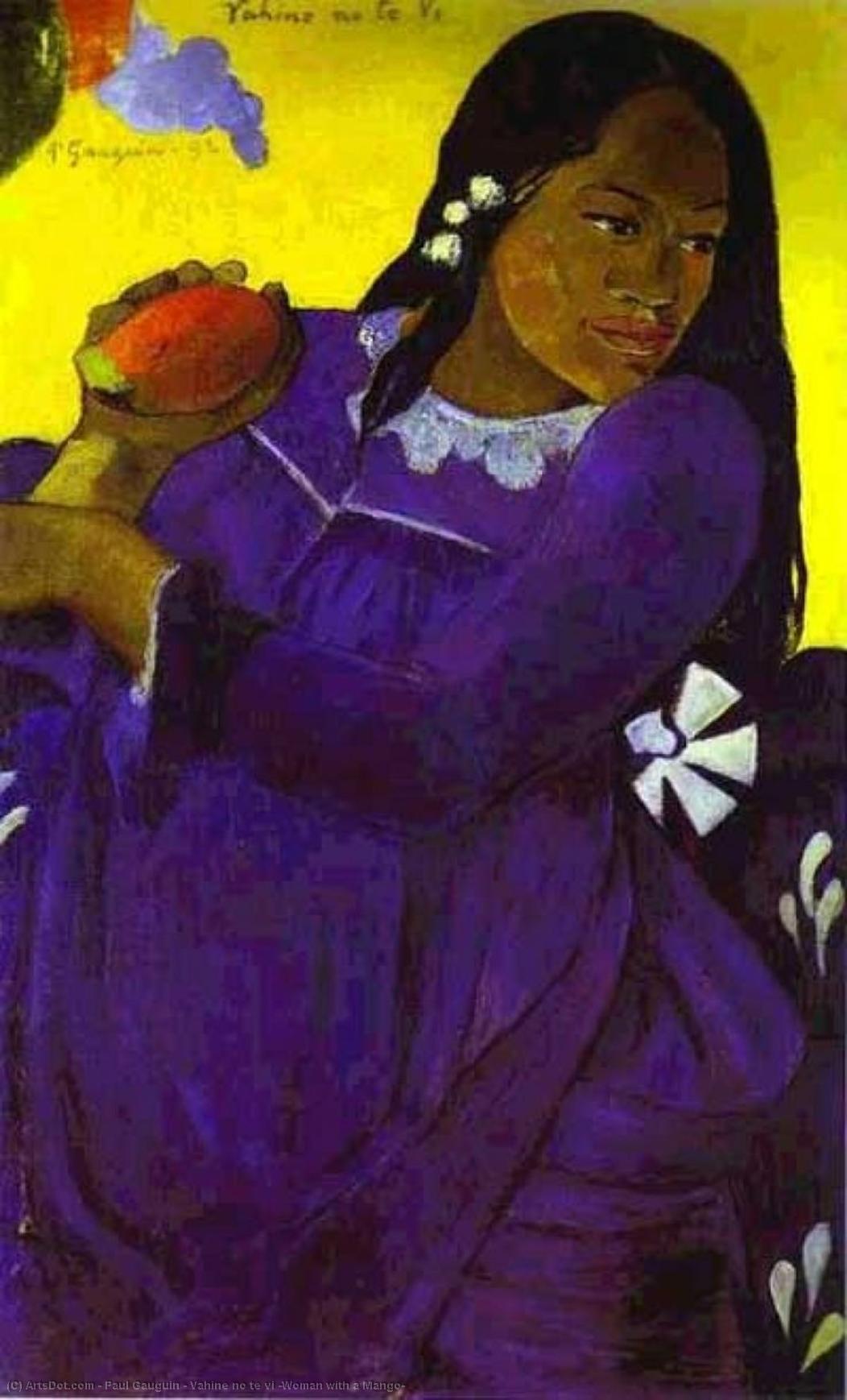
Introduction to the Painting
Paul Gauguin's
Vahine no te vi, which translates to "Woman with a Mango," is a captivating oil on canvas painting that showcases the artist's unique style and his fascination with the cultures of Tahiti. This piece is characterized by its use of bold lines, vibrant colors, and flat forms, exemplifying Gauguin’s adoption of
Cloisonnism, a technique that emphasizes bold lines and flat forms. Cloisonnism, derived from the French word "cloison," meaning "partition" or "cell," was a revolutionary approach to painting developed by Gauguin during his time in Polynesia. It departed dramatically from Impressionistic realism, prioritizing expressive color and simplified shapes over meticulous detail. This stylistic choice reflects Gauguin's desire to capture the essence of Polynesian life—its spirituality, its primal beauty—rather than merely documenting it visually.
Context and Inspiration
Gauguin’s time in French Polynesia was marked by his profound yearning for escape from the constraints of Western civilization. He envisioned Tahiti as a sanctuary untouched by industrialization and materialism, a place where he could reconnect with nature and rediscover authentic human experience. His artistic endeavors during this period were fueled by an intense spiritual curiosity—a conviction that art possessed the power to transcend rational thought and communicate directly with the soul. The painting features a Tahitian woman holding a mango, with lush vegetation in the background, inviting the viewer into her serene world. This imagery speaks to themes of fertility, abundance, and the harmonious relationship between humanity and nature – concepts central to Polynesian cosmology and Gauguin’s own worldview. He meticulously observed the rhythms of daily life in Tahiti, capturing not just what he saw but also what he felt—a deep reverence for the natural environment and a fascination with indigenous traditions.
Legacy and Impact
Today,
Vahine no te vi is considered a cornerstone of
Post-Impressionism, cementing Gauguin’s position as one of the most influential artists of his era. Its bold color palette—dominated by reds, yellows, and greens—immediately grabs the eye and establishes an emotional resonance that transcends mere visual representation. The painting resides in the collection at the
Museum Galleria d'Arte Moderna in Brescia, Italy. For those interested in exploring more of Gauguin’s works,
view the painting and discover the beauty of his art. His influence extended far beyond the artistic realm, inspiring subsequent generations of artists to experiment with color and form—a legacy that continues to resonate in contemporary visual culture.
Recommended Similar Paintings
For enthusiasts of Gauguin’s style,
At
ArtsDot.com, we offer high-quality hand-made oil paintings reproductions of
Vahine no te vi and other works by
Paul Gauguin. Our skilled artists meticulously recreate each detail, ensuring a faithful representation of the original work.
For more information on
Paul Gauguin and his artistic style, visit
his page on ArtsDot.com. Discover the world of
Post-Impressionism and explore the captivating works of this renowned artist.