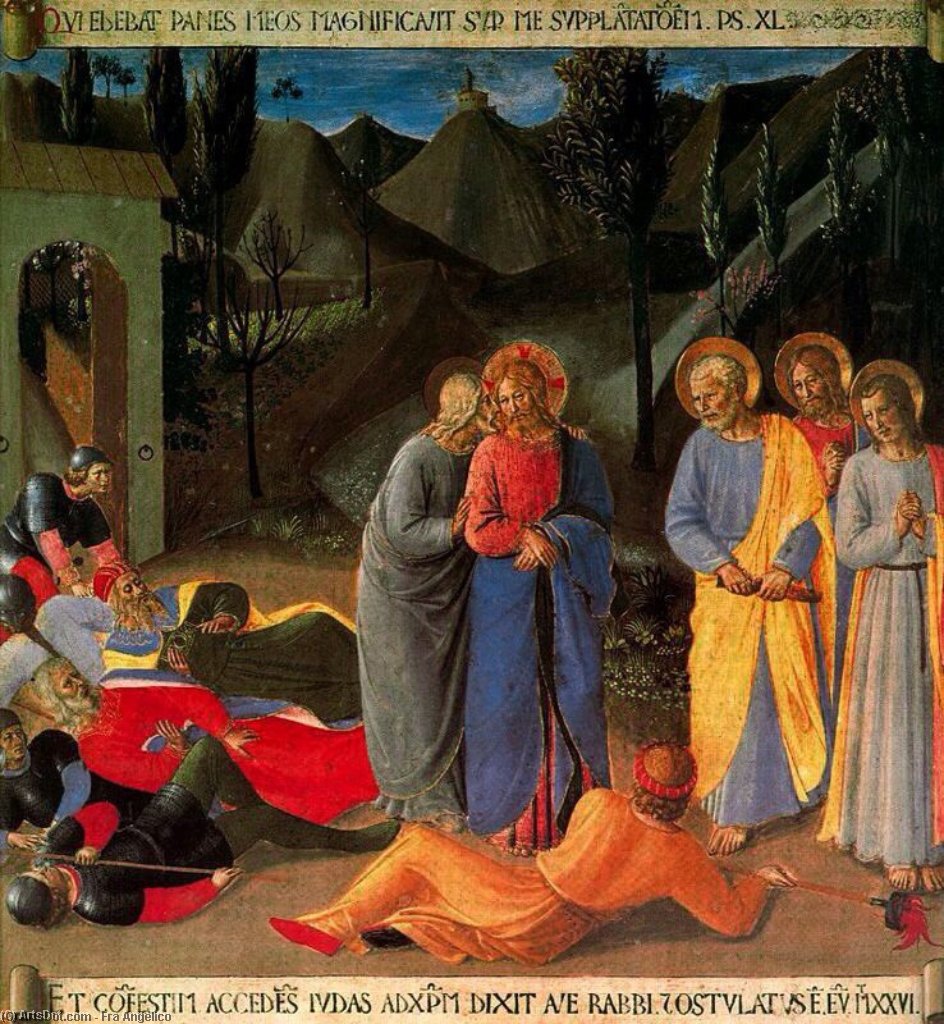
El Beso de Judas: Un Icono del Renacimiento Temprano
Fra Angelico’s “El Beso de Judas” – a fresco housed within the evocative Convent of San Marco in Florence – isn't merely a depiction of a biblical event; it’s a profound meditation on betrayal, redemption, and the very essence of human emotion. Completed around 1450 during the flourishing of the Quattrocento art movement, this masterpiece transcends its historical context to resonate powerfully with viewers centuries later. The painting captures a pivotal moment – the clandestine kiss between Jesus and Judas Iscariot – yet it’s far more than a straightforward narrative illustration. Angelico masterfully employs the techniques and sensibilities of the Early Renaissance, creating an image brimming with grace, clarity, and a subtle, almost heartbreaking, sense of tragedy.
The fresco's foundation lies in the Gospel accounts of Judas’s betrayal, but Angelico elevates the scene through his meticulous attention to detail and his profound understanding of human psychology. The composition is remarkably balanced, drawing our eye immediately to the central figures: Jesus, serene yet vulnerable, and Judas, a figure shrouded in shadow, his face etched with a mixture of guilt and calculation. The surrounding crowd – a diverse collection of men and women – isn’t simply a backdrop; they are active participants in this drama, their expressions ranging from curiosity to concern, reflecting the shock and disbelief that must have permeated the scene.
La Influencia del Quattrocento y la Técnica del Fresco
“El Beso de Judas” is inextricably linked to the Quattrocento art movement, a period of immense artistic innovation in Italy. This era witnessed a renewed fascination with classical antiquity and a burgeoning interest in humanism – a shift towards portraying humanity with greater realism and emotional depth. Angelico’s work embodies these ideals perfectly. The use of *fresco* as the medium is crucial to understanding the painting's impact. Fresco, involving pigments applied directly to wet plaster, creates an enduring image, resistant to decay and lending a remarkable luminosity to the colors. Angelico skillfully manipulates light and shadow, creating a sense of depth and volume that was revolutionary for its time. Notice how he uses subtle gradations of color to define the figures’ forms and create a palpable atmosphere of tension.
Furthermore, Angelico's training under Lorenzo Monaco is evident in the painting’s elegant lines and decorative patterns. However, unlike his teacher, Angelico imbues his work with a deeply spiritual quality, reflecting his devotion as a Dominican friar. The meticulous detail – from the folds of the robes to the expressions on the faces – speaks volumes about his dedication to capturing not just the physical likenesses but also the inner lives of his subjects.
Simbolismo y Emoción: Un Retrato de la Condición Humana
Beyond its technical brilliance, “El Beso de Judas” is rich in symbolism. The sword and book present in the scene are potent reminders of betrayal and divine judgment. The book, often interpreted as representing Scripture, underscores the gravity of Judas’s actions – a rejection of God's word. The placement of these objects subtly directs our gaze and reinforces the painting’s central theme: the consequences of sin and the possibility of redemption.
However, it is the emotional impact of the work that truly captivates. Angelico doesn’t simply depict a historical event; he captures the agonizing moment of betrayal – the palpable sense of loss, regret, and despair. The subtle sadness in Jesus's eyes, coupled with Judas’s conflicted expression, creates a deeply moving tableau. The painting invites us to contemplate not only the tragedy of Judas’s actions but also the universal themes of faith, doubt, and the enduring struggle between good and evil. It is a testament to Angelico’s ability to transform a biblical narrative into a profound meditation on the human condition.
Reproducciones de Alta Calidad: Revive la Belleza del Renacimiento
ArtsDot offers meticulously crafted, hand-painted reproductions of “El Beso de Judas” that faithfully capture the essence and beauty of this iconic masterpiece. Using archival-quality materials and employing techniques reminiscent of Angelico’s own approach, our reproductions provide a stunning alternative to the original fresco while preserving its historical significance. Whether you're an art collector, interior designer seeking to infuse your space with timeless elegance, or simply someone who appreciates the beauty of Renaissance art, a ArtsDot reproduction of “El Beso de Judas” is a treasured addition to any collection.