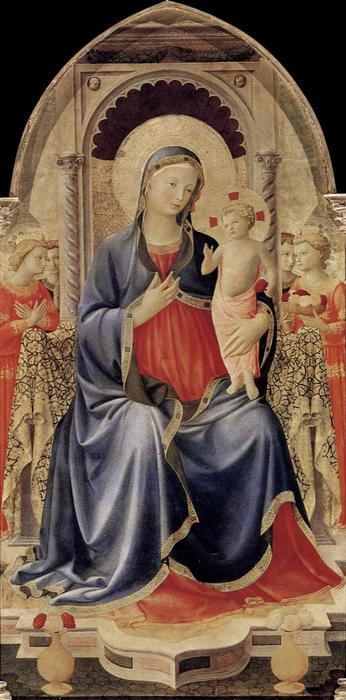
Cortona Polyptych (central panel): A Hymn to Divine Grace
The Cortona Polyptych stands as one of Fra Angelico’s most celebrated achievements, embodying the pinnacle of Early Renaissance artistic idealism and spiritual devotion. Created in 1437 for the Diocesan Museum of Cortona, Italy—a testament to Tuscan piety—this tempera painting on panel transcends mere visual representation; it's a profound meditation on faith and grace rendered with breathtaking precision and luminous color. Measuring 137 x 68 cm, its central panel depicts Mary holding the infant Jesus amidst an angelic choir, establishing a composition that resonates with timeless beauty and theological significance.
- Composition & Harmony: Fra Angelico’s genius lies in orchestrating a visual narrative that achieves remarkable depth and balance. The figures are arranged in concentric circles, guiding the viewer's gaze upwards towards God—a deliberate strategy reflecting medieval cosmological beliefs. Each element contributes to an overarching sense of serenity and spiritual contemplation.
- Symbolism & Iconography: The Virgin Mary’s serene posture embodies humility and maternal compassion, while Jesus Christ represents divine innocence and redemption. Surrounding them are angels radiating light and symbolizing God's benevolent presence—a visual echo of biblical scripture. The drapery is meticulously rendered to convey movement and elegance, reinforcing the painting’s spiritual aura.
- Technique & Color Palette: Fra Angelico’s mastery of tempera paint—known for its durability and ability to achieve vibrant hues—is evident in every brushstroke. He employs a masterful color palette dominated by blues and golds, symbolizing Mary's purity and Christ's divinity respectively. The subtle gradations of tone create an illusion of three-dimensionality, enhancing the painting’s realism without sacrificing its spiritual essence.
- Historical Context: Produced during the Florentine Renaissance—a period marked by intellectual ferment and artistic innovation—the Cortona Polyptych reflects the humanist ideals prevalent at the time while retaining a deeply rooted Christian faith. It stands alongside masterpieces by Piero della Francesca and Masaccio, demonstrating the transformative influence of perspective and naturalism on artistic expression.
- Legacy & Emotional Impact: The Cortona Polyptych continues to inspire awe and admiration centuries after its creation. Its ethereal beauty—captured with unparalleled skill—serves as a poignant reminder of humanity’s yearning for transcendence and divine grace. It remains a cornerstone of Renaissance art history, securing Fra Angelico's place among the greatest painters of his era.
Additional Insights: The Predella Panels
Beyond its central panel, the Cortona Polyptych comprises four predella panels depicting episodes from the life of Saint Dominic—the patron saint of Tuscany and a pivotal figure in the Catholic Reformation. These panels showcase Fra Angelico’s meticulous attention to detail and his ability to convey narrative complexity with understated elegance. The predella's luminous colors and graceful figures underscore the importance of monastic piety and devotion within Renaissance culture.
Exploring Related Works
For a deeper understanding of Fra Angelico’s artistic vision, consider examining “Virgin with Child and Four Saints” (detail of the predella), housed in Museo Diocesano Cortona. This masterpiece exemplifies his signature style—characterized by serene composition, luminous color palettes, and profound spiritual symbolism—offering invaluable insight into the artist's creative process and aesthetic sensibilities.
Resources for Further Study
To delve deeper into Fra Angelico’s life and oeuvre, visit
Meester Van De Conversazione Di Santo Spirito at ArtsDot. Explore his other paintings and manuscripts—remarkable examples of Early Renaissance art—to appreciate the breadth and depth of his artistic legacy.