A Vision of Heavenly Grace: Exploring Fra Angelico’s “La Virgen”
- Subject Matter and Narrative:
- Renaissance Style and Artistic Innovation
- Technique – Tempera on Panel: A Delicate Dance of Color
- Historical Context – Florentine Spirituality and Patronage
- Symbolism – Divine Femininity and Spiritual Perfection
Subject Matter and Narrative:
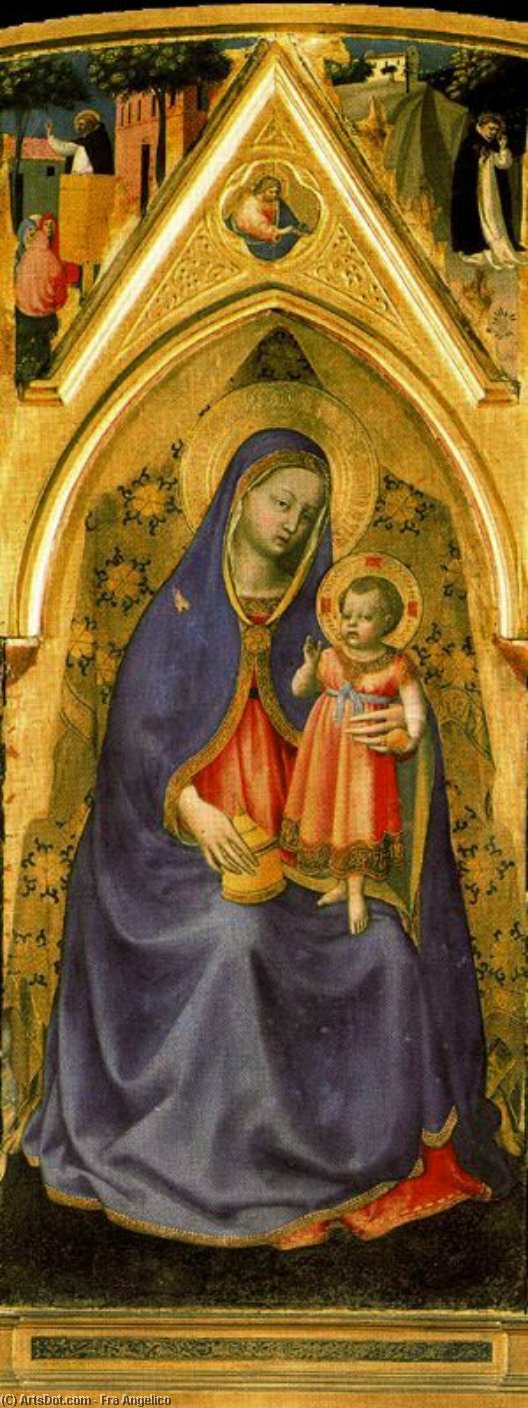
“La Virgen,” attributed to Fra Angelico, transcends mere representation; it embodies a profound meditation on motherhood and divine grace. The painting depicts Mary cradling Jesus Christ, a motif central to Christian iconography throughout the centuries. More than just portraying a biblical scene, Angelico’s artwork seeks to convey an idealized vision of purity, compassion, and unwavering faith—qualities deeply valued during the Renaissance period. The composition is carefully orchestrated, positioning Mary as the focal point amidst a serene castle-like structure, symbolizing divine majesty and protection. Surrounding figures underscore the importance of communal devotion and reinforce the narrative’s spiritual core.
Renaissance Style and Artistic Innovation:
Fra Angelico's contribution to Renaissance art is undeniable, marking him as one of its foremost luminaries. His style aligns seamlessly with the humanist ideals flourishing in Florence at the time—a movement prioritizing human intellect and artistic expression alongside religious contemplation. Unlike earlier Gothic styles characterized by darkness and solemnity, Angelico’s palette employs luminous colors achieved through tempera paint on panel, creating an atmosphere of ethereal beauty. This stylistic choice reflects a deliberate effort to elevate the viewer's spirit and evoke feelings of reverence—a hallmark of Renaissance spirituality. He skillfully blended Byzantine influences with emerging Italian artistic sensibilities, establishing a distinctive aesthetic that would inspire generations of artists.
Technique – Tempera on Panel: A Delicate Dance of Color:
The technique employed by Angelico—tempera paint on panel—was remarkably precise and demanding. Tempera involves mixing pigment with egg yolk and resin, resulting in a durable, luminous coating that resists cracking and fading over time. This meticulous process allowed for subtle gradations of color and unparalleled tonal accuracy—essential elements in capturing the delicate beauty of Mary’s face and robes. The artist's painstaking attention to detail is evident in every brushstroke, demonstrating mastery of artistic craftmanship. Furthermore, Angelico utilized glazing techniques, layering translucent washes of pigment over underlying colors to achieve depth and luminosity, enhancing the overall visual impact of the artwork.
Historical Context – Florentine Spirituality and Patronage:
“La Virgen” emerged from the vibrant intellectual and spiritual landscape of Florence during the Quattrocento—the “rebirth” of classical learning and artistic creativity. The painting was commissioned by Lorenzo Medici, ruler of Florence, reflecting the city’s commitment to fostering religious art as a means of upholding moral virtue and glorifying God. Patronage played a crucial role in shaping artistic production during this era, providing artists like Angelico with resources and encouragement to pursue ambitious projects—such as monumental frescoes adorning churches throughout Tuscany. The artwork stands as testament to the humanist conviction that beauty could inspire piety and elevate human consciousness.
Symbolism – Divine Femininity and Spiritual Perfection:
Beyond its aesthetic qualities, “La Virgen” is laden with symbolic significance. Mary represents divine femininity—a concept central to Christian theology—symbolizing compassion, humility, and selfless devotion. Her crown signifies her regal dignity as Queen of Heaven, reflecting the belief in Mary’s exalted spiritual status. The castle-like structure serves as a visual metaphor for God's protection and majesty, emphasizing the sanctity of the depicted scene. Ultimately, Angelico’s masterpiece aspires to convey an idealized vision of spiritual perfection—a timeless reminder of faith’s transformative power and its capacity to illuminate the human soul.