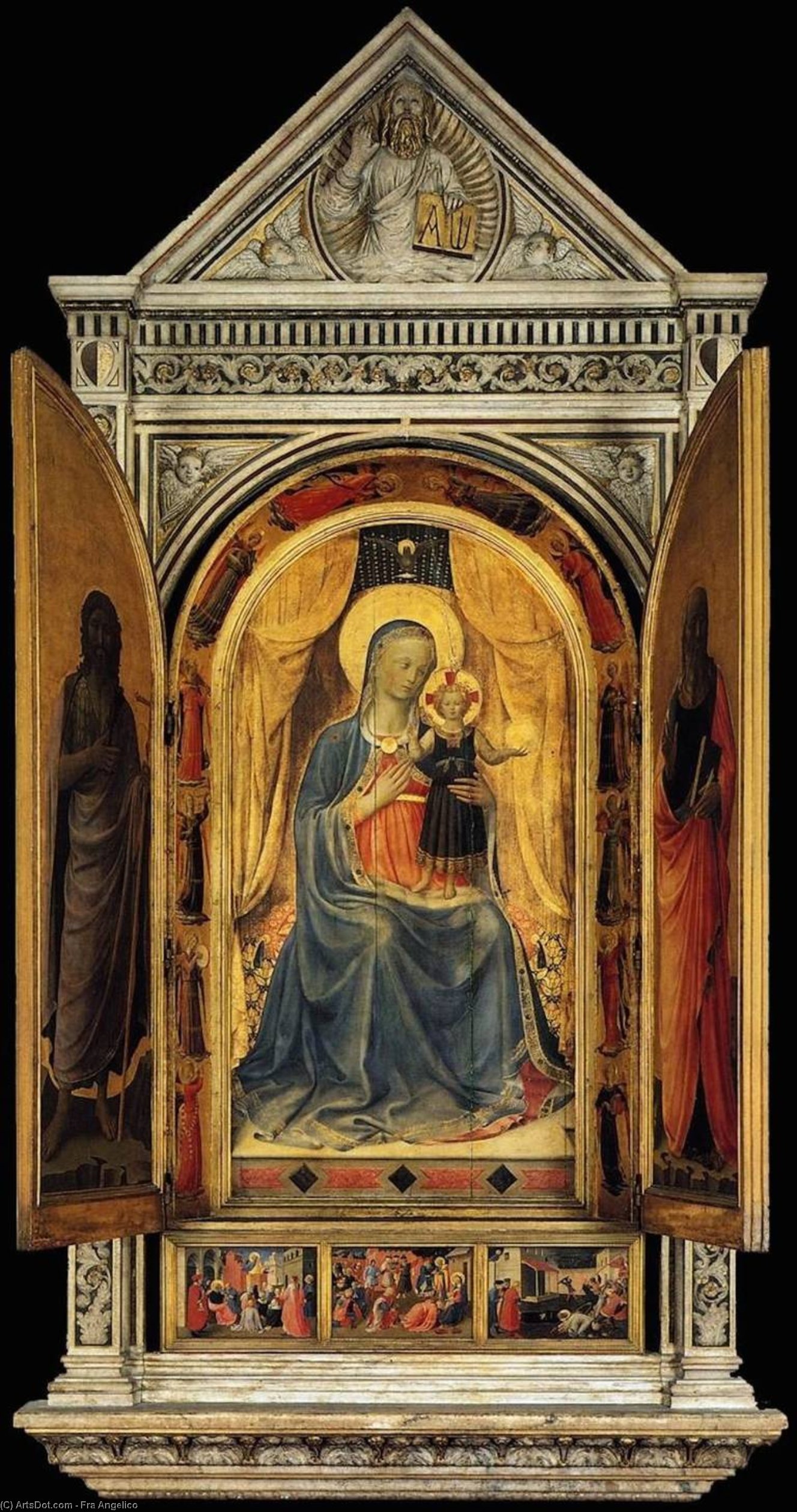
Linaioli Tabernacle (shutters open): A Renaissance Masterpiece Illuminated
The
Linaioli Tabernacle (shutters open) stands as a testament to Fra Angelico’s unparalleled skill and devotion—a cornerstone of Florentine Renaissance art. Created in 1433 for the Guild of Linen Manufacturers, this monumental altarpiece resides within the Museo di San Marco, Florence, offering visitors an immersive experience into the spiritual fervor of its time. Measuring 260 x 330 cm, it’s more than just paint on wood; it's a carefully crafted narrative imbued with profound symbolism and executed with meticulous attention to detail.
Composition and Symbolism: Harmony Within Sacred Space
Fra Angelico’s genius lies in his ability to convey complex theological concepts through deceptively simple forms. The central panel depicts the Virgin Mary seated serenely on a throne, cradling the infant Jesus—a depiction that embodies the core tenets of Christian faith. Surrounding this focal point are twelve musician angels, arranged in concentric circles, symbolizing divine harmony and proclaiming God’s glory. The drapery folds are rendered with exquisite precision, creating an illusion of depth and enhancing the overall sense of tranquility. Beyond its visual beauty, the tabernacle speaks volumes about medieval piety—a reflection of the humanist ideals that were beginning to emerge during the Renaissance.
Artistic Significance: Tempera on Panel – A Technique of Refinement
Fra Angelico’s masterful use of tempera paint on panel distinguishes him from many of his contemporaries. This technique, favored by artists like Piero della Francesca and Masaccio, allows for unparalleled luminosity and subtle color transitions—qualities that are vividly apparent in the luminous blues and golds dominating the composition. The delicate lines and soft colors contribute to an atmosphere of ethereal grace, mirroring the spiritual essence of the scene depicted. Unlike fresco painting, tempera does not adhere directly to the surface, necessitating careful preparation and layering, a process that demanded considerable artistic skill and patience. This painstaking method ensured that every brushstroke conveyed maximum impact.
Context and Provenance: Part of a Larger Artistic Legacy
The Linaioli Tabernacle is inextricably linked to the broader artistic landscape of Florence during the Quattrocento—a period marked by intellectual curiosity, humanist scholarship, and an ambitious revival of classical ideals. It belongs to a significant collection housed at Museo di San Marco, alongside other celebrated works by Fra Angelico, including *Annalena Altarpiece (without predella)* and *St Peter Preaching in the Presence of St Mark (Linaioli Tabernacle)*. The Museo di San Marco itself is an invaluable cultural institution—a repository of artistic treasures that illuminate the history of Florentine art and culture. Its preservation underscores the importance of safeguarding our collective heritage for future generations.
Relevance to Art History: Influencing Generations
Fra Angelico’s influence extended far beyond his own lifetime, shaping the aesthetic sensibilities of artists who followed him—a legacy that continues to inspire admiration today. His meticulous attention to detail and his profound understanding of spiritual themes established a standard of excellence that resonated throughout Europe. The Linaioli Tabernacle serves as an enduring symbol of Renaissance artistic achievement—a masterpiece that encapsulates the humanist spirit and celebrates divine beauty.
Fra Angelico's Linaioli Tabernacle (shutters open) is a masterpiece that continues to captivate art lovers with its beauty and spiritual depth. Through ArtsDot.com, you can own a piece of this history.