The Visceral Echo of Existence
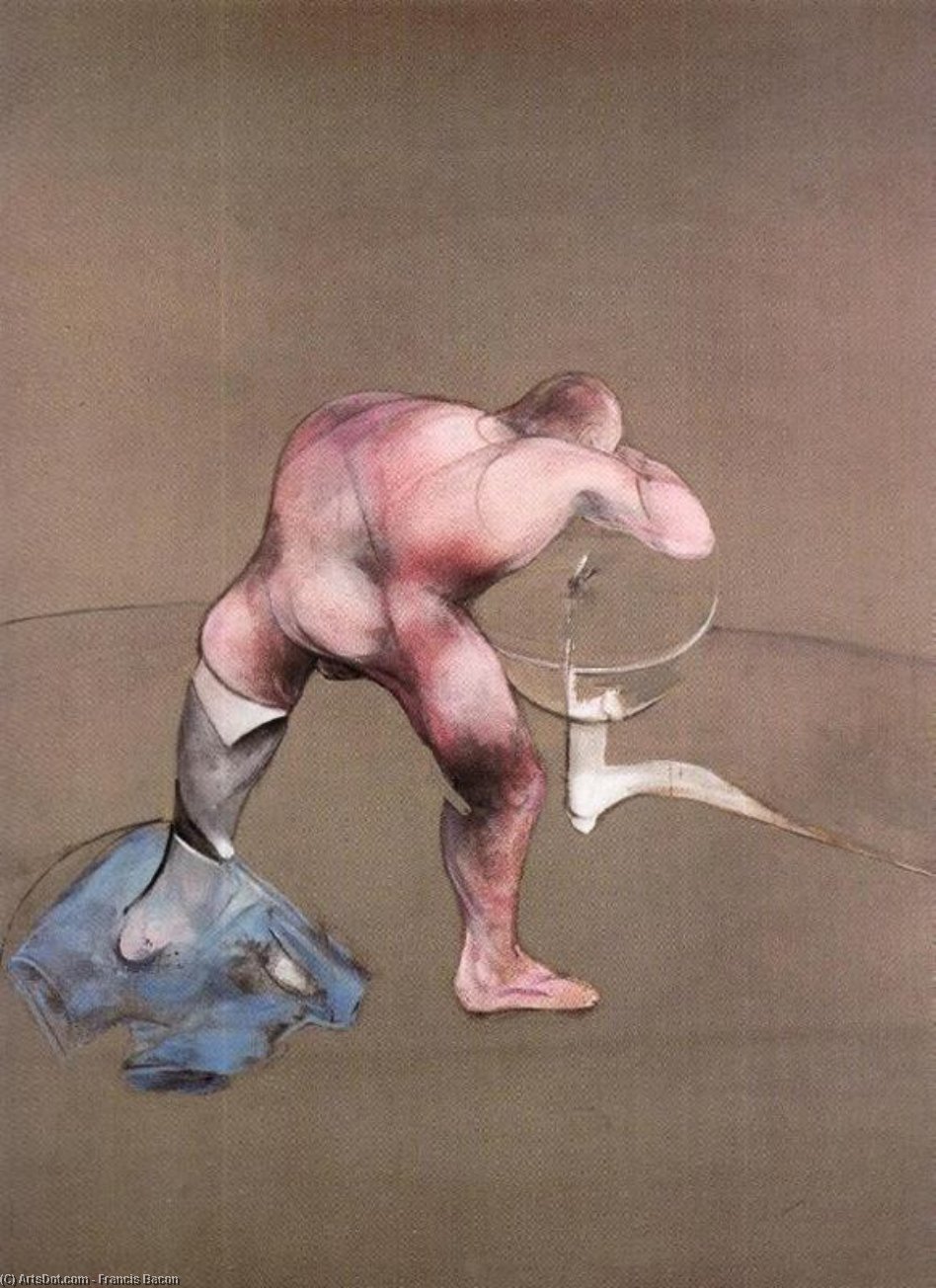
In the hauntingly quiet space of Francis Bacon’s 1953 masterpiece, Man at Washbasin, we are not merely observers of a private moment, but witnesses to a profound psychological confrontation. The painting presents a figure captured in a state of raw vulnerability, his back turned toward the viewer as he stands before a stark, utilitarian sink. There is an undeniable tension in his posture—a hand resting on his hip, another gripping a cold metal fixture—that suggests a man caught between the ritual of cleansing and the overwhelming weight of his own being. This is not a portrait of comfort; it is a study of the human condition stripped of all pretension, where the simple act of washing becomes a heavy, almost ritualistic struggle against the encroaching shadows of the psyche.
Bacon’s technique serves as the very heartbeat of this unsettling scene. Eschewing the polished perfection of academic traditions, he embraced an expressionist boldness that prioritizes emotional truth over anatomical accuracy. Through the use of thick, heavy impasto and aggressive, sweeping brushstrokes, the artist creates a surface that feels alive with movement and unease. The paint does not merely sit upon the canvas; it pulses with a tactile energy, mirroring the turbulent internal landscape of the subject. This textured approach allows the light to catch the ridges of the pigment, creating a dynamic interplay of shadow and form that prevents the eye from ever finding a place of true rest.
A Mirror to Post-War Disillusionment
To understand the profound impact of this work, one must look through the lens of its historical moment. Emerging from the bleak, uncertain aftermath of World War II in Britain, Man at Washbasin breathes the air of a generation grappling with trauma, loss, and the collapse of old certainties. The painting resonates with the existentialist philosophies of Sartre and Camus, capturing that specific mid-century dread—the feeling of being isolated within one's own skin in an increasingly absurd world. The bathroom setting, while mundane, becomes a stage for a much larger drama: the confrontation with mortality and the inescapable reality of human fragility.
The symbolism embedded within the composition is both subtle and devastating. The nakedness of the man represents a total lack of defense, a stripping away of social identity to reveal the vulnerable flesh beneath. Even the towel, draped precariously, offers little solace or protection against the exposure of the soul. For the discerning collector or interior designer, this piece offers more than just aesthetic value; it provides a profound focal point for spaces that demand depth and intellectual gravity. A high-quality reproduction of this work brings into a room not just a striking image, but a conversation about resilience, the beauty found in raw emotion, and the enduring power of the human spirit to face its own reflection.