A Moment Frozen in Graphite: The Intimacy of Frank Hinder’s Jerry
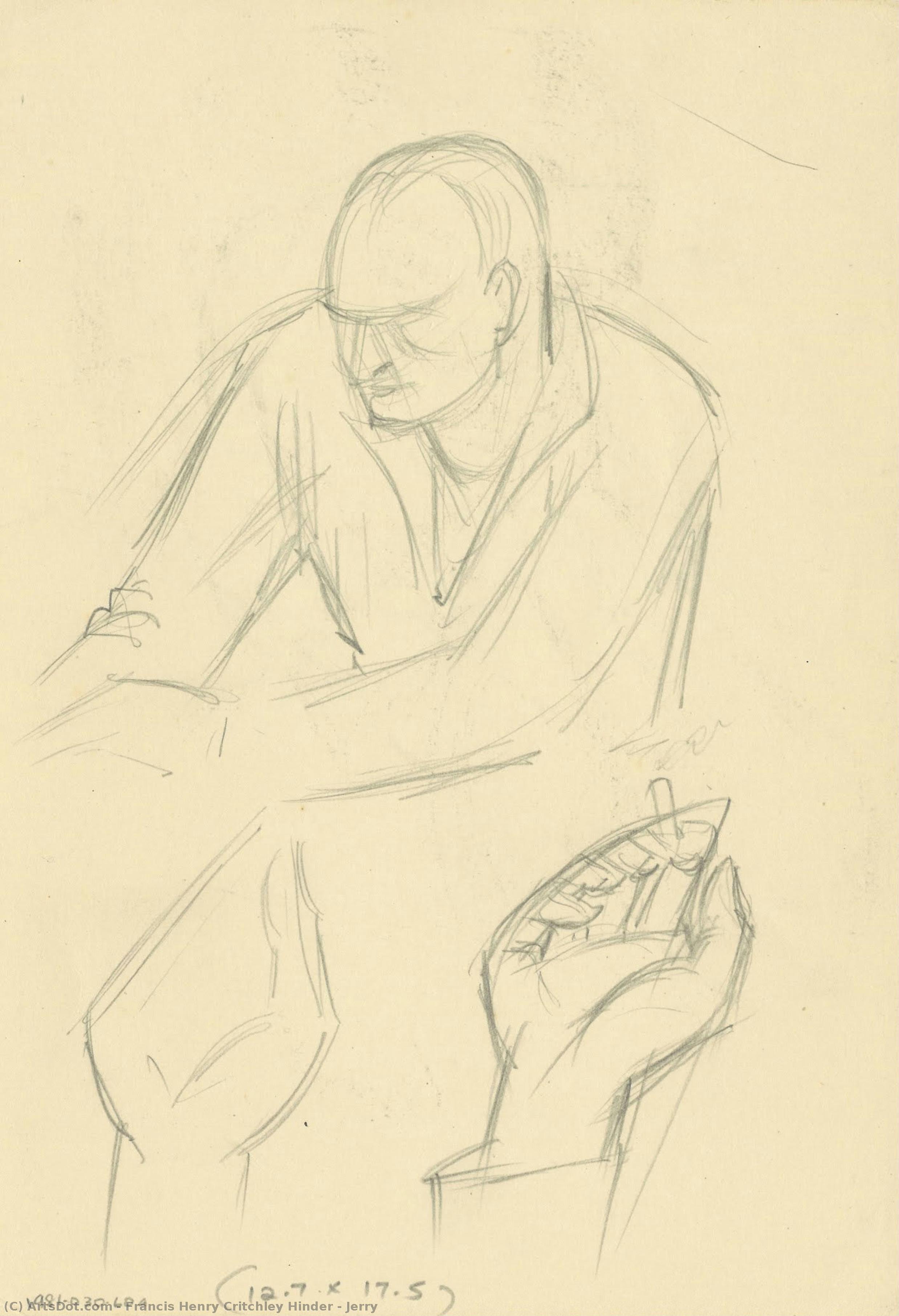
In the quiet, amber-hued depths of 1945, a moment of profound stillness was captured by the hand of Frank Hinder. His drawing, titled Jerry, serves as more than just a sketch; it is a window into a vanished era of camaraderie and creative communion. The artwork presents a dual vision of a man—likely his close friend Gerald Lewers—caught in the contemplative ritual of smoking. Through delicate, rhythmic lines, Hinder renders the subject with an effortless grace that belies the simplicity of the medium. There is a haunting quality to the way the figure sits, enveloped by the soft shadows of a post-war world, holding a cigarette as if it were a scepter of quiet thought. The paper itself, yellowed and weathered by the passage of decades, adds a layer of temporal texture, making the viewer feel as though they are peering through a veil of history.
The technique employed in Jerry speaks to Hinder’s mastery of line and his ability to translate human presence into abstract essence. While Hinder would later become a titan of Australian abstraction, this early work reveals the foundational strength of his draftsmanship. The repetition of the figure—two overlapping depictions of the same man—creates a sense of movement and psychological depth, suggesting the flickering nature of memory or the restless energy of a mind at work. This layering technique provides a rhythmic pulse to the composition, guiding the eye through the smoky atmosphere of the subject's environment. For the collector, this piece offers a rare glimpse into the artist's formative years, showcasing a delicate balance between representational accuracy and the burgeoning modernist sensibilities that would eventually define his legacy.
Beyond its formal qualities, Jerry carries an immense emotional weight, acting as a poignant document of the social fabric of the Lewers household. It captures the essence of a tight-knit community of artists—a group of souls sharing meals, reading, and resting amidst the reconstruction of a post-World War II landscape. To possess a reproduction of this work is to invite a sense of nostalgic warmth and intellectual curiosity into a space. For interior designers, the piece serves as an exquisite focal point for a study or a sophisticated gallery wall, offering a muted, earthy palette that complements both contemporary minimalist settings and classic, traditional interiors. It is an invitation to pause, to breathe, and to find beauty in the quiet, unobserved moments of human existence.