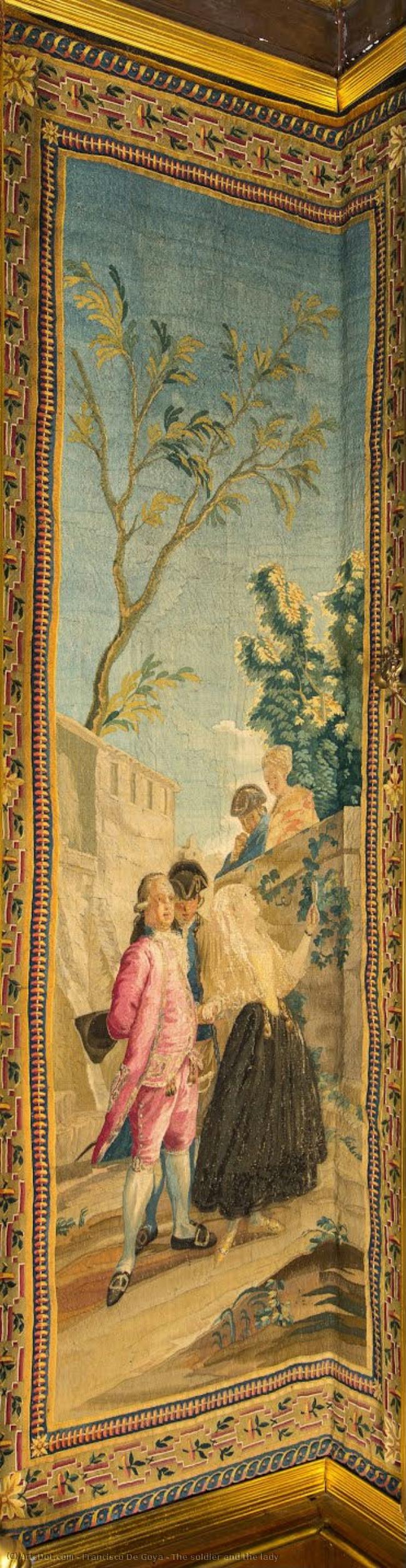
Explora ‘El soldado y la dama’ (1784) de Francisco de Goya, un lujoso tapiz barroco que muestra la vida aristocrática. Bordado intrincado, colores ricos y detalles clásicos: una pieza impresionante.
Francisco Goya capturó magistralmente la esencia de María Cayetana de Silva en este retrato de 1797. Análisis profundo y simbolismo enriquecen esta obra maestra del Romanticismo español. Descubre más en ArtsDot.com.
Descubre el Palacio Nacional da Ajuda en Lisboa: una joya arquitectónica neoclásica que alberga obras maestras de arte portugués y ofrece una visión fascinante de la historia real portuguesa.
A Scene of Courtly Intrigue: Goya’s ‘The Soldier and the Lady’ (1784)
This exquisite tapestry, created in 1784 by the masterful Francisco de Goya, offers a captivating glimpse into the world of Spanish aristocracy. More than just a decorative piece, *The Soldier and the Lady* is a testament to Goya's burgeoning talent during his early career as a court painter – before the darkness that would later define some of his most famous works took hold.
Subject & Composition
The tapestry depicts an intimate encounter between two elegantly dressed gentlemen and a lady, partially veiled in shadow. A fourth figure, likely a servant or attendant, stands discreetly nearby, observing the interaction. The scene unfolds against a backdrop of classical architecture – columns and arches suggesting a garden pavilion or palace setting – seamlessly blending with stylized foliage. Goya masterfully arranges his figures to draw the eye towards the central group, creating a sense of focused conversation and subtle tension. While seemingly serene, there’s an underlying current of narrative ambiguity; what is being discussed? What relationship connects these individuals?
Style & Technique: Rococo Refinement with a Goya Twist
Stylistically, the tapestry leans heavily into the prevailing aesthetic of the late Rococo period. The composition is characterized by flowing lines, ornate detail, and an overall sense of theatricality. However, even within this framework, hints of Goya’s individual style begin to emerge. While embracing the graceful curves and luxurious drapery typical of the era, he imbues his figures with a psychological depth that transcends mere decorative charm. The technique itself is remarkable: intricate needlework using wool and silk creates a rich texture and luminous surface, demonstrating exceptional craftsmanship. The tapestry’s construction isn't simply about replicating an image; it *is* the image, built thread by painstaking thread.
Historical Context & Goya’s Early Career
In 1784, Goya was establishing himself as a painter to the Spanish court under Charles III and later Charles IV. Commissioned works like this tapestry provided him with financial stability and access to aristocratic circles. This period allowed him to hone his skills in portraiture and decorative arts, while also exposing him to the complexities of courtly life – themes that would subtly influence his later, more critical work. It’s important to remember Goya's trajectory; he began as a painter of charming scenes like this before becoming renowned for works such as *The Third of May 1808*, which starkly depicted the brutality of war.
Symbolism & Emotional Resonance
The clothing, poses, and interactions within the tapestry are laden with symbolic meaning, reflecting the social status and conventions of the time. The gentlemen’s attire speaks to their wealth and position, while the lady's partially obscured face adds an element of mystery and perhaps vulnerability. The overall emotional impact is one of refined elegance tinged with a subtle undercurrent of intrigue. It evokes a sense of privileged leisure and the delicate social dances that characterized aristocratic life in 18th-century Spain.
A Timeless Piece for Discerning Collectors & Designers
*The Soldier and the Lady* is more than just a beautiful object; it’s a window into a bygone era, crafted by one of history's most important artists. A high-quality reproduction of this tapestry would be a stunning addition to any interior, bringing a touch of Spanish elegance and artistic sophistication to a living room, library, or dining room. Its warm color palette – reds, browns, golds, and muted greens – complements a variety of décor styles, while its intricate detail provides endless visual interest. This piece is ideal for collectors seeking early works by Goya, as well as interior designers looking to create spaces that are both beautiful and historically resonant.