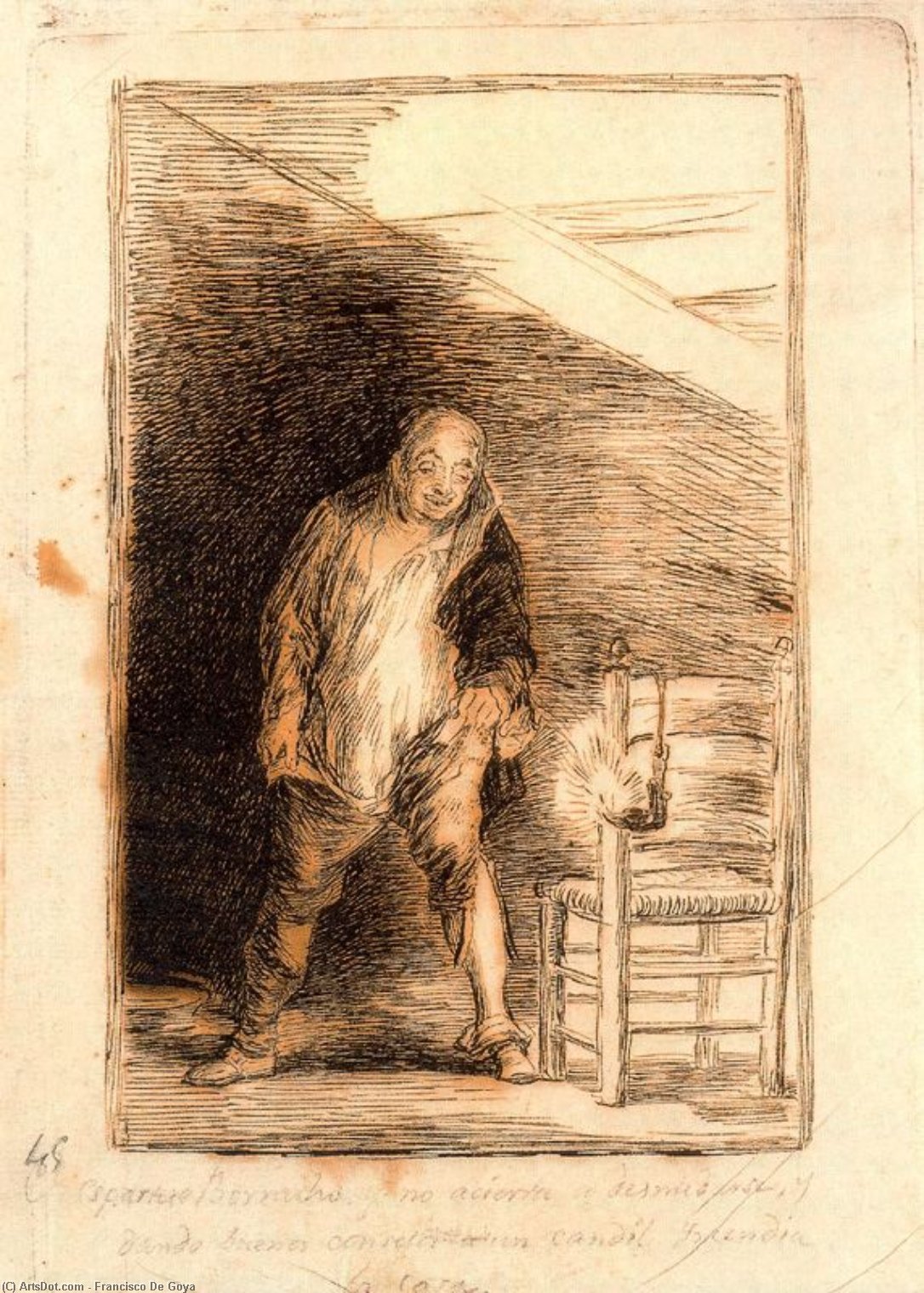
"Y se le quema la Casa 1": Una obra maestra de Goya que captura el dolor y la desesperación humana con una técnica innovadora y un profundo simbolismo histórico."
Francisco Goya capturó magistralmente la esencia de María Cayetana de Silva en este retrato de 1797. Análisis profundo y simbolismo enriquecen esta obra maestra del Romanticismo español. Descubre más en ArtsDot.com.
Francisco José de Goya y Lucientes: The Soul of Spain
Francisco José de Goya y Lucientes, a name that resonates through the halls of art history, embodies a fascinating paradox. He was both a product of his time – steeped in the traditions of Old Masters – and a visionary who foreshadowed the anxieties and expressive freedom of modern art. Born in 1746 in Fuendetodos, Aragon, Spain, Goya’s journey from aspiring provincial artist to court painter, and ultimately, to a chronicler of human suffering and societal decay, is a testament to his extraordinary talent and the turbulent era he inhabited. His early training began at fourteen under José Luzán y Martinez, laying a foundation in traditional techniques before he moved to Madrid and refined his skills with Anton Raphael Mengs, then the dominant artistic force at the Spanish court. This initial period instilled in him a mastery of form and composition, evident in his early portraits of the Spanish aristocracy and royalty, and Rococo-style tapestry cartoons designed for the royal palace.
The Alchemy of Darkness: Technique and Artistic Evolution
Goya’s masterful execution of “Y se le quema la Casa 1,” likely created as an etching or aquatint, exemplifies this transformative approach to artmaking. He wields tonal variation with breathtaking skill, building form and texture through meticulous cross-hatching and stippling—techniques that transcend mere representation, aiming instead to evoke the very essence of emotion. Deep shadows envelop the scene, punctuated by subtle gradations of light that reveal the contours of the figure and his surroundings. This isn’t simply about depicting what *is* visible; it’s about conveying what is *felt*. The work marks a significant shift in Goya’s artistic trajectory, moving away from the brighter palettes and more conventional subjects of his earlier career towards a darker, more expressive style that anticipates the emotional intensity of 19th-century Romanticism. This evolution wasn’t arbitrary; it was born from witnessing—and deeply feeling—-the tumultuous social and political upheavals of Spain during his lifetime—particularly the Napoleonic Wars.
Echoes of Disasters: Historical Context and Social Commentary
Francisco de Goya lived through an era defined by conflict and instability, a period that profoundly shaped his artistic vision. Initially trained in the Rococo style, he navigated Neoclassicism before forging his own path—a path that led him to confront the harsh realities of human existence with unflinching honesty. “Y se le quema la Casa 1” resonates powerfully with themes explored in Goya’s renowned series, *The Disasters of War*. Both bodies of work reveal a deep empathy for suffering and a critical perspective on societal ills. While the specific meaning of this particular piece remains open to interpretation—the unseen fire suggesting personal ruin, societal collapse, or simply the extinguishing of hope—it undeniably evokes the hardships faced by ordinary people during times of conflict and political unrest. The title itself, “And the house is burning down on him,” speaks volumes about a sense of helplessness in the face of overwhelming forces.
A Timeless Resonance: Symbolism and Emotional Impact
The power of “Y se le quema la Casa 1” lies not only in its historical context or technical brilliance but also in its enduring emotional resonance. The slumped posture, melancholic expression, and dimly lit interior all contribute to a palpable sense of loneliness and vulnerability. The figure appears stripped bare, both physically and emotionally, inviting viewers to confront their own feelings of isolation and despair. This is not an image that offers easy answers or comforting illusions; it’s a mirror reflecting the darker aspects of the human condition. Yet, within this darkness lies a strange beauty—a testament to Goya’s ability to find profound meaning in suffering. It is precisely this timeless quality that makes “Y se le quema la Casa 1” a compelling addition to any art collection or interior space, serving as a poignant reminder of our shared humanity and the enduring power of art to illuminate even the most shadowed corners of existence.
## Photo Description: --Overall Impression-- The artwork is a monochromatic drawing in the style of Francisco Goya, likely an etching or aquatint. It depicts a solitary figure – a man with a prominent belly and large head – seated on a simple wooden chair within a dimly lit interior space. The composition is vertically oriented, creating a sense of confinement and isolation. The scene is dominated by deep shadows and subtle gradations of tone, emphasizing texture and form through cross-hatching and stippling techniques. Lines are predominantly dark and create a strong sense of depth and volume. The subject matter focuses on the figure’s slumped posture and melancholic expression, suggesting weariness or despair. There’s a palpable atmosphere of poverty and suffering. The use of light is minimal, casting dramatic shadows that obscure details and heighten the emotional impact. Perspective is somewhat flattened, contributing to the claustrophobic feel. The texture is rough and uneven, characteristic of printmaking techniques. Symbolically, the image evokes themes of loneliness, hardship, and perhaps societal critique. The figure’s appearance suggests a marginalized individual. The style aligns with Goya’s social realism, capturing human suffering and vulnerability. The technique relies heavily on tonal variation to create form and mood. Materials used are likely engraving or etching plates and ink.