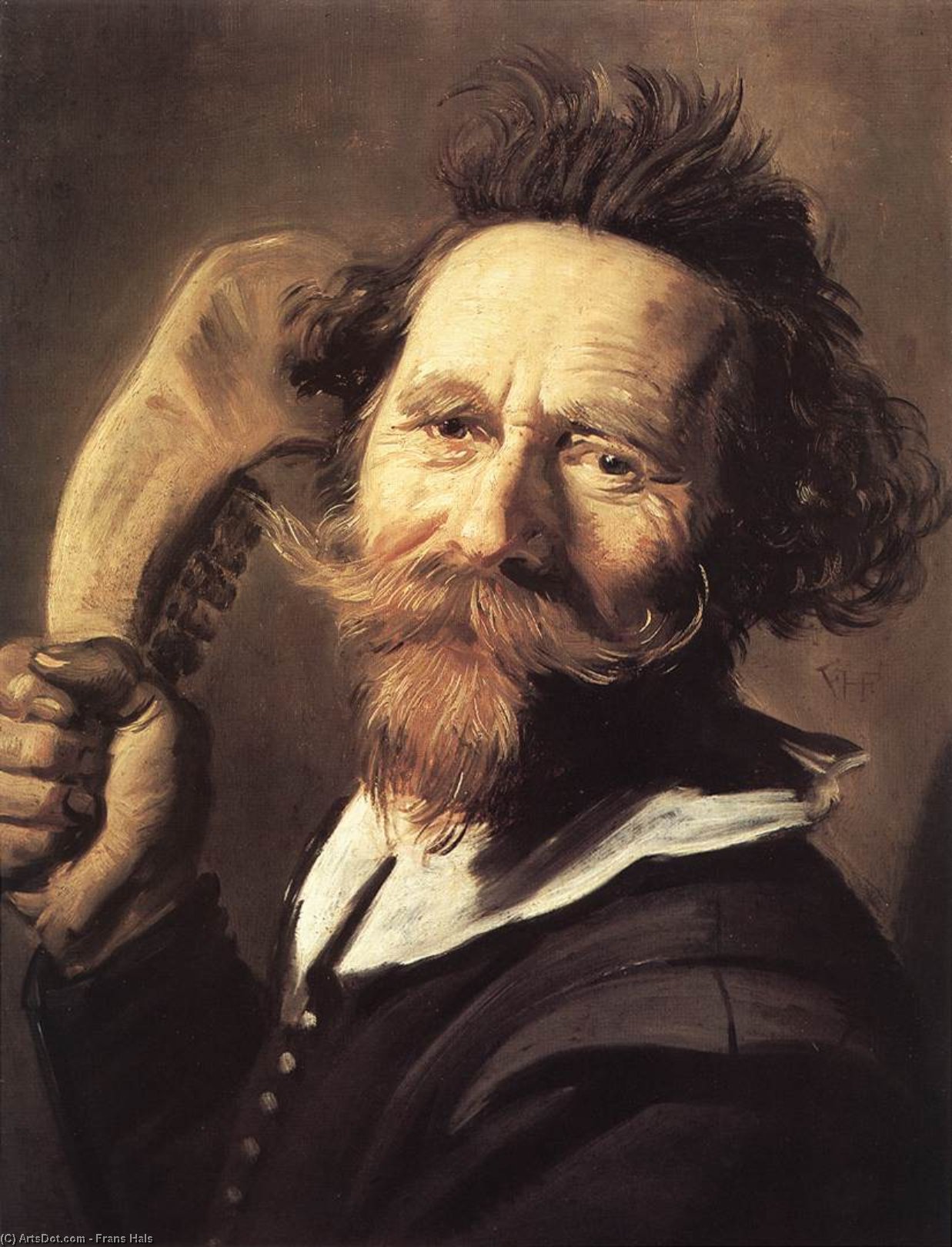
Verdonck by Frans Hals is a captivating portrait depicting Pieter Verdonck, a Mennonite member known for his outspoken nature and symbolized by Samson wielding the jawbone. Executed in oil on panel around 1627, it exemplifies Hals’s innovative style and masterful depiction of character.
Verdonck by Frans Hals: A Portrait of Resolve
Frans Hals’s “Verdonck,” completed around 1627, stands as an emblem of the Dutch Golden Age portraiture tradition—a genre characterized by its remarkable ability to capture not merely likeness but also psychological depth and emotional resonance. This monumental canvas, measuring 46.7 x 35.5 cm and housed at the National Gallery of Scotland in Edinburgh, transcends a simple depiction of a man; it’s an exploration of character, conviction, and the subtle nuances of human expression.
The subject is Pieter Verdonck, a prominent Mennonite leader from Ghent who served as a member of Haarlem's influential Reformed Church. Hals skillfully portrays Verdonck in a dramatic pose—a half-length portrait that immediately draws the viewer’s gaze into his intense stare. His face is illuminated by a warm light, highlighting the contours of his features and conveying an aura of unwavering determination.
Hals's distinctive technique—loose brushstrokes imbued with spontaneity—is instantly recognizable. Unlike many artists of his time who prioritized meticulous detail, Hals opted for a looser approach, prioritizing texture and vibrancy over precise representation. This method allowed him to convey Verdonck’s personality with astonishing accuracy, capturing the subtle flicker of emotion beneath the surface.
- Style: Baroque – Characterized by dramatic lighting, dynamic poses, and an emphasis on emotional expression.
- Technique: Oil on Panel – Hals employed a glazing technique that layered thin coats of paint to achieve luminous colors and subtle tonal variations.
- Historical Context: The painting reflects the intellectual ferment of the Dutch Golden Age, marked by humanist ideals and a fascination with human psychology. It aligns with the broader trend toward portraying individuals as complex characters grappling with moral dilemmas.
Beyond its technical brilliance, “Verdonck” resonates deeply with viewers due to its symbolic significance. The inclusion of a jawbone—a reference to Samson’s biblical tale—suggests Verdonck's unwavering resolve and defiance against adversity. Hals’s masterful composition reinforces this message, directing the viewer’s eye toward Verdonck’s gaze and emphasizing his commanding presence.
The painting’s enduring appeal lies in its ability to evoke empathy and contemplation. It invites us to consider Verdonck's inner life—his convictions, fears, and aspirations—and reminds us of the power of art to transcend time and communicate universal human emotions. “Verdonck” remains a testament to Hals’s genius as a portraitist and a profound reflection of the spirit of its era.
Additional Research Links: