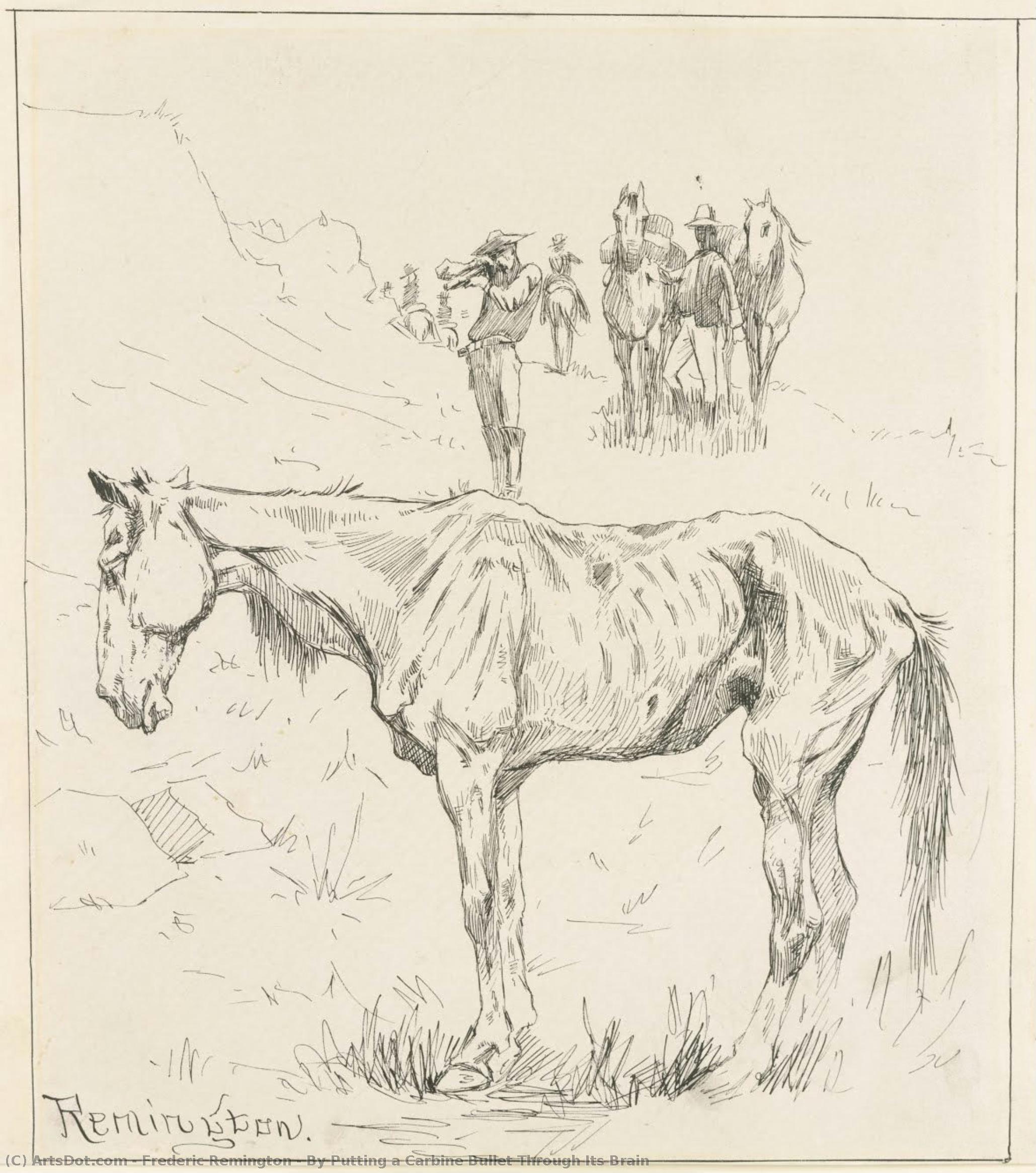
Experimente la icónica obra de Frederic Remington, 'Al atravesar su cerebro con una bala de carabina', una representación dramática del Oeste americano: una imagen inquietante que captura la tensión de la frontera.
Descubre Frederic Remington (1861-1909), el icónico pintor del Oeste americano. Caballeros, nativos americanos y paisajes épicos en ArtsDot.
¡Descubre el arte estadounidense en el Amon Carter Museum of American Art! Explora obras maestras de Remington y Russell, además de fotografía y piezas de los siglos XIX y XX. ¡La entrada es gratuita!
By Putting a Carbine Bullet Through Its Brain - Frederic Remington's Vision of Frontier Justice
Frederic Sackrider Remington’s “By Putting a Carbine Bullet Through Its Brain” isn’t merely a depiction of the American West; it’s an embodiment of its spirit—a brutal confrontation between man and beast, lawlessness and order, rendered with masterful precision and imbued with palpable emotion. Completed in 1887 during Remington's prolific period documenting the final days of the Wild Frontier, this iconic painting transcends simple representation to become a powerful statement about morality and retribution within a harsh landscape.
A Snapshot of Wyoming Territory
The scene unfolds against the backdrop of Wyoming Territory, circa 1887, capturing a pivotal moment in the ongoing struggle between settlers and Native American tribes vying for control over resources and land. Remington meticulously portrays a lone cowboy—likely Caleb Marsh—facing down a wounded buffalo calf. The horse beneath him is positioned strategically, mirroring the cowboy’s unwavering gaze and conveying an aura of resolute determination. The artist's keen observation of animal anatomy and posture contributes to the painting's realism, grounding it firmly in the tangible realities of frontier life.
Remington's Distinctive Style: Romantic Realism
Remington championed what he termed “Romantic Realism,” a stylistic approach that blended elements of Impressionism with traditional academic conventions. He achieved this through careful layering of brushstrokes—primarily horizontal and vertical—creating textured surfaces that capture the ruggedness of the terrain and the physicality of the figures involved. Remington’s masterful use of chiaroscuro – dramatic contrasts between light and shadow – amplifies the emotional intensity of the scene, highlighting the cowboy's grim resolve and emphasizing the vulnerability of the wounded animal. The muted color palette—dominated by browns, ochres, and grays—further reinforces the painting’s atmosphere of desolate grandeur.
Symbolism Within Violence: Justice Served
Beyond its visual splendor, “By Putting a Carbine Bullet Through Its Brain” carries significant symbolic weight. The act itself – administering lethal justice to an animal that posed a threat – reflects the prevailing ethos of the era—a belief in upholding law and order even amidst barbarity. Remington’s depiction isn't glorifying violence; rather, it presents it as a necessary consequence of defending one's values against encroaching savagery. The cowboy’s stance embodies courage and moral fortitude, symbolizing the enduring spirit of the American West and its unwavering commitment to upholding justice.
Emotional Resonance: Confrontation and Reflection
The painting compels viewers to confront uncomfortable truths about human behavior and the complexities of survival in a challenging environment. Remington skillfully conveys the palpable tension between man and animal—a visceral portrayal of instinct versus intellect, aggression versus compassion. Yet, beneath the surface brutality lies an underlying contemplation on morality and responsibility. “By Putting a Carbine Bullet Through Its Brain” remains a timeless masterpiece, prompting ongoing discussion about ethics, heroism, and the enduring legacy of the American Frontier. It’s a piece that lingers in the mind long after viewing, reminding us of the profound impact art can have on shaping our understanding of history and human nature.