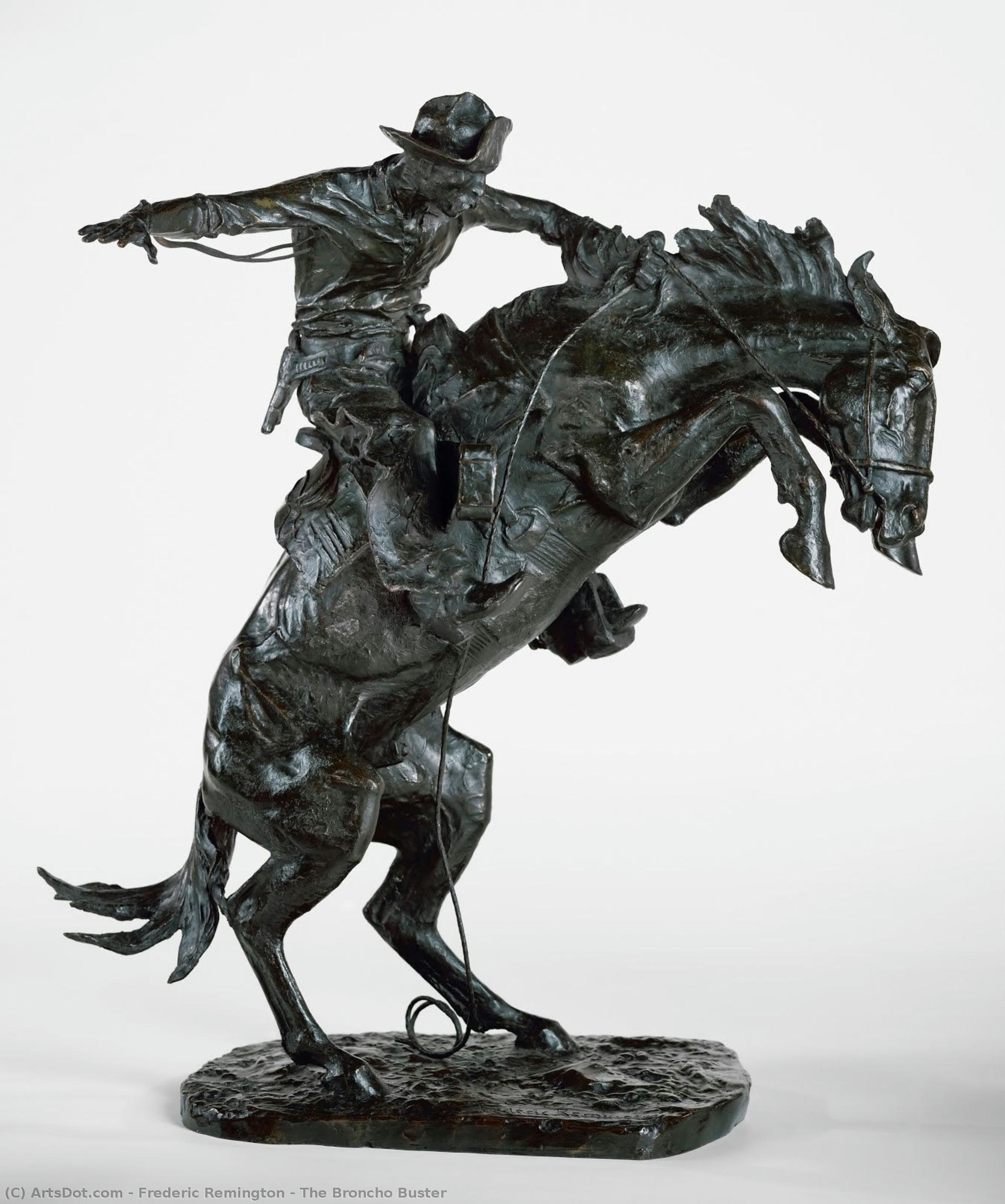
The Broncho Buster: A Triumph of Bronze and Frontier Spirit
Frederic Remington’s “The Broncho Buster,” completed in 1899, stands as an enduring emblem of the American West—a testament to both artistic skill and a romanticized vision of frontier life. Cast from bronze using the lost-wax method, this monumental sculpture captures a pivotal moment: a cowboy battling for control atop a rebellious horse, embodying courage, determination, and the primal struggle between man and nature.
The artwork’s composition is deliberately dramatic, employing a pyramidal structure that elevates the horse's head—a visual declaration of dominance. Diagonal lines dominate the scene, conveying an irresistible sense of movement and mirroring the frantic energy of the confrontation. Remington skillfully utilizes anatomical detail to portray both figures with remarkable realism, emphasizing muscle mass and conveying palpable tension.
- Subject Matter: The sculpture depicts a cowboy wrestling with a bucking horse—a quintessential image of the American West, reflecting themes of bravery, resilience, and the challenges faced by pioneers venturing into uncharted territories.
- Style & Medium: Remington’s style leans toward realism, albeit infused with expressive dynamism. Bronze casting ensures durability and allows for intricate textural detail, capturing the ruggedness of the landscape and the physicality of the struggle.
- Technique & Materials: The lost-wax method guarantees precision in replicating the horse's musculature and the cowboy’s posture—a technique perfected by Remington to convey emotion and movement with unparalleled accuracy.
Beyond its technical prowess, “The Broncho Buster” resonates deeply with symbolic meaning. The horse represents untamed wilderness, while the cowboy embodies human will and mastery over adversity. Remington's depiction isn’t merely a record of observation; it’s an idealized portrayal of heroism—a celebration of the spirit of exploration and conquest.
Considered within its historical context – the late 1890s, shortly after the Spanish-American War – the sculpture reflects anxieties about westward expansion and the perceived need for individuals to confront formidable challenges. It speaks to a broader cultural fascination with frontier narratives and the romantic notion of conquering nature.
“The Broncho Buster” continues to captivate audiences today because it transcends mere representation; it embodies an emotional core—a visceral depiction of struggle, triumph, and the enduring allure of the American West. Its powerful imagery serves as a reminder of a bygone era while simultaneously affirming the timeless values of courage and perseverance.