The painting
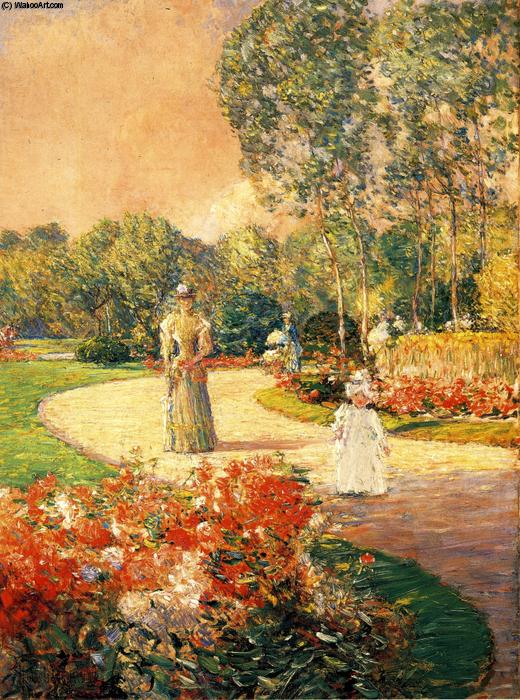
Parc Monceau, Paris is a beautiful example of American Impressionism, created by the renowned artist
Frederick Childe Hassam in 1897. This oil on canvas piece is a testament to Hassam's skill and attention to detail, showcasing his ability to capture the essence of a moment in time. The scene depicts a woman walking down a path in a park with her child, surrounded by lush greenery and vibrant flowers.
The Artist's Style
Frederick Childe Hassam's style is characterized by his use of
Impressionist techniques, which emphasize capturing the fleeting effects of light and color. In
Parc Monceau, Paris, Hassam's brushstrokes are bold and expressive, with a focus on conveying the sense of movement and energy in the scene. The painting is a prime example of Hassam's ability to balance
color and
composition, creating a harmonious and visually appealing work of art.
The Painting's Significance
Parc Monceau, Paris is not only a beautiful painting but also an important work in the context of American Impressionism. The piece is part of the collection at the
Frye Art Museum in the United States, where it continues to be admired and studied by art enthusiasts. For those interested in learning more about
Frederick Childe Hassam and his work,
visit the ArtsDot website to explore a wide range of his paintings, including
Rooftops: Pont-Aven and
Tuileries Gardens.
The beauty and significance of
Parc Monceau, Paris make it a must-see for art lovers and enthusiasts of Impressionism. With its stunning depiction of a serene park scene, this painting is a testament to the skill and artistic vision of
Frederick Childe Hassam.