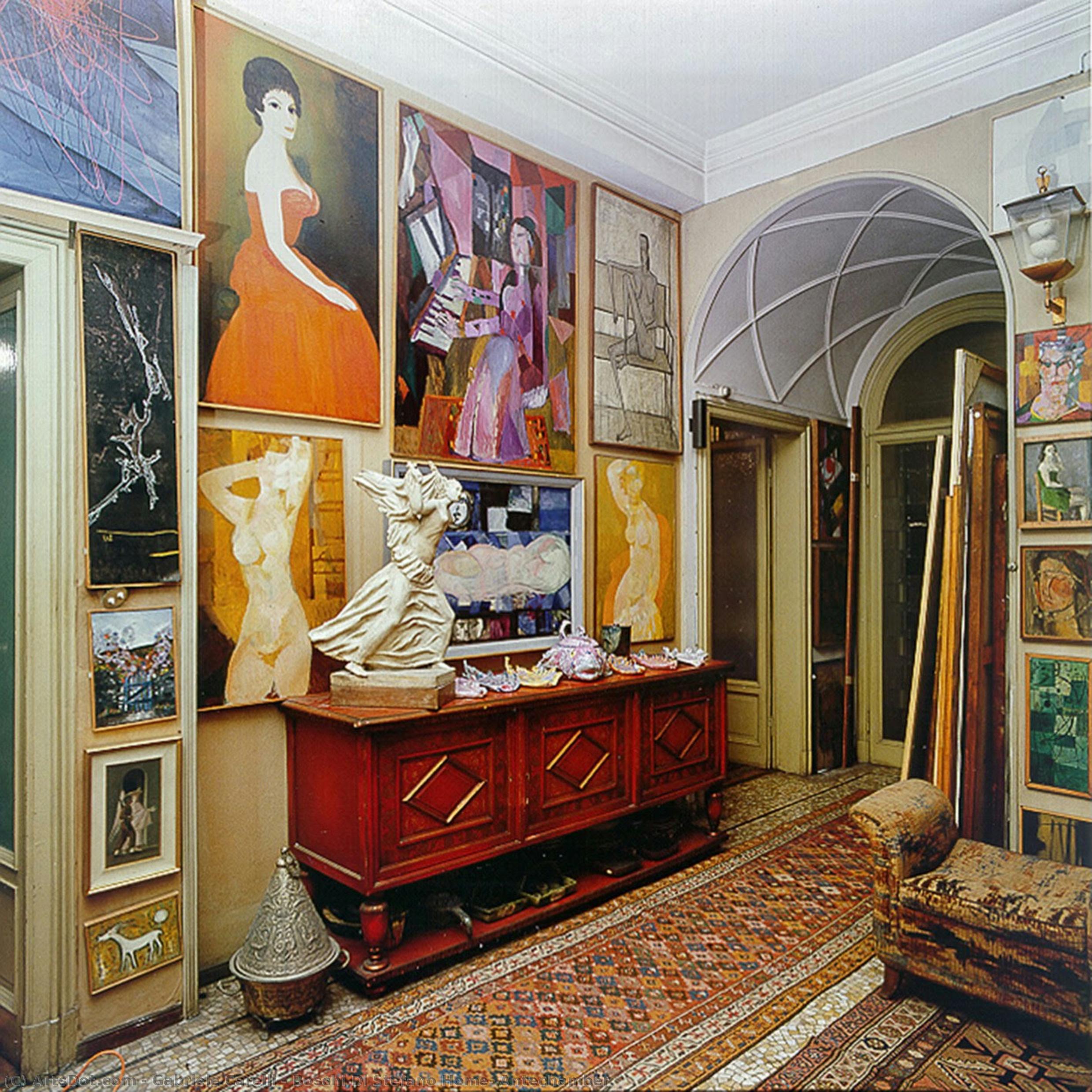
Gabriele Carelli’s “Boschi Di Stefano Home: Antechamber” – A Window into Neapolitan Life
“Boschi Di Stefano Home: Antechamber,” painted in 1982 by Gabriele Carelli, offers a captivating glimpse into the domestic life of a wealthy Italian family during the late 19th century. This evocative scene, rendered with Carelli’s signature blend of landscape and genre painting, transcends a simple depiction of an interior; it's a carefully constructed tableau brimming with subtle narratives and reflecting the artistic sensibilities of its time. The artwork immediately draws the viewer into a space of quiet contemplation – a cozy salon designed for relaxation and social interaction, meticulously arranged with furniture and adorned with artworks that speak to both taste and status.
The Artist’s Vision: Carelli and the School of Posillipo
Gabriele Carelli (1821-1900), born in Naples, was a pivotal figure within the renowned “School of Posillipo.” This artistic movement, flourishing throughout the 19th century, championed a realistic approach to landscape painting, often infused with intimate scenes of everyday life. Influenced profoundly by his father, Raffaele Carelli – himself a prominent artist associated with Posillipo – Gabriele inherited a deep understanding of light and color, particularly as it manifested in the coastal landscapes surrounding Naples. His travels, notably accompanying the 6th Duke of Devonshire on extensive tours through Sicily, Greece, Asia Minor, and Constantinople, broadened his artistic perspective, exposing him to diverse cultures and breathtaking vistas that he subsequently incorporated into his work. Carelli’s ability to capture both the grandeur of these locations and the nuances of human interaction cemented his reputation as a skilled and observant painter.
Technique and Composition – A Symphony of Detail
Carelli's technique in “Antechamber” is characterized by meticulous detail and a masterful use of light. The painting employs a predominantly muted palette, dominated by browns, greens, and ochres, reflecting the naturalistic style favored by the School of Posillipo. Brushwork is generally smooth and blended, creating a sense of atmospheric depth and realism. Notice the careful rendering of textures – the plush upholstery of the couch, the polished surface of the dining table, the delicate folds of the woman’s portrait. The composition itself is carefully balanced, guiding the viewer's eye through the room with a deliberate grace. The placement of the furniture, the arrangement of the artworks, and even the positioning of the vase contribute to a harmonious whole, suggesting an environment designed for both aesthetic appreciation and comfortable conviviality.
Symbolism and Emotional Resonance
Beyond its technical merits, “Antechamber” is rich in symbolic meaning. The inclusion of a portrait – likely depicting a member of the family or a significant figure – speaks to the importance of lineage and social standing within this era. The carefully curated collection of artworks hanging on the walls reflects the owner’s refined taste and intellectual pursuits. The overall atmosphere of the room, with its comfortable furnishings and inviting light, evokes a sense of warmth, security, and belonging. It's a scene that invites us to imagine the conversations, the laughter, and the shared moments that might have unfolded within these walls – a poignant reminder of the enduring human desire for connection and domestic tranquility. The painting’s emotional impact lies in its ability to transport us back to a specific time and place, offering a glimpse into the lives of those who inhabited it.