The Serene Embrace of Nature in George Inness's "In the Berkshires"
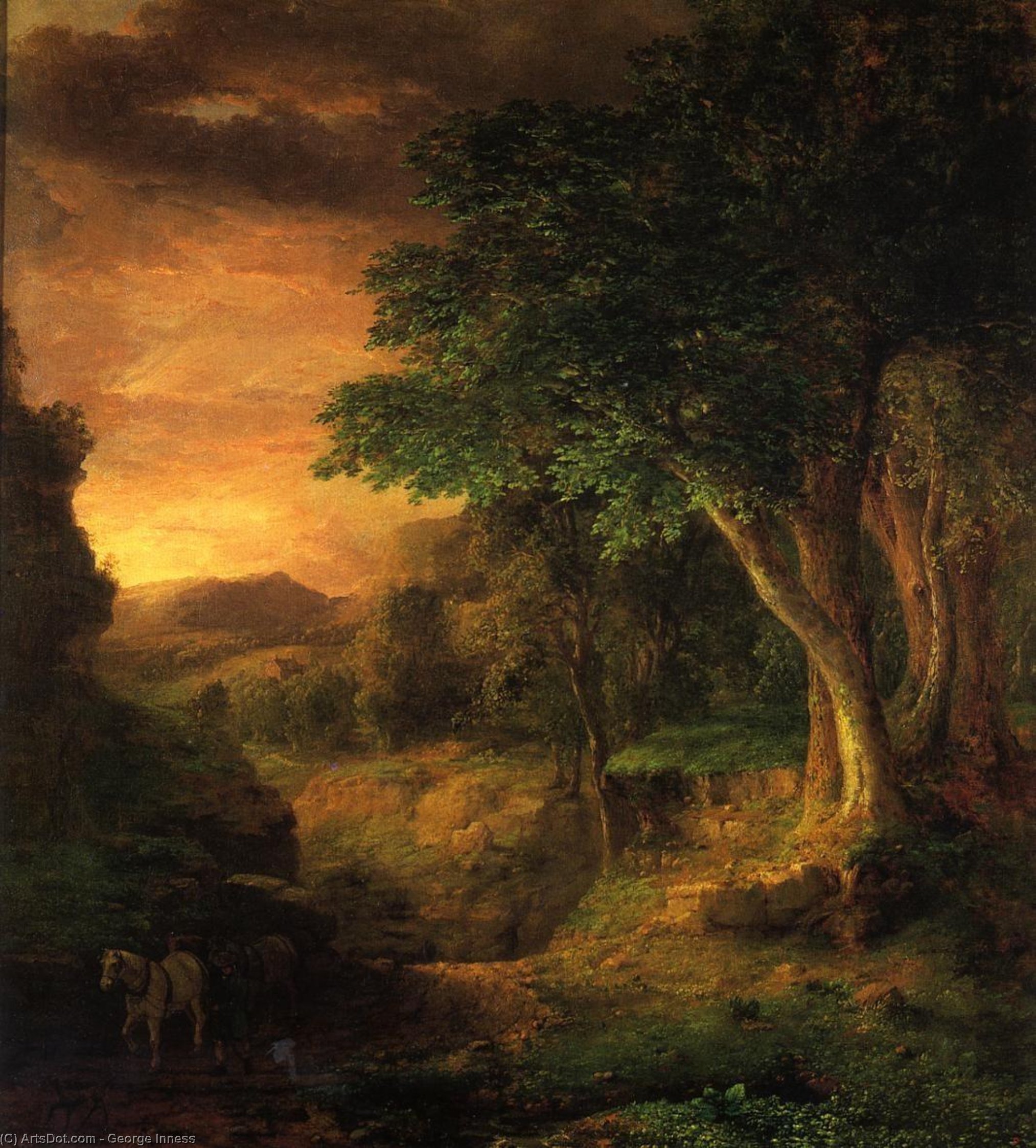
To gaze upon George Inness’s In the Berkshires is to step through a veil and into a moment suspended in time—a breath held by the quiet woods of New England. Painted in 1848, this oil on canvas transcends mere depiction; it offers an immersion into tranquility itself. The scene unfolds with a pastoral grace, inviting the viewer to wander alongside the figures and horses meandering through the dappled light filtering through the dense foliage. It is a masterful study in harmonious coexistence, where the rhythms of human life gently intersect with the enduring peace of the natural world.
A Symphony of Light and Shadow
Technically, Inness demonstrates an exquisite command over atmosphere. The painting is not merely colored; it is illuminated. Observe how the artist utilizes light and shadow—the interplay between sun-dappled patches on the forest floor and the deep, cool recesses of the woods—to lend profound depth to the composition. This careful handling of chiaroscuro gives the entire scene a palpable dimensionality, making the air itself feel thick with quietude. The warm tones employed throughout are not accidental; they wrap around the viewer like a comforting shawl, suggesting the golden glow of late afternoon and the deep satisfaction of a day spent in nature’s embrace.
Composition and Human Connection
The arrangement within In the Berkshires is thoughtfully orchestrated. The presence of two horses, positioned at varying depths—one nearer to the left, another receding into the right background—guides the eye naturally through the pictorial space. Complementing this natural movement are the three human figures. They are not central characters in a dramatic narrative, but rather integral components that provide scale and context. Their leisurely passage suggests companionship and contemplation; they are observers as much as they are participants, embodying that quiet moment of shared appreciation for beauty.
Echoes of Transcendental Thought
Understanding George Inness requires acknowledging the philosophical currents of his time. Emerging from an era deeply influenced by Transcendentalist thought, Inness’s work often veered away from the grand historical epics favored by some of his contemporaries. Instead, he turned inward, finding spiritual resonance in the seemingly simple act of walking through a woods or watching animals graze. His art speaks to the soul's yearning for simplicity and connection—a visual meditation on man’s place within the vast, benevolent order of nature. For the modern collector or designer, this piece offers more than just decoration; it offers a tangible anchor to contemplation.
Bringing the Pastoral Home
To reproduce In the Berkshires is to invite that specific, luminous serenity into your own space. Whether adorning a formal drawing-room or lending quiet dignity to a study, this artwork promises an immediate emotional shift. It speaks to those who find solace in the rustle of leaves and the steady rhythm of life lived thoughtfully. Owning a reproduction allows one to curate not just a wall, but a mood—a perpetual sense of peaceful escape found deep within the heart of the American landscape.