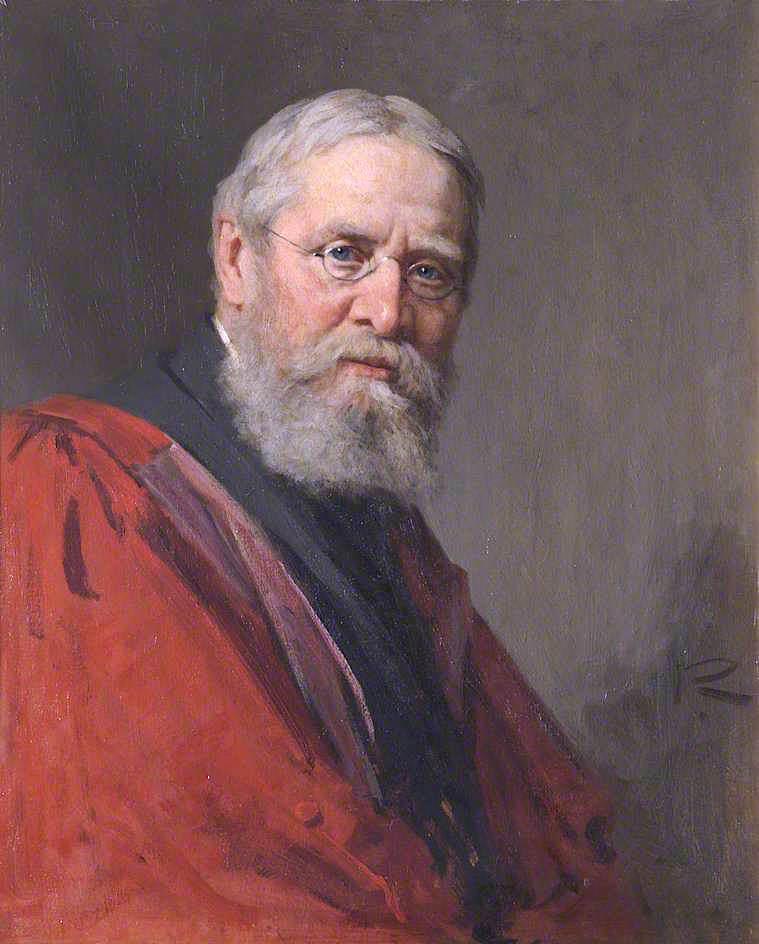
George Reid’s "Dr John Peile" (1902) is a stunning Victorian portrait showcasing realism and Dutch Impressionistic glazing techniques. This dignified depiction of the scholar, influenced by Thomas Eakins, captures intellectualism and virtue – discover this remarkable artwork.
George Reid’s “Dr John Peile”: A Portrait Steeped in Victorian Sentiment
The painting "Dr John Peile" by George Agnew Reid, completed in 1902, stands as a testament to the burgeoning artistic landscape of Edwardian Canada and embodies the prevailing aesthetic sensibilities of its time. More than just a likeness of a man—the esteemed Dr John Peile, Master (1887–1910), Philologist, Vice Chancellor of the University (1891–1893), President of Newnham College—it’s an artwork imbued with profound emotional resonance and meticulously crafted to capture the spirit of Victorian intellectualism.
- Subject Matter: Reid skillfully portrays Dr Peile in a dignified pose, seated against a subtly blurred backdrop that prioritizes focus on his face and attire. The artist's keen observation of anatomical detail—a hallmark of his training at Philadelphia’s Pennsylvania Academy of the Fine Arts—is evident in the rendering of Peile’s features: the furrowed brow conveying thoughtfulness, the gaze directed outwards with an air of quiet confidence.
- Style & Technique: Reid's style leans heavily toward realism, yet it transcends mere imitation. Influenced by Thomas Eakins and imbued with a Dutch Impressionistic spirit, he employs glazing techniques—a hallmark of Victorian painting—to achieve luminous tonal gradations and subtle atmospheric effects. This layering of translucent washes creates depth and texture, mirroring the complexities of Peile’s character and conveying an impression of inner contemplation.
- Historical Context: The painting emerged during a period marked by significant advancements in scientific inquiry and philosophical debate. Victorian society valued intellectual pursuits and moral integrity, qualities reflected in Reid's depiction of Peile—a respected academic figure dedicated to scholarship and education. It speaks to the broader cultural preoccupation with portraying individuals as embodiments of virtue and intellect.
- Symbolism: The red robe worn by Dr Peile is not merely decorative; it symbolizes authority and distinction, aligning with his position as Master and Vice Chancellor. Reid’s careful composition reinforces this symbolic significance, positioning Peile centrally within the frame to command attention and conveying a sense of solemn dignity.
- Emotional Impact: Ultimately, “Dr John Peile” succeeds in capturing a moment of quiet introspection—a glimpse into the mind of a man grappling with intellectual challenges and striving for moral excellence. Reid’s masterful brushwork evokes feelings of serenity and contemplation, inviting viewers to contemplate the enduring values of knowledge and virtue.
Further Exploration: To delve deeper into George Reid's artistic vision and his contribution to Canadian art history, consider researching Archibald David Reid, his father, who championed his son’s ambitions and fostered his artistic development. Also, exploring the influence of Thomas Eakins on Reid’s technique offers invaluable insight into the stylistic choices that shaped this remarkable portrait.