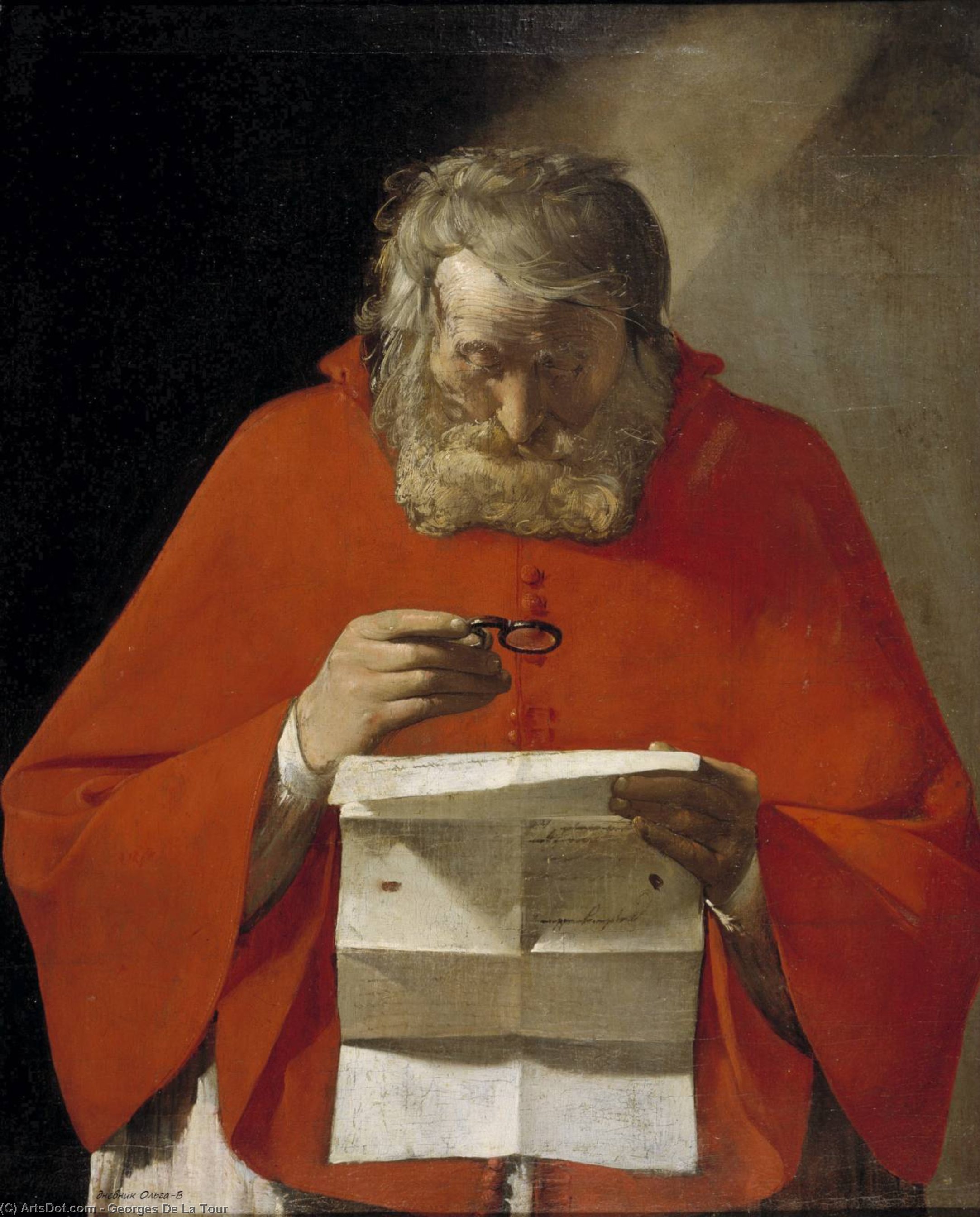
Saint Jerome Reading a Letter: A Meditation on Faith and Reflection
“Saint Jerome reading a letter” by Georges de La Tour is more than just a depiction of biblical scripture; it’s an embodiment of Baroque artistry—a masterful exploration of light, shadow, and psychological depth that continues to captivate viewers centuries later. Painted in 1629 during the height of De La Tour's prolific career, this artwork resides firmly within the tradition of Tenebrism, a stylistic approach characterized by extreme contrasts between illumination and darkness.
The scene portrays Saint Jerome, depicted with solemn dignity, absorbed in reading a parchment scroll. His posture exudes quiet contemplation—a deliberate positioning that invites us to consider the profound significance of his task. De La Tour’s meticulous attention to detail is evident in every aspect of the composition: the folds of Jerome's robe rendered with painstaking realism, the subtle texture of his skin illuminated by a single candle flame, and most notably, the expressive gaze directed towards the letter.
- Style & Technique: Tenebrism—Georges de La Tour perfected this technique, prioritizing dramatic chiaroscuro to heighten emotional impact. The artist skillfully employs light as a tool of storytelling, directing it strategically to sculpt Jerome’s face and torso while plunging the background into impenetrable darkness. This deliberate manipulation of light creates an atmosphere of mystery and spiritual solemnity.
- Historical Context: De La Tour's work emerged during a period marked by religious fervor—the Counter-Reformation—and sought to convey moral instruction through visual representation. The painting reflects the Baroque preoccupation with portraying human emotion and psychological states, aligning perfectly with the artistic sensibilities of the time.
- Symbolism & Emotion: The candle flame symbolizes divine illumination guiding Jerome’s intellect and conscience. The letter itself represents communication—perhaps a message from God or a reminder of his vows—and underscores the importance of introspection and spiritual discernment. De La Tour's masterful rendering captures not only the physical appearance but also the inner turmoil and unwavering faith of Saint Jerome.
- Composition: The artist’s compositional choices contribute significantly to the artwork’s impact. Jerome is positioned centrally, dominating the frame while simultaneously drawing our eye towards the illuminated letter. This balanced arrangement reinforces the painting's contemplative mood and emphasizes the focal point of the scene.
Georges de La Tour’s “Saint Jerome reading a letter” transcends mere visual representation; it’s an invitation to contemplate themes of faith, solitude, and moral responsibility—qualities that continue to resonate powerfully with audiences today. Its enduring beauty lies in its ability to evoke emotion and stimulate intellectual curiosity, cementing De La Tour's place as one of the most influential artists of the Baroque era.