A Portrait of Contemplation: Georges de la Tour’s *St. Jerome Reading*
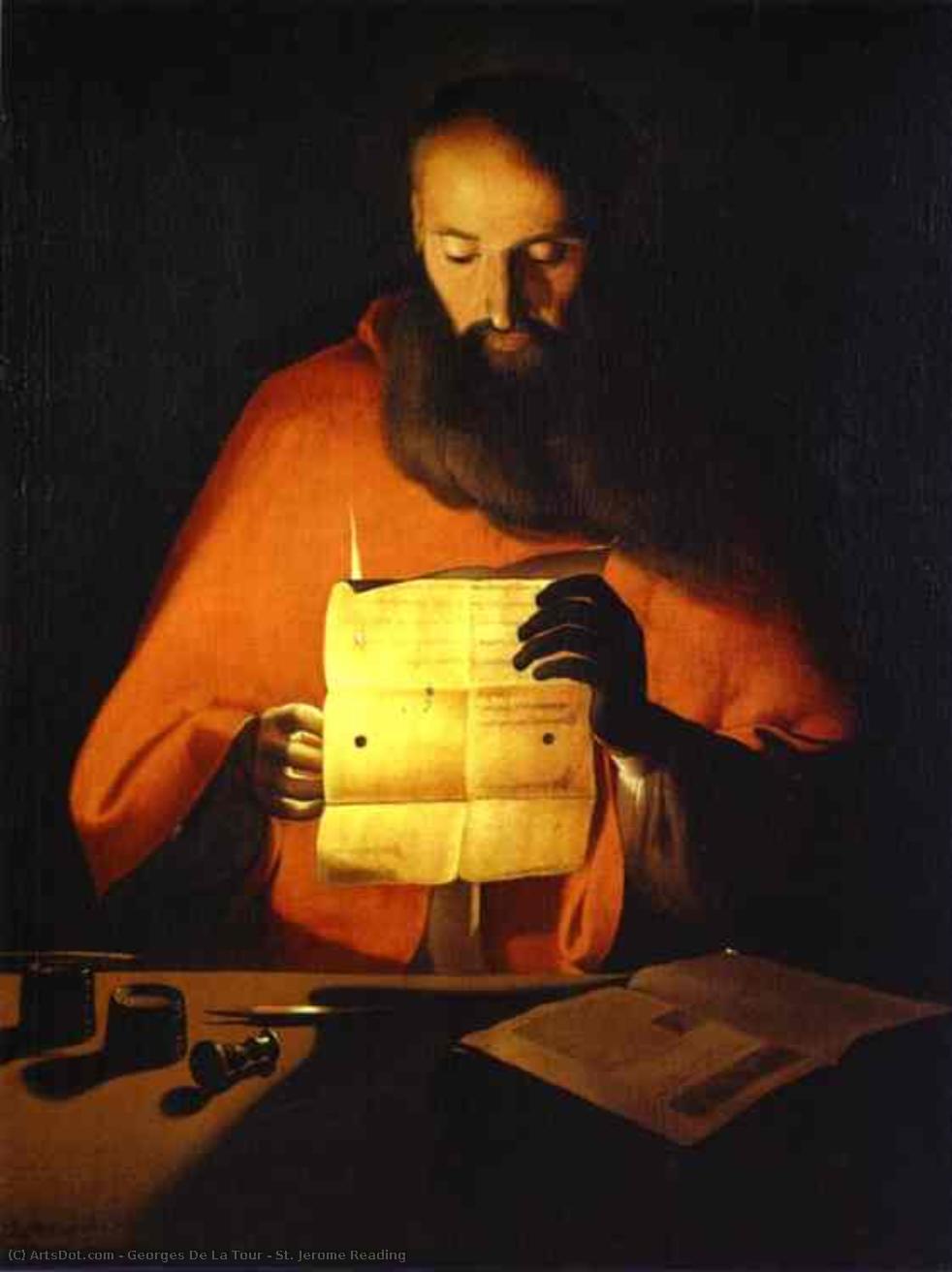
Georges de la Tour's 1650 painting, *St. Jerome Reading*, is not merely a depiction of a man absorbed in his studies; it’s an immersion into the very heart of Baroque introspection. This remarkable work, emerging from the artist’s workshop in Lunévi, France, exemplifies his mastery of chiaroscuro – the dramatic interplay of light and shadow – a technique that elevates the scene beyond simple portraiture and transforms it into a profound meditation on faith, time, and human consciousness. The subject, identified as St. Jerome, famously known for his dedication to prayer and penance, is rendered with an almost unsettling realism, his furrowed brow and focused gaze conveying a palpable sense of intellectual struggle. De la Tour doesn’t offer us a triumphant saint; instead, he presents a vulnerable figure wrestling with the weight of scripture, inviting the viewer into this intensely personal moment.
The Language of Light and Shadow
- Chiaroscuro Mastery: De la Tour’s signature technique dominates the composition. The intense light source, seemingly originating from an unseen window, dramatically illuminates Jerome's face and hands, while plunging the surrounding space into deep shadow. This isn’t simply a stylistic choice; it serves to heighten the emotional intensity of the scene, emphasizing the saint’s concentration and suggesting a spiritual realm beyond the tangible world.
- Layered Detail: The artist meticulously renders every detail – the texture of the robe, the worn pages of the book, the delicate curve of the clock face – contributing to the painting's remarkable sense of depth and realism. This painstaking attention to detail was characteristic of de la Tour’s approach, reflecting his commitment to capturing not just appearances but also the inner life of his subjects.
- Color Palette: The subdued color palette—dominated by browns, reds, and ochres—further enhances the painting's somber mood and reinforces its religious themes. The rich red of Jerome’s robe draws the eye immediately to the figure, while the darker tones create a sense of mystery and contemplation.
Symbolism Within the Scene
Beyond the central figure, *St. Jerome Reading* is laden with symbolic elements that deepen its meaning. The clock, prominently displayed on the wall, serves as a potent reminder of mortality and the fleeting nature of time – a key preoccupation within the Baroque era. It’s a visual echo of St. Jerome's own life dedicated to repentance and spiritual reflection. The two books further emphasize the saint’s scholarly pursuits and his engagement with sacred texts. The bowl, often interpreted as a symbol of penance and humility, adds another layer of complexity to the scene, suggesting Jerome’s willingness to endure hardship for the sake of faith.
Historical Context and Artistic Influence
Created in 1650, *St. Jerome Reading* reflects the artistic and religious climate of France during the early 17th century. De la Tour was a key figure within the School of Touraine, a group of artists who championed a deeply spiritual and emotionally resonant style of painting. His work aligns with the broader trends of the Baroque period, characterized by its dramatic intensity, emotional expressiveness, and emphasis on religious themes. De la Tour’s influence extended beyond his immediate circle, inspiring subsequent generations of painters to explore the power of light and shadow in their own artistic endeavors. The painting's meticulous detail and profound psychological insight mark it as a pivotal work within de la Tour’s oeuvre and a testament to his enduring legacy.
Emotional Impact and Artistic Reproduction
*St. Jerome Reading* possesses an undeniable power, captivating viewers with its quiet intensity and evocative atmosphere. A hand-painted reproduction of this masterpiece offers the opportunity to bring this profound work into your home or office, allowing you to experience its beauty and contemplation daily. ArtsDot’s skilled artisans meticulously recreate de la Tour's technique, ensuring that every nuance of light, shadow, and detail is faithfully reproduced. This isn’t simply a print; it’s a genuine work of art, imbued with the spirit and emotion of one of France’s greatest Baroque painters.