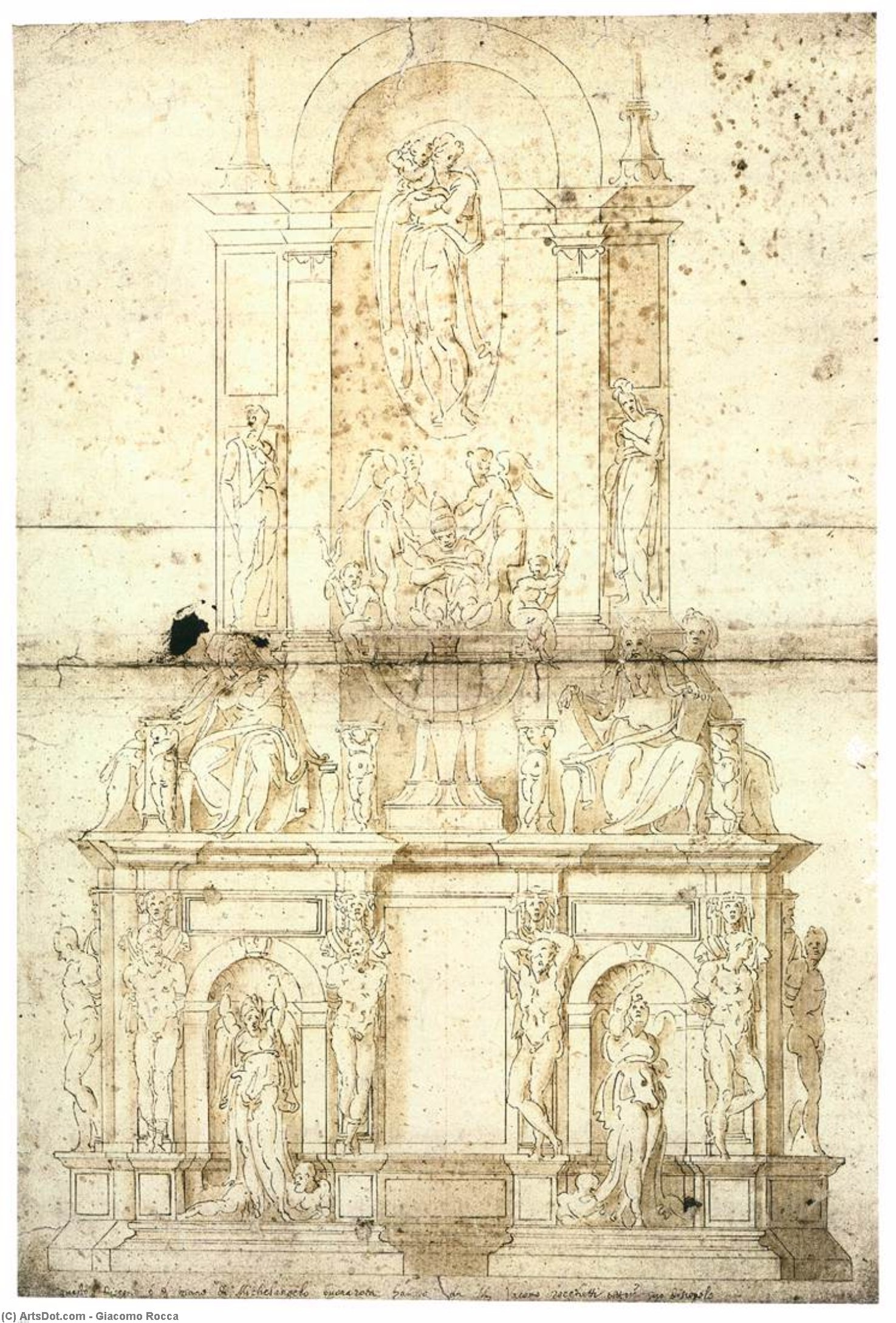
Michelangelo's Draft for the Tomb of Julius II: A Vision of Faith Embodied in Ink
Giacomo Rocca’s drawing, “Michelangelo’s Draft for the Tomb of Julius II,” stands as a testament to artistic devotion and meticulous observation within the fervent religious landscape of Renaissance Rome. Created around 1605, this monochrome masterpiece captures not merely an image but a conceptual echo of Michelangelo’s monumental ambition – a project that would redefine papal iconography and solidify his legacy as one of history's greatest sculptors.
The artwork originates from the Cluniac chapel of Château des Moines at Berzé-la-Ville, near Cluny. Abbot Hugh of Cluny, a visionary leader in ecclesiastical art, commissioned a program of murals that aimed to convey profound theological ideas. Rocca’s drawing meticulously reproduces Michelangelo's original sketch for the tomb of Julius II – a project conceived shortly after Pope Julius II’s death in 1513 and abandoned due to logistical challenges.
Rocca’s artistic approach is characterized by masterful pen and ink technique combined with subtle brown washes. This method, favored during Rocca's time, allowed for exceptional detail and tonal gradation—essential elements in conveying the solemn grandeur of the biblical narrative depicted. The drawing faithfully replicates Michelangelo’s preliminary design, demonstrating Rocca’s dedication to accuracy and his understanding of the artist’s stylistic principles.
- Style: Mannerist – Marked by dramatic poses, distorted figures, and an emphasis on expressive emotion, reflecting a reaction against the idealized forms of High Renaissance art.
- Technique: Pen and Ink Wash – Rocca skillfully utilized pen strokes to delineate precise contours while incorporating brown washes to create depth and luminosity, mirroring Michelangelo’s approach.
- Historical Context: The drawing emerged during a period of intense papal patronage aimed at glorifying the Catholic faith. It reflects the artistic fervor prevalent in Rome under Pope Gregory XIII.
- Symbolism: The composition embodies Christian iconography—Christ enthroned as ruler, St Peter receiving the law from Christ—representing divine authority and spiritual righteousness.
More than just a visual representation, Rocca’s drawing serves as an invaluable document of artistic process. It offers viewers a glimpse into Michelangelo's creative vision and underscores the enduring power of art to communicate complex theological ideas. Its quiet solemnity invites contemplation on faith, artistry, and the legacy of one of humanity’s most influential figures.
This reproduction captures the essence of Rocca’s artistic genius—a faithful echo of Michelangelo’s groundbreaking endeavor to honor God through monumental sculpture and painting. Ideal for enriching any interior space or inspiring artistic appreciation.