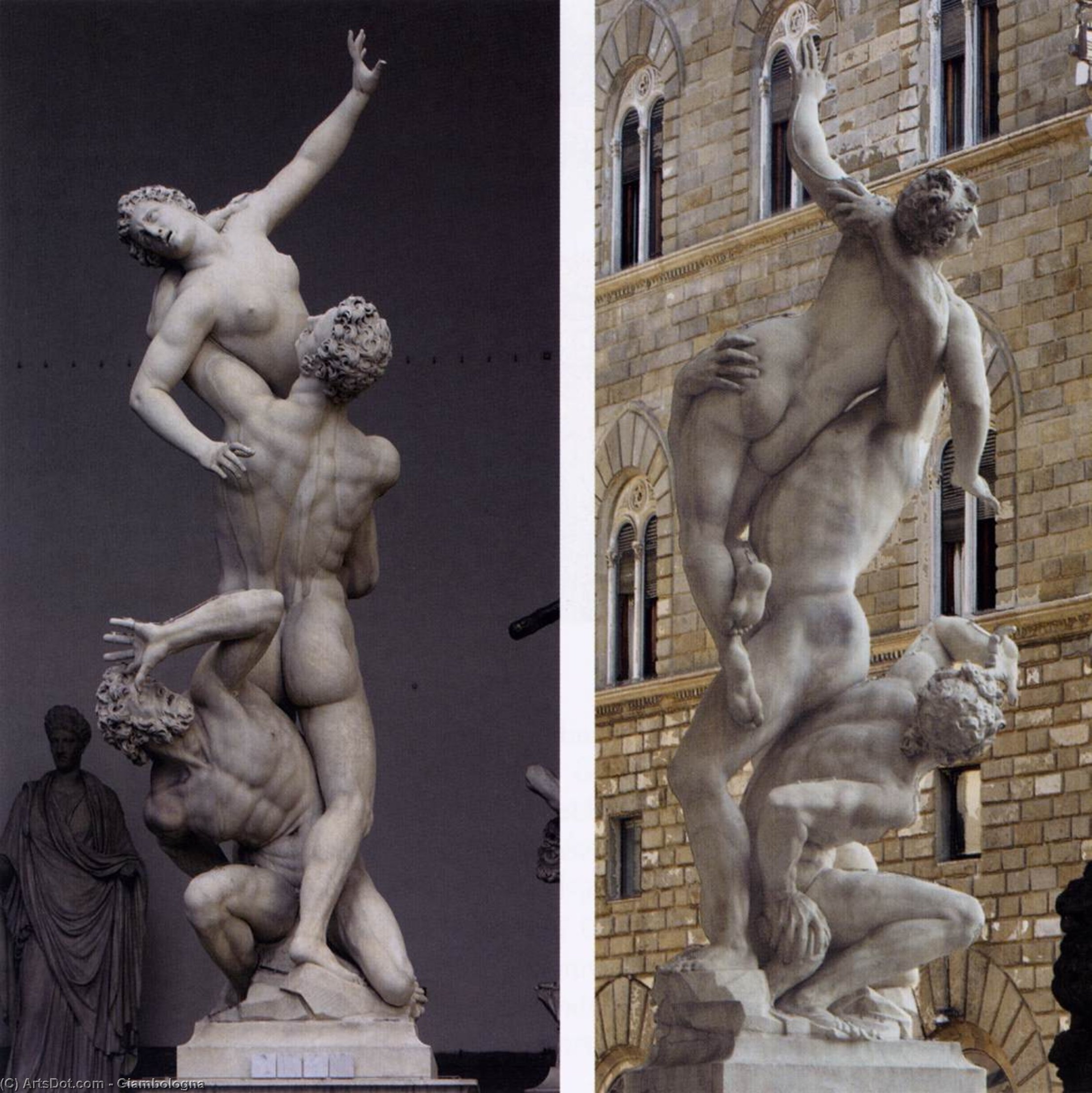
'El rapto de las sabinas', esculpida por Giambologna entre 1579 y 1583, encarna el arte manierista con su movimiento expresivo y detalle intrincado, celebrando la mitología romana. Admire esta obra en la Loggia dei Lanzi.
Giambologna (1529-1608), escultor manierista líder del Renacimiento italiano, famoso por obras dinámicas en bronce y mármol como Mercurio y El Rapto de las Sabinas. Explora su influencia en el Barroco y los encargos Medici.
¡Descubre los tesoros de la Piazza della Signoria: el David de Miguel Ángel, la Fuente de Neptuno y las esculturas de la Loggia dei Lanzi! Explora el legado renacentista y la fascinante historia de Florencia.
The Rape of the Sabine Women - A Masterpiece of Mannerist Sculpture
Giambologna’s *Abduction of a Sabine Woman*, completed in 1583 for Francesco I de’ Medici, stands as one of the most iconic sculptures of the Italian Renaissance and Baroque periods. More than just a depiction of an ancient Roman legend—the kidnapping of Sabine women by Roman men seeking wives—it embodies the stylistic zenith of Mannerism, marking a decisive break from the idealized beauty championed by earlier artists like Michelangelo.
A Dramatic Narrative Embodied in Marble
The sculpture recounts the tale of Rome’s desperate need for women after its founding. Faced with dwindling populations and a lack of suitable brides, Roman men resorted to audacious acts—mass abductions—to secure alliances with neighboring Sabine communities. Giambologna brilliantly captures this tense moment, portraying three figures engaged in a dynamic struggle: a muscular male figure forcefully seizing a woman from the grasp of an older man who desperately defends his daughter’s honor.
Technical Brilliance and Mannerist Style
Giambologna achieved unparalleled fame during his lifetime, largely due to his mastery of marble sculpture. He meticulously crafted this monumental group from a single block of white Carrara marble—a testament to his skill and dedication. The sculptor employed the *figura serpentinata* technique—characterized by twisting poses—to convey movement and emotion with remarkable precision. Observe how Giambologna’s attention to detail renders the musculature of the figures with astonishing realism, yet simultaneously imbues them with an expressive quality that transcends mere anatomical accuracy.
Symbolism and Emotional Resonance
Beyond its narrative depiction of Roman history, *The Rape of the Sabine Woman* carries profound symbolic weight. The sculpture explores themes of power, vulnerability, resistance, and the clash between tradition and desire. Giambologna’s masterful composition draws the viewer into the scene, eliciting a visceral response to the drama unfolding before them. The statue's placement in Piazza della Signoria—Florence’s historic heart—further underscores its significance as a symbol of Florentine civic pride.
A Legacy Enduring Through Time
Giambologna’s *Abduction of a Sabine Woman* continues to inspire artists and scholars alike. Its influence can be seen in subsequent Baroque sculptures, demonstrating Giambologna's enduring legacy as a sculptor who redefined artistic expression. To appreciate the full grandeur of this masterpiece, visit ArtsDot.com for high-quality reproductions and detailed information about Giambologna’s life and work.